New to horse riding? Discover how to choose the perfect riding boots with our beginner-friendly guide covering fit, safety, materials, and boot types.
Step into the Saddle: A Beginner’s Guide to Choosing the Perfect Riding Boots
Embarking on your equestrian journey is an exhilarating experience, filled with the promise of learning new skills, connecting with horses, and immersing yourself in a unique and rewarding sport. However, before you can fully enjoy your time in the saddle, it’s crucial to equip yourself with the proper gear—and few items are more essential than a dependable pair of riding boots.
For first-time riders, choosing the right boots can be confusing due to the range of options and technical terms involved. This comprehensive guide is here to simplify the process, focusing on key factors like heel height, ankle support, materials, and the differences between paddock boots, tall boots, and yard boots. With the right information, you’ll feel confident selecting boots that provide both safety and comfort from your first ride onward.
Why Proper Riding Boots Matter
While riding boots might seem like a stylish accessory, their purpose goes far beyond appearances. These boots are specially designed to offer support, safety, grip, and stability—all of which are essential for an effective and secure ride. Poor footwear can lead to discomfort, reduced control, and even serious accidents, such as your foot slipping through or getting stuck in the stirrup.
Good riding boots also enhance your posture and performance, supporting proper leg alignment and minimizing fatigue during long periods in the saddle. In short, a reliable pair of boots isn’t just a nice-to-have—it’s a necessity for every rider.
Remember that you’re not the only one who should be wearing specialized gear to ensure a safe and successful ride. Many experienced riders have realized that keep animals comfortable with boots that protect sensitive lower legs from overreach injuries and impact during rigorous training sessions. These protective layers prevent unnecessary strain on tendons and ligaments, allowing your horse to perform at its peak for longer periods. By prioritizing high-quality leg protection, you are making a long-term investment in your equine partner’s health and mobility.
Key Features to Look For in Riding Boots
1. Heel Height
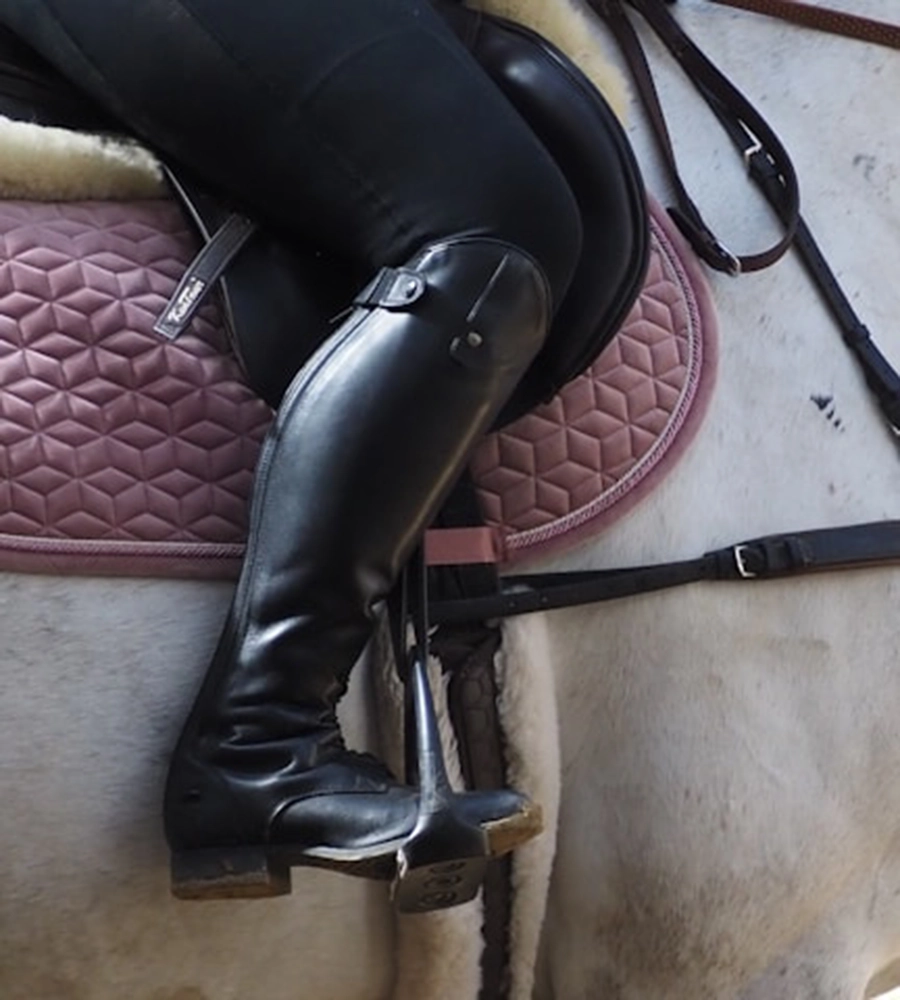
One of the most important safety features in a riding boot is the heel. A modest heel—typically between 2.5 to 5 cm (1 to 2 inches)—prevents your foot from sliding too far through the stirrup. Flat-soled shoes, like trainers or loafers, are not suitable for riding, as they increase the risk of your foot becoming trapped, especially in the event of a fall.
2. Ankle Support
Your ankles do a lot of work while riding, particularly when you’re learning how to control your leg and body movements. Look for boots that offer firm yet comfortable support around the ankle, as this will help with stability and prevent twisting or strain. Ankle support is especially vital for beginners still developing their riding position and balance.
3. Material and Weather Resistance
Traditionally, leather has been the material of choice for riding boots due to its durability, breathability, and timeless appearance. However, synthetic materials are becoming increasingly popular because they’re often more affordable, lighter, and easier to clean.
If you expect to ride or work in wet conditions, consider waterproof or water-resistant boots. Keeping your feet dry and warm is essential for comfort and preventing blisters during long days at the stables.
4. Safety and Grip
In addition to the heel, check for reinforced toes and non-slip soles. These elements provide an added layer of protection while also helping you maintain grip in the stirrups. A well-gripped sole can also make walking around the yard or stable safer and more comfortable.
Understanding the Different Types of Riding Boots
Paddock Boots
Often referred to as jodhpur boots, paddock boots are ankle-height and a popular choice among beginners. Their shorter length makes them easier to put on, and they offer great mobility and comfort. They’re also versatile—you can pair them with half chaps to create the feel and function of a taller boot. Ideal for both riding and light stable work, paddock boots are a solid starting point for any novice rider.
Tall Boots
Tall boots extend up to the knee and come in two main varieties: field boots and dress boots. These boots are typically used in more formal disciplines such as dressage, show jumping, or eventing. They offer superior leg support and a polished, professional appearance. However, they are usually more expensive and may require a break-in period, making them better suited for committed riders.
Yard Boots
Yard boots are built for functionality and comfort during stable chores, such as mucking out stalls or leading horses. While not specifically designed for riding, they provide excellent protection, grip, and warmth for daily tasks around the barn. Many riders own both riding boots and yard boots, using each pair for its intended purpose.
Budget and How Often You Ride
Your investment should reflect your riding frequency and long-term plans. For new or casual riders, a mid-range pair of paddock boots offers the ideal balance of comfort, safety, and affordability. As your passion for riding grows, you may consider upgrading to premium brands or adding different types of boots to your collection for specific activities.
The Perfect Fit: What to Watch For
Fit is one of the most important factors in choosing a riding boot. Your boots should feel secure but not tight, allowing you to wiggle your toes while offering firm support around the foot, ankle, and (for tall boots) calf.
Tips for finding the right fit:
- Always try boots on with your usual riding socks.
- Walk around and simulate mounting to test comfort and mobility.
- Check for pressure points or rubbing, which can lead to blisters.
- Remember that leather boots will soften slightly over time, while synthetic boots will maintain their shape.
Where to Shop: Quality Riding Boots from Ariat
If you’re seeking a combination of quality craftsmanship, innovative features, and style, the Ariat collection at Ayr Equestrian is an excellent place to start. Ariat is renowned for its attention to detail and ergonomic design, offering boots that cater to both beginners and experienced riders alike. Their wide selection ensures you can find a pair that fits your budget, riding goals, and personal style.
Step into the Saddle: How to Choose the Perfect Riding Boots for Beginners
Choosing the right pair of riding boots is one of the most impactful decisions a new rider can make. By understanding the differences between boot types and carefully considering factors like heel height, ankle support, material, safety features, and fit, you’ll be well on your way to a safer and more enjoyable experience in the saddle.
Your first rides should be focused on building confidence and learning—not dealing with sore feet or unsafe gear. Whether you’re preparing for lessons, casual hacks, or a long-term equestrian adventure, the right boots will give you the foundation you need to ride with comfort, control, and confidence.