Why Are We Still Building Homes That Only Fit One Stage of Life?
Our lives change. Our homes rarely do. Perhaps it's time we stopped asking families to adapt to buildings and started asking buildings to adapt to families.
Our lives change. Our homes rarely do. Perhaps it's time we stopped asking families to adapt to buildings and started asking buildings to adapt to families.
There is a question that has stayed with me for most of my adult life. Why do we keep building homes that only work for one stage of life?
For many people in the UK, the housing journey follows a familiar pattern.
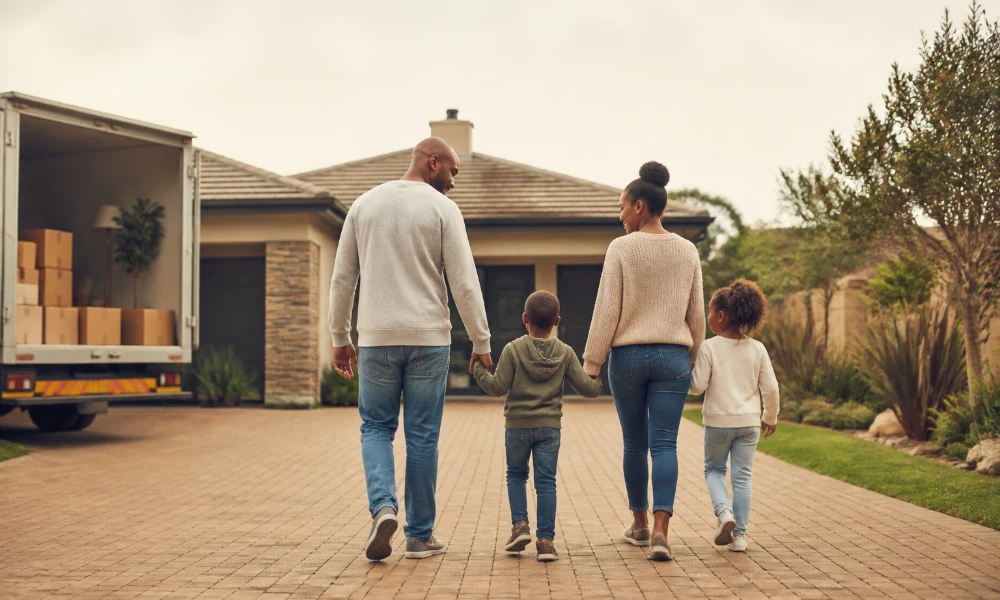
A young couple finally scrape together enough money to buy their first home. It might be a one-bedroom flat or a small starter house. It feels like a huge achievement, but almost as soon as they've unpacked, life changes.
A baby arrives. Suddenly the home feels too small and the search begins again.
Estate agent fees. Solicitors. Removal companies. Stamp Duty. The emotional stress of moving and the financial burden of climbing the property ladder all over again.
A few years later another child arrives. The children grow, schools become important, and once again the family moves to find a larger home in the right catchment area.
Then something else happens, the children become teenagers.
We often joke that teenagers spend all their time in their bedrooms, but perhaps we should ask why. Many modern homes simply aren't designed to give families different ways to live together. Teenagers crave independence but still need connection. Parents need somewhere quiet to work. Families need spaces where everyone can gather without feeling on top of one another.
Instead, many retreat behind closed doors, each scrolling their own screen, living separate lives under the same roof.
Life changes again.
The children finish education but can't afford to buy a home of their own. Increasingly they stay at home well into adulthood because the housing market gives them little alternative. The family home, once too small, can suddenly become both too crowded and badly configured.
Then the parents grow older and the children eventually move away, but the house remains exactly as it always was.
One day the father falls and injures his hip. Suddenly the stairs become a daily challenge. There is a dining room downstairs that could become a bedroom, but the cloakroom is too small to install a shower. The layout that worked perfectly twenty years ago no longer supports the family's needs.
The solution? Move again. More legal fees. More removal costs. Perhaps more Stamp Duty.
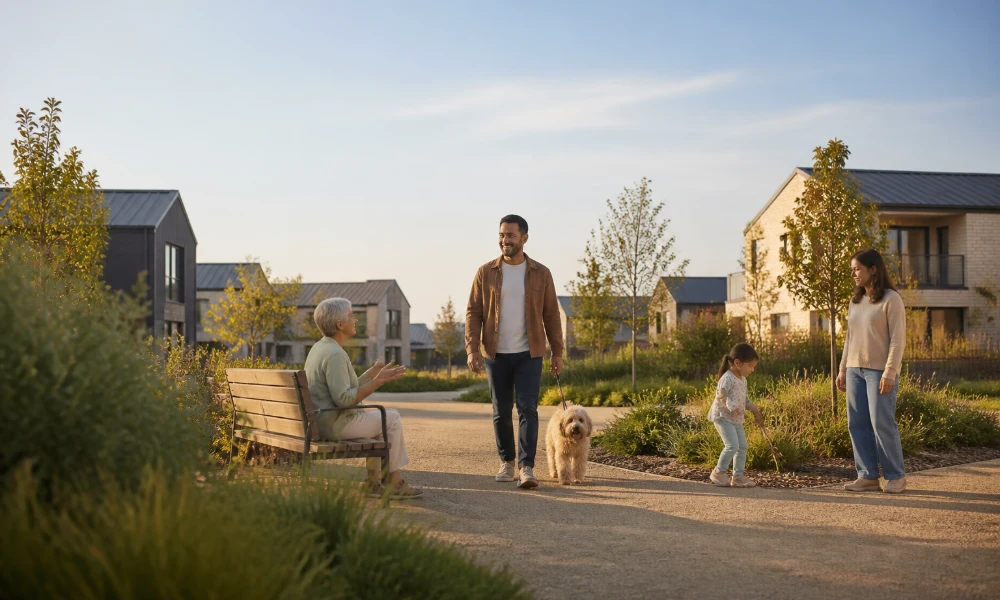
But this move is different. It often means leaving neighbours who have become friends. Leaving the walking routes that have become part of daily life. Leaving the local shop where everyone knows your name. Downsizing often means children and grandchildren can no longer stay overnight because there simply isn't the space.
The house may become smaller and life often becomes smaller too.
I've bought and sold five homes during my life and not one of them would have comfortably supported me through old age.
Today I'm searching for what I hope will be my long-term home. In theory I have complete freedom. I can move almost anywhere in the country. Yet I've spent years visiting new developments and searching online, and I still haven't found somewhere that truly feels designed for the future.
If I find a house I like, it's often miles from shops, healthcare and community. If I find a wonderful village with beautiful walks and local amenities, the homes themselves often feel surprisingly unimaginative.
Garages too narrow for modern cars, very little storage, nowhere practical for bicycles, mobility equipment or the clutter of family life.
No flexible downstairs accommodation that could adapt if circumstances changed. And I know just how quickly circumstances can change.
A close friend of mine has a daughter who developed Postural Orthostatic Tachycardia Syndrome (POTS). Almost overnight she was unable to climb the stairs. The family home couldn't adapt. She ended up sleeping on the sofa and washing in the kitchen because there was simply no suitable downstairs accommodation.
That wasn't just a housing problem as it affected the wellbeing of the entire family. When one person's home no longer works, everyone around them feels the consequences.
Perhaps that is why one memory has stayed with me for more than thirty years.
When I was sixteen, I took part in a home exchange with a family in the Netherlands. Walking around their house, I noticed something unusual. The doorways were much wider than those in most British homes.
I asked why.
The father explained that he had deliberately designed the house so that if anyone in the family ever needed a wheelchair, the home would continue to work. Every room had been planned with future accessibility in mind.
It struck me as incredibly practical.
At the time I had already spent two years working weekends in my family's estate agency. My father was a Chartered Surveyor and I was selling new homes, so property fascinated me. That Dutch home challenged everything I had seen in Britain.
I remember wondering why we weren't building homes like this ourselves.
Years later, I found myself working in social housing, helping market new developments.
And yet...
We were still building largely the same types of homes. Still not enough storage. Still homes that assumed every family looked the same. Still layouts that struggled to adapt when life inevitably changed and still allocating homes to families already living in unsuitable accommodation because there simply wasn't anything better available.
Too often our conversations centred on housing targets, planning quotas and delivery numbers.
Far less time was spent asking a much more important question.
How will people actually live here over the next fifty years?
I don't believe the answer is simply adding another downstairs room. I think we need to be far more ambitious.
Perhaps we need to throw away many of the assumptions that have shaped British housebuilding for generations and start again.
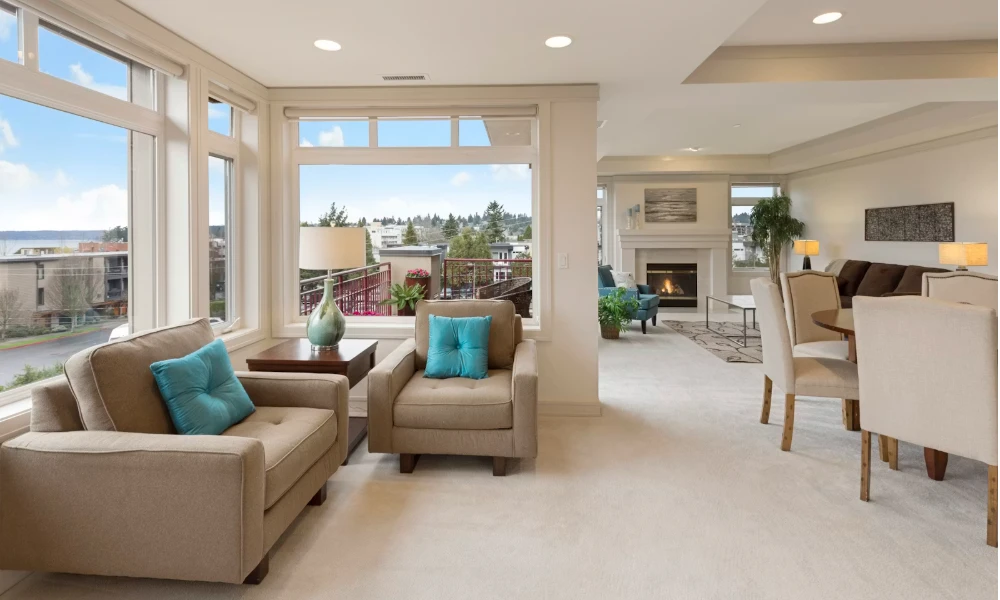
Imagine homes with rooms that can change purpose without major building work. Movable walls. Plumbing designed so bathrooms can evolve. Built-in storage that keeps clutter under control.
Garages that actually fit modern cars.
Flexible living spaces that can become a home office, a nursery, a teenage den, a downstairs bedroom or accommodation for an ageing parent.
Perhaps even homes that grow and adapt with life's changes. Homes that recognise that life is unpredictable. Because life always changes.
The question is should our homes be allowed to change with it.
Our population is ageing and people are living with long-term health conditions for longer. Young adults are staying at home later. More people work from home than ever before and families are more diverse than at any point in history.
Yet many of the homes we continue building assume life follows a neat, predictable pattern.
It doesn't.
The homes we build today will still be standing long after today's planning policies have been forgotten. So perhaps it's time we stopped measuring success by the number of homes we build.
Instead, let's ask a different question.
Will this home still support the people living in it twenty, forty or even sixty years from now?
Because a truly future-proof home isn't simply energy efficient or filled with smart technology. It's a home that grows alongside the people who call it home.
How would you want your home to adapt as your life changes? What would you design differently if you could start with a blank sheet of paper?
Let's start imagining the homes future generations deserve.
Filed underFamily & parenting, Home & garden sanctuary

About the author
Rachel BransonFounder & Editor in Chief
With over 30 years in publishing and a background in Naturopathic Medicine, she has made it her mission to challenge mainstream health narratives and empower people to take control of their wellbeing. Now expanding her vision across the Atlantic, Rachel is bridging UK and US audiences with inspiring stories, trusted insights, and pioneering partnerships that align with a new era of health innovation.