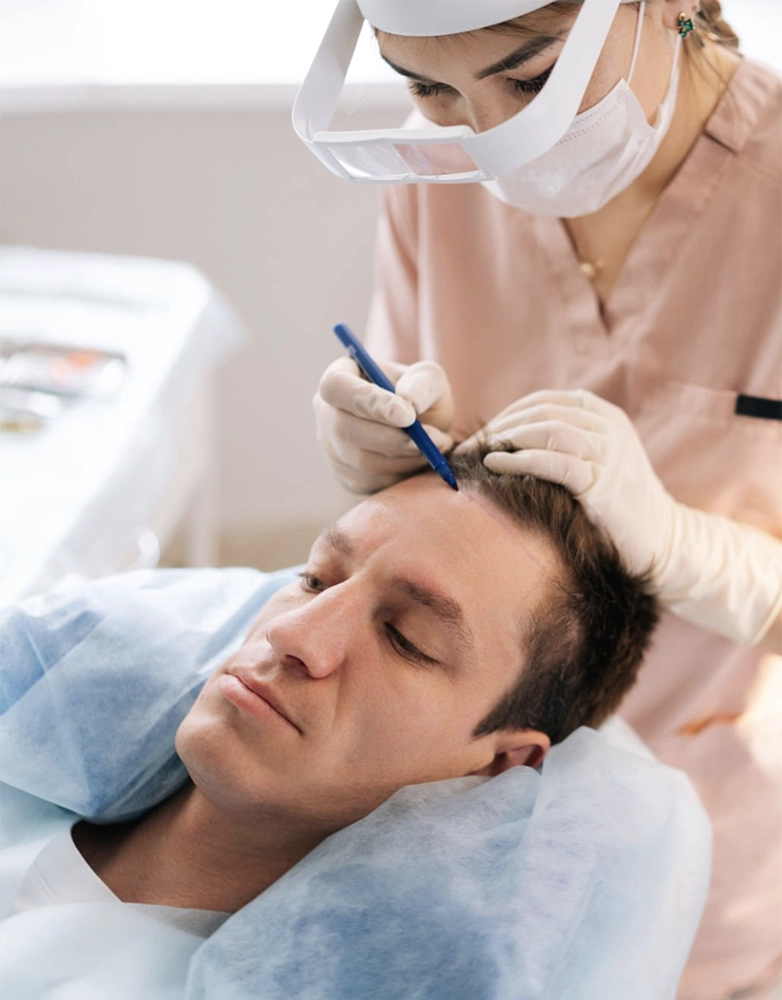
Hair transplant is frequently regarded as the ultimate treatment for thinning hair, but it is not the best option for everyone. If you’re experiencing early hair loss, don’t know what’s causing it, or aren’t ready for surgery, the right non-surgical plan can help you protect, thicken, and visually improve your hair. Alternatives to hair transplants, such as the Calecim Professional Advanced Hair System, which is intended to stimulate follicles, enhance scalp health, and prevent hair loss, can be considered.
Signs You’re Not Ready for a Hair Transplant
Sign 1: Your hair loss is still rapidly progressing or unstable
Hair transplants are most effective when your hair loss pattern has stabilized. If you shed quickly, you risk chasing the pattern over time, which can lead to patchiness and the need for additional surgeries. Even after successful surgery, native hair may continue to thin, leaving new gaps around transplanted grafts. Medical therapy may be recommended first to stabilize the loss.
Sign 2: You don’t have a clear diagnosis (or the cause isn’t ideal for surgery)
Not all forms of hair loss are suitable for transplantation. Alopecia areata (autoimmune), telogen effluvium (shedding after stress, illness, or childbirth), nutritional deficiencies, and scalp inflammation frequently necessitate a medical evaluation and stabilization first. The American Academy of Dermatology emphasizes that effective treatment begins with determining the cause and recommends consulting a board-certified dermatologist.
Sign 3: Your donor supply (or expectations) does not match your goals
Transplants move hair rather than creating new follicles. If you have limited donor areas on the sides and back of your scalp, or if you expect “teenage density,” surgery may not be the best option. The American Society for Dermatologic Surgery (ASDS) cautions that candidates must have healthy donor hair, and many patients will require multiple surgeries to achieve the desired coverage.
Sign 4: You cannot commit to downtime and aftercare
Transplants are typically one-day procedures, but aftercare is necessary. Protect fragile grafts for ~2 weeks, avoid strenuous exercise at first, and expect transplanted hairs to shed before regrowth begins. The NHS outlines typical milestones (bandage removal in 2-5 days, gentle washing by day 6, early shedding in the coming weeks, visible regrowth in 4 months, and full results in 10-18 months).
Sign 5: Your budget and risk tolerance do not fit with surgery
A high-quality transplant is an investment, and while complications are rare, they can occur. Hair transplants in the UK cost between £1,000 and £30,000, depending on the extent, technique, and clinic. There are also risks associated with hair transplants, such as bleeding, infection, and scarring.
If you’re putting off surgery or simply want to maximize non-surgical benefits, look for a solution that promotes follicle health, is safe for many types of hair loss, and is simple to use.
Calecim Professional Hair Loss Solution: A Non-Surgical Alternative to Hair Transplants.
CALECIM® Professional Advanced Hair System (AHS) is a stem cell hair growth serum that contains the brand’s proprietary PTT-6®, a conditioned medium high in growth factors, cytokines, and exosomes. Calecim AHS serum is frequently combined with microneedling or a derma stamper to penetrate deeper into the scalp, resulting in less shedding and fuller-looking hair.
The Calecim Advanced Hair System has been clinically validated to provide measurable benefits for hair health. It shows a 24% increase in follicle cell production, which helps hair grow stronger and more actively, as well as a significant 30-fold decrease in scalp inflammation, making it an ideal environment for hair recovery and health. Users report seeing visible results within six weeks, with no side effects.
Quick Questions and Answers
Q: Are stem cell hair growth serums a viable alternative to transplants?
In many cases of diffuse thinning or early loss, hair loss solutions such as Calecim Advanced Hair System can stimulate regrowth and improve thickness, making them viable alternatives to surgery.
Q: How long until you see results with Calecim?
The majority of users report visible improvements in hair density and coverage during or shortly after the six-week intensive regimen.
Q: Are there side effects to worry about?
Calecim’s Advanced Hair System is noninvasive and has no known side effects, making it a safer alternative to surgical or medicinal options.
Conclusion
A hair transplant isn’t always the best option, especially if your hair loss is progressing, your diagnosis is unclear, or you’re not prepared for surgery and recovery. Rushing into it can result in disappointment or additional procedures down the road. Instead, consider nonsurgical alternatives such as the Calecim Professional Advanced Hair System. Calecim has been clinically proven to reduce shedding, increase follicle activity, and improve scalp health, all with no downtime or side effects.
If you aren’t ready for surgery, Calecim provides an effective and safe alternative.
Explore the CALECIM® Professional Advanced Hair System to see if its 6-week program matches your objectives and your clinician’s recommendations.
- About the Author
- Latest Posts

Our Editorial Team are writers and experts in their field. Their views and opinions may not always be the views of Wellbeing Magazine. If you are under the direction of medical supervision please speak to your doctor or therapist before following the advice and recommendations in these articles.