There is a particular kind of unease that arrives quietly in the early years of parenthood. It doesn’t belong to the sleepless nights of newborn life — those are well-documented, anticipated, almost ritualised. This unease arrives later, often at the nursery door or the school gate. It shows up as a low-grade question that hums beneath everyday routines: Is this normal? Is this serious? Am I overreacting — or not reacting enough?
For many parents, the transition from infancy to early childhood marks a strange gap in support. Once the baby books are shelved and health visitors fade into the background, families find themselves navigating fevers, rashes, coughs and call-backs largely alone. The internet offers answers in abundance, but rarely reassurance. Knowing what to do is one thing. Knowing when to worry is another.
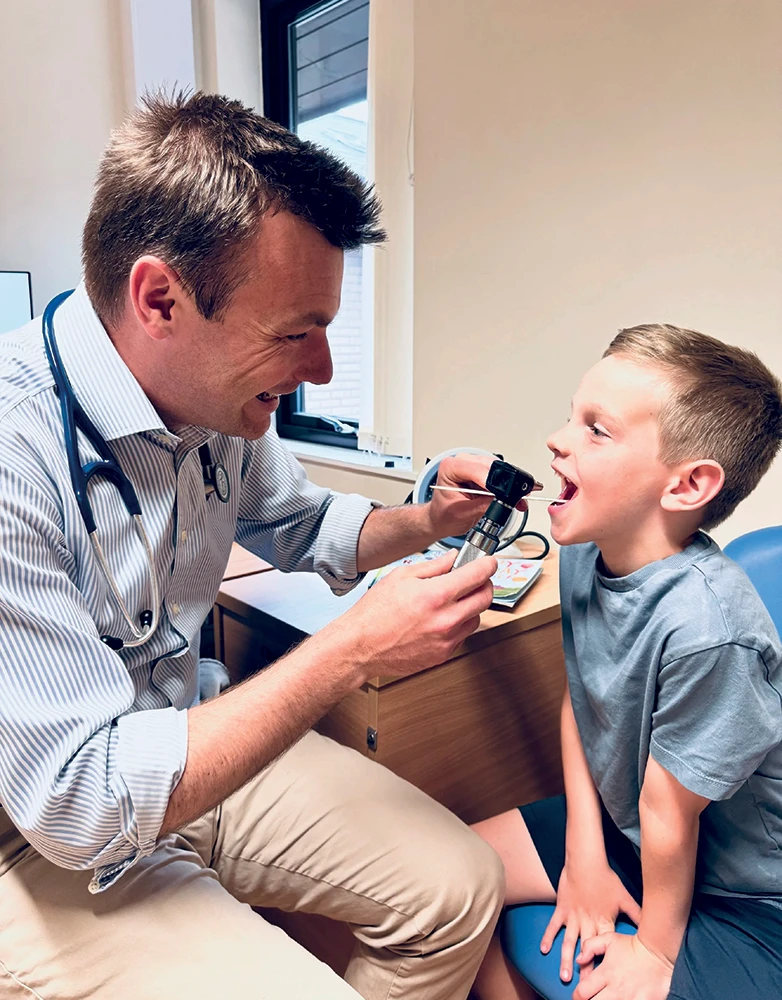
It was in this quieter, less spoken-about phase of parenting that Dr Ciaran Conway, a UK GP and clinical academic, found himself unsettled. Like many first-time parents, he and his wife were well supported in the early months. But as their child grew — and nursery bugs became a regular feature of family life — something felt missing.
“There was so much support at the start,” he reflects, “but once children reach nursery or school age, parents are often left to figure things out on their own. And that’s when illness becomes frequent — and frightening.”
What struck him most wasn’t a lack of information, but a lack of orientation. Parents didn’t necessarily need more facts; they needed a calm framework for understanding what they were seeing in front of them. When to watch. When to wait. When to seek help — and when to trust that the body is doing what it knows how to do.
The space between panic and reassurance
In an age shaped by search engines and instant answers, certainty can feel deceptively close. But Dr Conway is acutely aware of how quickly online information can escalate anxiety rather than settle it. Symptoms blur together. Worst-case scenarios rise to the top. Context is lost.
“There’s a huge amount of information out there,” he says, “but knowing what can be trusted — and how it applies to your child, in this moment — is incredibly difficult.”
What parents often carry, quietly, is the weight of responsibility without confidence. A sense that the wrong decision could have consequences — for their child, their job, their family rhythm. Missed workdays. Late-night NHS website checks. The uneasy judgement of whether a GP visit is necessary or excessive.
It was from this lived tension that Nurture Knowledge was born — not as a solution to childhood illness, but as a steadier way of meeting it.
Knowledge as reassurance, not control
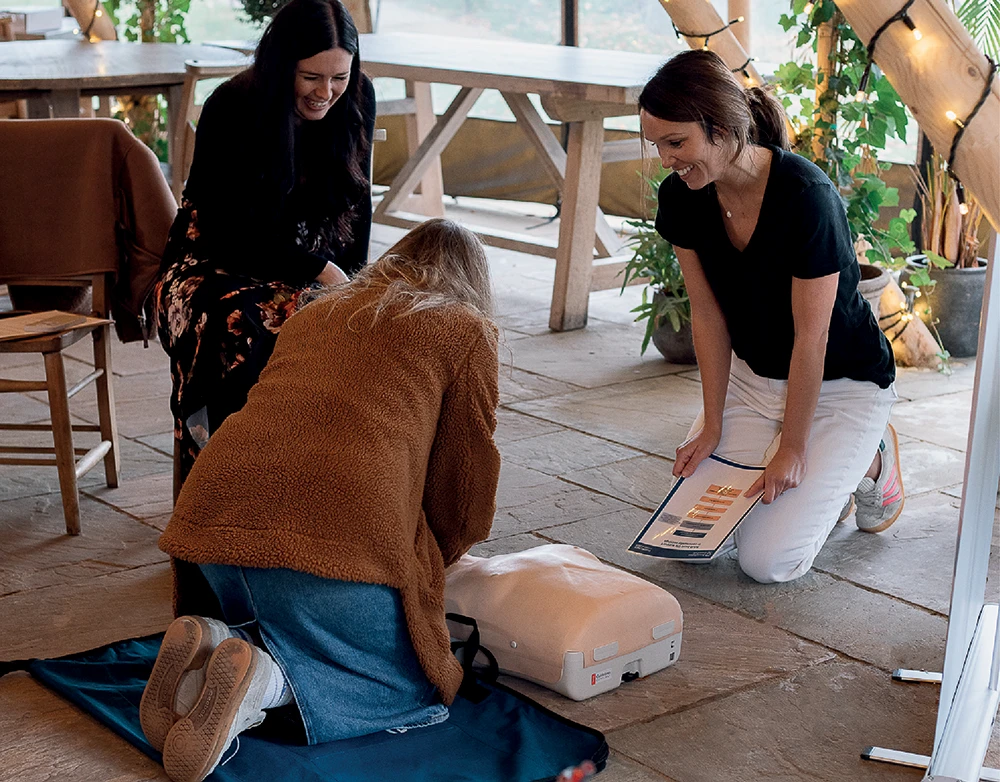
Nurture Knowledge offers GP-led, evidence-based courses for parents of children aged one to five — a developmental window where independence grows, immunity is tested, and parental confidence often wavers. The sessions cover everything from common infections to rare but serious conditions, as well as practical skills such as CPR and choking response.
Yet the intention is not to turn parents into clinicians, nor to encourage constant vigilance. Quite the opposite.
“The aim is to help parents feel calmer,” Dr Conway explains. “To understand what’s common, what’s concerning, and what genuinely needs medical attention — so they can make informed decisions without panic.”
The courses are deliberately unhurried. Parents are invited to ask questions — the kind that often feel too small, too obvious, or too late when faced with a ten-minute appointment. There is time to explore uncertainty rather than rush past it.
In a healthcare culture increasingly stretched for time, this space feels quietly radical.
When wellbeing includes the workplace
An unexpected dimension of Nurture Knowledge has been its relevance beyond the home. Many employers have recognised that childhood illness doesn’t stop at the office door. Parents missing work to care for sick children, or distracted by unresolved worry, affects not only families but organisational health too.
By offering courses within workplaces, employers can support staff in a way that acknowledges the reality of modern working parenthood — without stigma or pressure to “cope better.”
For Dr Conway, this isn’t about productivity metrics or reduced GP visits, though these may follow. It’s about recognising parents as whole people.
“If parents feel more confident and supported, that ripples outwards,” he says. “At home, at work, and in how they engage with healthcare.”
A quieter kind of confidence
What parents report after attending these sessions is not mastery, but steadiness. A sense that they are no longer alone with their questions. That uncertainty doesn’t always require urgency — and that seeking help, when needed, is part of good care, not failure.
In many ways, Nurture Knowledge sits comfortably within a broader understanding of wellbeing — one that values orientation over optimisation, reassurance over control. It acknowledges that parenting is not about getting it right every time, but about feeling resourced enough to meet what arises.
As Dr Conway puts it, “Children will get ill. That’s part of growing up. The question is how supported parents feel when it happens.”
Sometimes, wellbeing begins not with answers — but with the quiet relief of knowing which questions matter.
DISCOVER: nurtureknowledge.co.uk
- About the Author
- Latest Posts

Rachel Branson is the Founder of Haywood Media and Editor-in-Chief of Wellbeing Magazine, where she has spent more than twenty years exploring the relationship between health, wellbeing and the environments in which we live. Her passion for housing began growing up in her family’s estate agency, where her grandfather, father and uncles worked as a Chartered Surveyor specialising in commercial, residential property and new homes. She later became Head of Communications for a social housing provider, working closely with communities and new developments. Bringing together experience across property, housing, communications and wellbeing, Rachel is developing a new body of work focused on how homes and neighbourhoods can be designed to support healthier, happier lives through every stage of life.