






Rethink Your Approach to Nutritional Supplements with Algae Tablets
-
- January 30, 2026

Can algae supplements replace conventional supplements?
Nutritional and dietary supplements, such as daily multivitamins, vitamin B complexes, and omega-3 fish oils, are staples in many a medicine cabinet. People take these kinds of supplements every day to support various aspects of their health and wellness. They often rely on them to fill nutritional gaps or to support wellness goals.
However, dietary supplements like these have their limits. They’re limited in their nutritional value. Some even come with risks. What if you could support your health and wellness without relying on conventional supplements, thanks to a different approach to filling nutritional gaps or supporting wellness goals? Here’s where spirulina and chlorella supplements come into play.

Reaching the Limits of Dietary Supplements
With so many nutritional and dietary supplements on the market today (the FDA estimates there are over 100,000 on sale currently), you’d think they’d be anything but limiting. One of their biggest limiting factors, however, is the nutritional value of any given supplement.
Conventional supplement tablets, capsules, gummies, and powders are often hyper-focused. You get what you get. If you only want a vitamin B complex, that’s one thing. If you’re interested in taking a well-rounded approach to nutrition, it usually means filling your medicine cabinet with many supplements.
Supplements are also limited in how, how often, and how many you can take. They may have usage guidelines (take with food, don’t take with food, take with water, etc.). Ignoring these guidelines might reduce the supplement’s effectiveness, as it may not be properly absorbed.
(There’s also a lot to be said about the efficiency at which conventional supplements are absorbed, but that’s a topic all its own.)
Certain supplements also pose a risk if you take too much. There is a point at which taking a lot of a specific supplement, or taking a lot of supplements in general, becomes hard on your organs and your body as a whole. They end up having the opposite intended effect. Overdoing vitamin D, for example, may lead to bone loss.
Long story short, there’s much to consider. Ideally, you should work closely with a healthcare or dietary specialist (someone with credentials to back up their recommendations) when taking supplements.

Overcoming the Limits of Conventional Supplements with Algae
To call spirulina and chlorella supplements “supplements” is a misnomer. In fact, algae supplements are whole-food sources. More than that, they’re single-ingredient whole-food sources. Most supplements, even single vitamins (like vitamin C), contain several ingredients, including sweeteners and binders.
This information sets the stage for how spirulina and chlorella supplements overcome the limitations of conventional options. It’s also important to understand what’s in the algae that make up spirulina tablets and chlorella tablets. As a single-ingredient whole food, algae is incredibly nutrient-dense. In spirulina tabs, you’ll find:
- Protein (more per serving than many conventional protein sources)
- Essential fatty acids (including DGLA, GLA, ALA, and DHA)
- Phytonutrients (including chlorophyll, glutathione, and superoxide dismutase)
- Amino acids (including all 9 essential amino acids, plus more)
- Vitamins (including A, E, K1, K2, and niacin)
- Minerals (including magnesium, potassium, and zinc).
This is just the tip of the iceberg when it comes to the nutritional density of spirulina tabs. The list of vitamins and minerals numbers over 40. Looking at chlorella tabs, you’ll find many of the same nutrients in different ratios.
You’ll also find a significant amount of chlorophyll. Chlorella contains more chlorophyll than any other food source. You’d have to eat a lot of spinach to come close!
What Does This Mean in the Context of Conventional Supplements?
With all of this in mind, what does this mean in a practical sense? For many people, it means they’ll replace most (though not all) of their conventional supplements with chlorella and spirulina tablets. A full cabinet of supplements, including vitamins, minerals, fish oil, and antioxidants, can be replaced with just one or two canisters of spirulina and chlorella supplements.
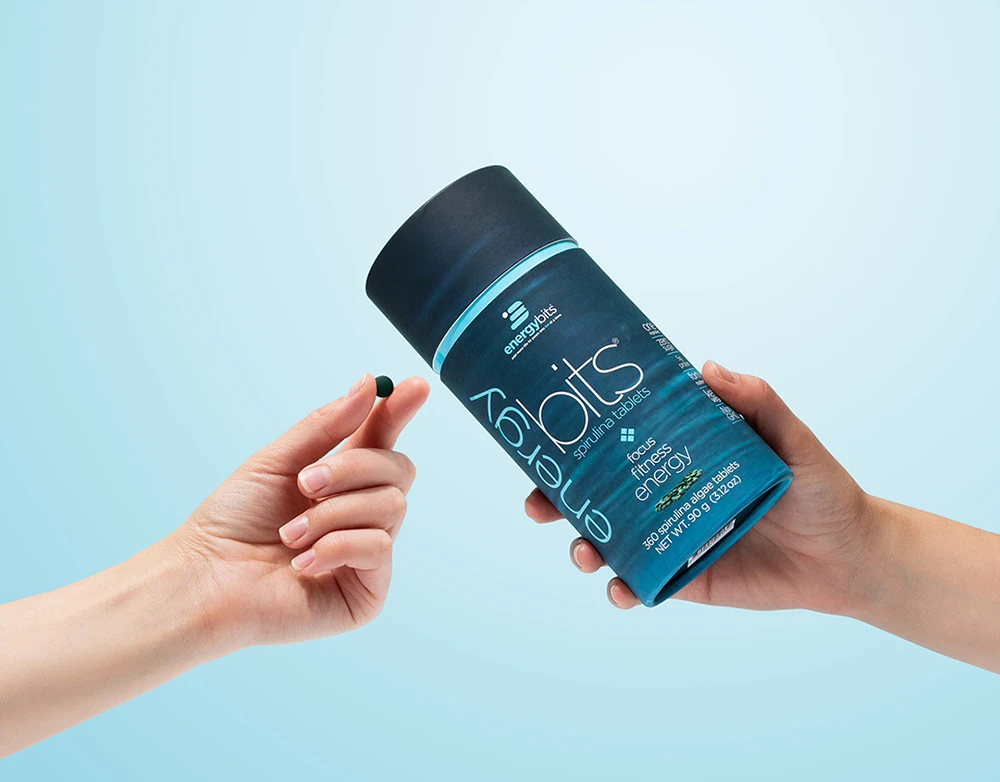
On top of that, if you want to fill nutritional gaps or support nutritional goals, algae tablets may help you accomplish those, and then some. Algae tablets offer well-rounded nutrition in a single, convenient, nutrient-dense, and very small but mighty package. You can also eat as many as you want, when you want. Have 10, have 30. Because algae is a food, there aren’t the same use guidelines or risks associated with it.
Adding spirulina tabs, chlorella tabs, or even blended spirulina chlorella tablets to your daily routine helps fill potential nutritional gaps from day one. This makes for one less thing you have to think about.
If you’re working on specific nutritional goals (or related ones), algae tablets can play the role once filled by conventional supplements. If you’ve been taking fish oil and vitamin B complexes for brain health, algae can serve a similar function. Spirulina tablets are chock full of brain-nourishing compounds (essential fatty acids, B vitamins, and so on).
If you’ve been taking antioxidant supplements to boost your immunity, you can also swap them for algae tablets. Chlorella tablets are also full of immune-supporting nutrients. This includes antioxidants, vitamins, minerals, and more, which can give your complex immune system and related systems a leg up.
The Nutritional Scope of Algae Tablets is Significant
While algae tablets can help you target specific goals or concerns, like conventional supplements, they offer a more well-rounded approach. They can be ideal for people with diverse concerns or at different stages of life. The nutritional scope of algae tablets is expansive.
For example, a college athlete can take advantage of the nutritional wealth of a serving of spirulina tablets before a workout or before hitting the field or court. It all comes back to the nutrient density of algae. Algae tablets can help support an athlete’s energy, stamina, and endurance (without any sugar, caffeine, or other chemicals).
Another example: A woman in perimenopause (or even menopause). During this phase of life, for several reasons, including hormonal fluctuations, women can begin to lose bone density. They may also find it hard to focus and experience persistent brain fog. They may also feel less energetic.
Many of these concerns can be attributed to nutritional gaps. Algae tablets can fill these gaps and, to a degree, balance things out. Spirulina tabs may help support bone health and brain health. Blended spirulina chlorella tablets may even promote a greater sense of vitality.
Where Does That Leave Us?
Algae can provide many benefits for our dietary needs. If you want to take a more well-rounded approach to your daily nutrition, and you want to say goodbye to a cabinet of supplements, it’s time to say hello to algae!
Yes, algae supplements can replace conventional supplements!
About ENERGYbits® Inc.
ENERGYbits® was created to help people feel and be their best through the power of algae nutrition. Founded by Catharine Arnston after her sister was diagnosed with cancer, Catherine’s research pointed to algae, the most alkaline, nutrient-dense food in the world. Today, ENERGYbits® spirulina tablets and RECOVERYbits® chlorella tablets are “bits of nutrition” packed with essential nutrients your body needs to thrive. Designed to fit seamlessly into your daily routine, these tiny tablets may support your health and wellness goals, all from one natural source.
Take advantage of the many benefits of algae at https://energybits.com/
- About the Author
- Latest Posts

Our Editorial Team are writers and experts in their field. Their views and opinions may not always be the views of Wellbeing Magazine. If you are under the direction of medical supervision please speak to your doctor or therapist before following the advice and recommendations in these articles.