Scent for many people is about more than just a fragrance, about how something smells. Scents are intrinsically linked to memories and can invoke feelings. One whiff of a certain fragrance can transport you to a completely different time, place and emotion. And this is all down to the way our brains process smells.
When the airborne particles from a scent interact with the olfactory bulb, a distinct pathway bypasses the thalamus and directly connects to the amygdala and hippocampus, the areas of the brain responsible for protecting emotions and storing long-term memories.
It all makes sense now, doesn’t it? Why, when you smell bread baking, you’re transported to a nice memory of home baking with relatives or stepping inside a bakery as a child or why some fragrances can send a shiver down your spine even if you don’t know why.
It makes sense that, within your own home, you want the fragrance to make you feel good. To envelope you in happiness. And within your home environment thet fragrance can do this, but you need to be intentional about how you use fragrance, what type of fragrance you use to help you build up something unique to your life and where you live to make you feel good each and every day.
Here’s how to do exactly that.
Match the Fragrance to Room Use
The different rooms in your home hold scent differently. This means using scent the same way throughout won’t give you the result you need. Kitchen carries oils, and food smells that can settle into surfaces, while bedrooms can trap scent in soft furnishing and fibres and hold them for longer periods.
This means you need to adjust how you fragrance each and every room.
The kitchen, for example, you need something sharp to cook through cooking smells, ideally placed at the entrance of the room for maximum impact when you enter the kitchen. In the bathroom, however, you need to focus on lighter scents placed by the bathroom door or window to refresh the space quickly rather than having it sit damp in the air.
As you can see, it’s not always about the fragrance, but how the room is used that influences how you add fragrance to it.
Place Fragrance Where It Will Circulate
Following on from the above point, placement is also an important factor. Basically, if you’re putting the candle in the middle of a large room and expecting it to work wonders, you’re going to be highly disappointed.
You want to be able to smell it as you move through the room. In places where it naturally shifts. This is near doorways, at the ends of hallways beside windows that are opened regularly, etc.
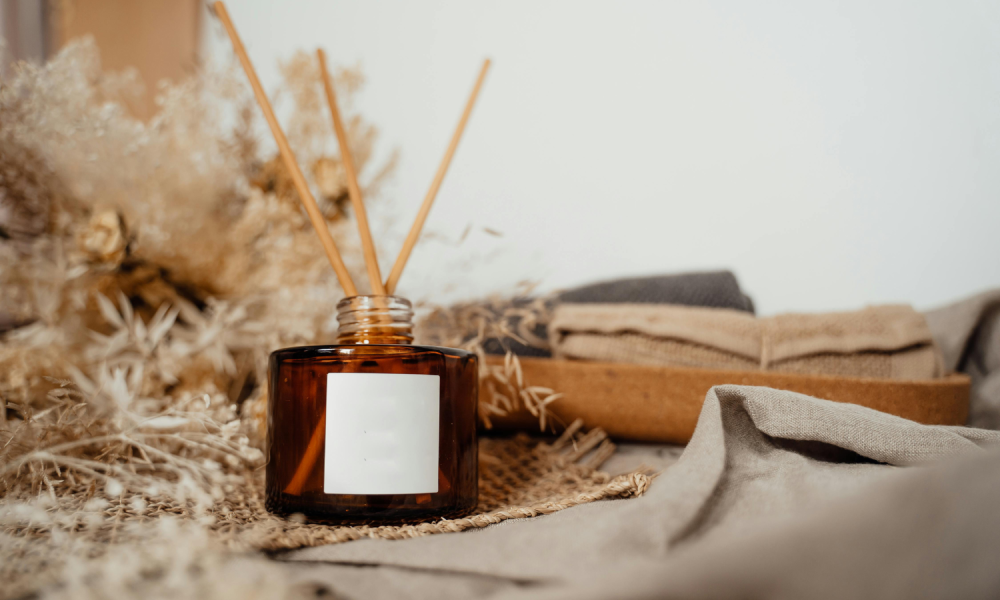
In real life, this looks like a diffuser placed by your front door so that the fragrance is spread when the door opens, and fresh air moves through the hallways to distribute the fragrance. It’s about allowing you to travel with you throughout your home or the room instead of sitting still in the air, not doing so much.
Combine Multiple Light Sources, Not One Strong One
A common mistake people can make when adding scent to their home is thinking they need to replicate the accent throughout by reinforcing a strong fragrance in each room. This couldn’t be further from the truth.
The trick here is not to rely on one source but to spread it evenly across the room. This is where using 100% natural home fragrances comes into the picture. You can distribute the scent across a living room, for example, by using candles, diffusers, sprays and essential oils in the same fragrance in different parts of the room, a candle on a shelf reinforced by a spray of the same fragrance on soft furnishings white a diffuser sits by an open window where the scent is gently wafted around the room with the breeze. A layered scent is much more effective than relying on one source alone
Choose Scents Based on Feelings
The title of this post is about making your home smell and feel happy. So the scents you use need to lean into this, too. It’s not about “certain fragrances” here; it’s about what makes you feel good, and this will be different for each and every person.
Remember what makes you feel happy and relaxed in the kitchen might be different from what you want in the bedroom or living room, so factor this into your choices too. Each room requires a different scent based on how you want to feel within each space.
If you want a room to feel calmer, for example, in your bedroom, slightly warmer scents might work better at a lower intensity, or a light, clean, fresh scent can be perfect for your living room, where you want to feel fresh.
Keep A Consistent Base Across the Whole House
A base scent isn’t just one product. It’s a consistent note that runs through the house; it might be that you use the same diffuser in hallways and shared spaces, while you use a lighter version in smaller spaces like bathrooms and offices.
The idea here is not to have everything identical; you can have slight variations, but people should recognise the familiarity in each room, and the scent should tie together like the decor in your home, where you have one base colour running through each room.
But the last thing you want to be doing is changing it frequently, especially if you’re trying to cultivate a unique scent in your home. Find a base note you’re happy to live with and build it up or down from here as appropriate for your home.
Using fragrance in your home is about more than covering up nasty smells or creating an ambience to relax each night, it’s about finding a signature that makes you feel good, helps you create new happy memories and acts like it’s the icing on the cake that pulls everything together and creates a more settled atmosphere as you know what to expect when you come home each day.
- About the Author
- Latest Posts

Our Editorial Team are writers and experts in their field. Their views and opinions may not always be the views of Wellbeing Magazine. If you are under the direction of medical supervision please speak to your doctor or therapist before following the advice and recommendations in these articles.