Most people associate safety kits with disasters: earthquakes, hurricanes, and extended power outages. Those scenarios are worth preparing for, but they’re not the ones that most commonly require a safety kit.
The situations that arise most often are far more ordinary: a minor car accident, a bad cut while hiking, a sudden allergic reaction, a medical episode in a public place with no one nearby who knows your history.
A personal safety kit built for everyday life looks different from a disaster preparedness kit. It’s smaller, more portable, and focused on the situations that are actually likely to happen rather than the ones that dominate preparedness media. This guide covers what belongs in one, organized by the type of situation each item addresses.
First Aid Supplies Sized for Real-World Injuries
The injuries that happen most frequently in everyday life are not dramatic. They’re cuts, burns, sprains, blisters, and insect stings. A first aid section of a personal safety kit doesn’t need to be comprehensive enough to handle field surgery. It needs to handle the things that actually happen and prevent them from becoming worse.
Wound Care Basics
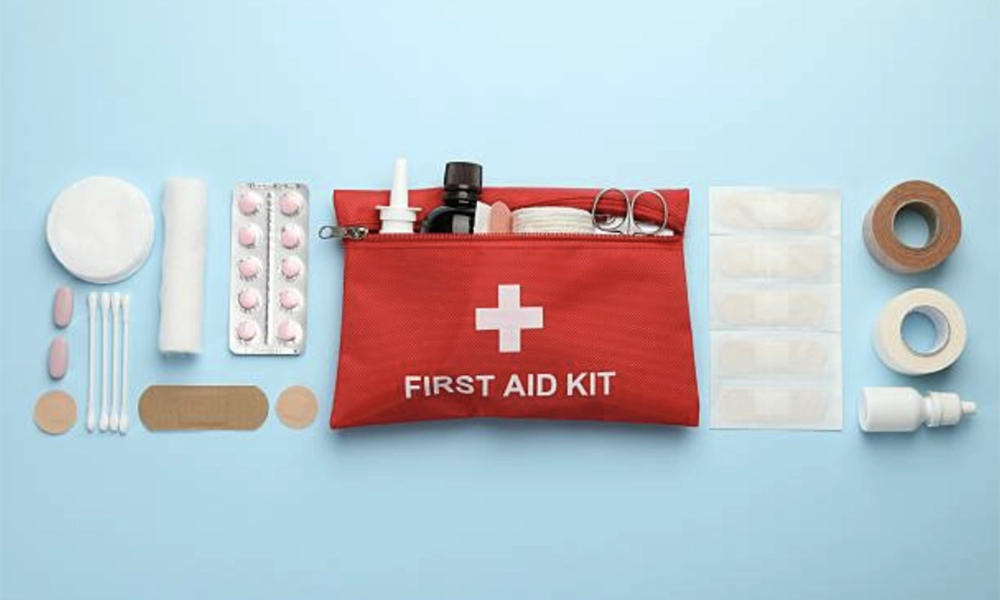
Adhesive bandages in multiple sizes cover the vast majority of everyday cuts and abrasions. Standard box assortments tend to include too many small bandages and not enough medium and large ones, so it’s worth supplementing with a few larger wound closure strips for cuts that need more support than a standard bandage provides.
Beyond bandages, the core wound care items worth including are:
- Sterile gauze pads and medical tape for larger wounds or those in awkward locations
- Antiseptic wipes or a small bottle of wound wash for cleaning before dressing
- Tweezers for splinters, thorns, and debris
- Medical-grade scissors for cutting tape or clothing, if necessary
- Disposable gloves, both for self-protection and to avoid introducing bacteria into a wound
Antibiotic ointment in a small tube rounds out the wound care section and takes up almost no space.
Pain and Reaction Management
A small supply of over-the-counter medications covers a surprisingly wide range of everyday situations. Ibuprofen or acetaminophen for pain and fever, an antihistamine for allergic reactions ranging from mild to moderate, and antacids for digestive discomfort are the three most consistently useful options.
For anyone with a known severe allergy, an epinephrine auto-injector belongs in this section as the highest-priority item in the entire kit. No other item in a personal safety kit has a more direct life-saving function for the people who need it.
Identification and Medical Information That Travels With You
A first aid kit handles injuries. But some of the most consequential moments in a medical emergency have nothing to do with bandages: they involve the information a first responder or bystander needs to help effectively. This is where emergency accessories focused on identification and communication become as important as any physical supply.
Personal Medical Information Card
A folded card kept in a wallet or small pouch alongside the kit can carry more information than most wearable identification allows. The card should include:
- Full name and date of birth
- Blood type
- Known allergies and documented reactions
- Current medications with dosages
- Chronic conditions relevant to emergency treatment
- Primary care physician name and phone number
- Two emergency contacts
The card should be printed or written clearly enough to be read quickly under stress, and updated whenever any of the information changes. Laminating it adds durability without adding bulk.
Wearable Medical Identification
For people managing conditions that affect emergency response, a card alone is not always sufficient. A wearable ID ensures the information is visible even when a bag or wallet is not accessible. Medical ID bracelets are the most common format, but they suit some people better than others. Clip-on tags, shoe IDs, and similar options serve the same function for those who prefer them.
The most critical information to include on any wearable ID is the condition, any contraindicated treatments (for example, medications that must not be given due to interactions or allergies), and a contact number. Keeping this information concise makes it more likely to be read and acted on correctly.
Navigation and Communication Tools for When Technology Fails
Smartphones handle most navigation and communication needs in ordinary life, but smartphones run out of battery, lose signal, and break at inconvenient moments. A personal safety kit that relies entirely on phone functionality has a significant single point of failure.
Power and Connectivity Backups
A compact portable power bank is one of the highest-value items in any everyday safety kit relative to its size. Modern power banks small enough to fit in a jacket pocket can fully charge a phone once or twice, which is enough to cover most scenarios where battery life becomes a safety issue.
For anyone who drives regularly, a car charger kept in the vehicle covers the gap in most road-based scenarios. The portable bank covers situations where the car is not accessible.
Physical Maps and Written Contact Information
GPS navigation works until it doesn’t. A small printed map of the local area, or the areas most frequently traveled, takes up almost no space and works without a signal or battery. The same logic applies to contact information: a short list of key phone numbers written on paper means those numbers remain accessible even when a phone is locked, dead, or lost.
This is one of the most frequently skipped steps in everyday preparedness, partly because phones have made it feel unnecessary. The backup is needed precisely in the situations where the phone stops working, which are the same situations where having a backup matters most.
Safety Tools for Personal Security and Situational Awareness
Personal safety kits are often discussed purely in medical terms, but physical security is a legitimate part of everyday preparedness for many people, particularly those who commute, travel alone, or work in environments where security risks are higher.
Personal Alarms
A personal alarm is a small device that emits a loud siren sound when activated, typically by pulling a pin or pressing a button. They are legal in virtually all jurisdictions, require no training to use, and serve two functions: drawing immediate attention to a situation and potentially deterring someone from continuing a threatening approach.
Personal alarms are among the most practical emergency accessories for people who walk alone at night, use public transportation regularly, or work in isolated settings. They are small enough to attach to a keychain and require no thought in the moment of use.
A Basic Flashlight
A small, durable flashlight is one of those items that seems unnecessary until it’s needed. Power outages, poorly lit parking areas, looking under a car seat in a dark vehicle, signaling for help: these are all situations where a reliable light source matters. Phone flashlights are adequate for casual use but drain battery quickly and are not ideal for extended use in a genuine emergency.
A compact LED flashlight with a spare battery, or a rechargeable model kept topped up alongside a power bank, covers this need without adding significant weight to a kit.
Practical Supplies That Handle the Situations Nobody Plans For
Beyond medical and security items, a few general-purpose supplies address the wide range of smaller situations that everyday life produces. These are the items that don’t fit neatly into a single category but consistently prove their usefulness.
Multi-Tool or Compact Knife
A quality multi-tool covers a remarkable number of practical situations: cutting rope or packaging, tightening a loose screw, opening a can when no opener is available, and cutting a seatbelt in a vehicle emergency. Compact folding multi-tools from established manufacturers are small enough to carry in a bag without adding noticeable weight.
Check local regulations before carrying a multi-tool or knife in certain locations, as blade length restrictions vary by jurisdiction.
Emergency Thermal Blankets
Mylar thermal blankets fold down to roughly the size of a deck of cards and can prevent hypothermia in situations where temperature becomes a factor: a breakdown on a cold night, an extended wait outdoors in poor weather, or any scenario where warmth needs to be maintained while waiting for help. They reflect a significant portion of body heat back to the wearer, which makes them effective despite their minimal weight and size.
A two-pack takes up almost no space and is worth including in any kit intended for use in areas with variable weather or significant time spent outdoors.
Cash in Small Denominations
Electronic payment systems fail, phones run out of battery, and card readers go offline. A small amount of cash in small denominations covers the gap in a surprising number of everyday situations: bus fare, a pay phone, a purchase at a vendor who doesn’t accept cards, or a tip to someone who provides unexpected assistance.
The amount doesn’t need to be large. Enough for transportation and a meal covers most realistic scenarios where cash becomes necessary.
Putting the Safety Kit Without Overcomplicating It
The supplies described above fit comfortably into a small pouch or dedicated compartment of a bag. A kit that’s too large or heavy to carry consistently is functionally useless, since it tends to get left behind on precisely the days when it would be needed.
The right container depends on how the kit will be carried. A zippered nylon pouch works for bag-based kits. A compact hard case offers more protection for items that need to stay sterile or intact. Some people maintain two versions: a smaller one for everyday carry and a more complete version kept in the car.
Reviewing the contents every few months and replacing anything expired or depleted keeps the kit functional over time. The goal is a kit that’s reliable, portable, and genuinely ready for the situations everyday life actually produces.
- About the Author
- Latest Posts

Our Editorial Team are writers and experts in their field. Their views and opinions may not always be the views of Wellbeing Magazine. If you are under the direction of medical supervision please speak to your doctor or therapist before following the advice and recommendations in these articles.