When a Curtain Becomes a Fire Risk
In the pediatric unit of any hospital, where delicate medical machines, oxygen lines, and electrical equipment are everywhere, even a slight negligence in safety standards can lead to a major accident. Imagine a short circuit in a machine installed next to a bed in a children’s ward or a small spark of electricity; in such a situation, if the curtain there is made of ordinary cloth, it can catch fire within seconds and engulf the entire ward.
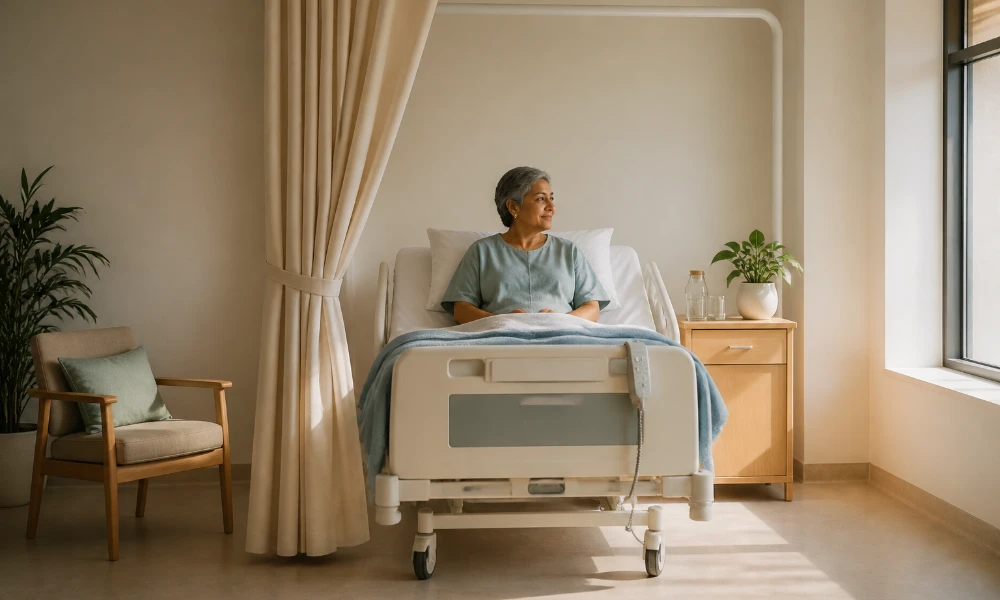
While hospitals place significant emphasis on infection prevention, the fire safety performance of interior materials, particularly curtains, is sometimes overlooked despite its equally critical role in protecting patients, staff, and healthcare facilities. It is important for hospital management to know how the selection of fire-resistant materials can make children’s lives safer. Understanding the principles of fire safety when choosing commercial shower curtains in medical institutions is not just a legal requirement but a moral obligation, under which all aspects of material composition, testing, and procurement must be carefully examined.
Why Fire Safety Carries Extra Weight in Pediatric Hospital Settings
Fire safety measures in pediatric healthcare areas are much more important and sensitive than in adult wards. Some of the most important reasons for this are as follows:
- Patients’ inability to escape on their own: Young and bedridden children are not capable of escaping on their own in any emergency, which makes fire-retardant materials essential there
- High curtain density: Curtains and partitions are used more in pediatric wards to maintain privacy and create smaller cabins than in adult wards, which increases the volume of materials
- Abundance of electrical equipment: Monitors, infusion pumps, and oxygen supply equipment are constantly working near each pediatric bed, which potentially increases the risk of fire (ignition sources)
- Increased evacuation time: Hospital staff need more time per patient to move children to safety, so fire-resistant fabric gives staff those precious minutes that are essential to saving lives
Fire Risks Associated with Traditional Hospital Curtain Systems
Traditional fabric curtains, especially those that are old or do not have flame retardants, catch fire very quickly and are a major source of fire spread throughout the room. In children’s hospital rooms, these curtains are permanently hung in proximity to oxygen supply ports and high-voltage medical equipment, where the presence of oxygen can double the intensity of a fire. In addition, a major practical problem with traditional curtains is that their protective properties are lost due to repeated washing, which is a major operational risk for reusable systems.
How Repeated Laundering Can Compromise Flame-Retardant Coatings
The chemicals applied externally to reusable curtains to prevent fire (topical treatments) wear off over time due to harsh hospital washing, industrial detergents, and heat exposure. Staff may think the curtain is safe on the outside, but internally it has lost its fire-resistant ability.
What Makes Flame-Resistant Pediatric Hospital Curtains Different
The main difference between modern fire-resistant curtains and conventional materials is the internal structure of their fibers. Curtains are generally made fire-resistant in two ways: one is by spraying fire-retardant chemicals on top, and the other is by naturally incorporating fire-resistant fibers into the fabric. These internally manufactured materials maintain consistent fire performance throughout their entire life cycle, as they do not require any external chemicals to achieve this characteristic. Understanding this difference in material science is essential for long-term safety planning when selecting Flame Resistant Curtains for hospitals.
Understanding Hospital Fire Safety Requirements for Curtain Systems
Healthcare facilities around the world are required to select only materials for their interiors and furnishings that meet international testing standards for fire resistance. Vertical flame spread testing (such as NFPA 701) is considered a basic measure for hospital curtains, which tests how well a fabric is self-extinguishing in the event of a flame. Fire marshals and accreditation bodies that inspect hospitals require that the facility have a certified fire certificate on record for each curtain installed, so that the material’s suitability can be proven during any legal or safety audit.
Healthcare Curtain Compliance: Standards, Certifications, and Inspection Expectations
Fire safety compliance in healthcare facilities is not just about purchasing a good material, but also includes full documentation of laboratory test data, fire resistance certificates, and consistent material sourcing provided by the manufacturer. When hospitals undergo government inspections or surveys, the first thing inspectors ask for is fire certificates for interior textiles, and even the slightest lapse in documentation or lack of records can result in hefty fines and license revocation for the hospital. Hospital operational teams should remember that Healthcare Curtain Compliance is not a one-time decision, but an ongoing process of constant record-keeping and monitoring.
Compliance Tip: Always verify that curtain fire certifications match your local healthcare regulations and are retained for future inspection audits.
Why Documentation Matters as Much as the Material Itself
If a hospital has installed the world’s best fire-resistant curtain, but the staff cannot produce its manufacturer’s certificate or batch number during an audit, the curtain will be considered non-compliant in the eyes of the law. Documentation is as important as the physical presence of the material.
Materials Commonly Used in Flame-Resistant Curtain Systems
Two types of materials are commonly used to provide fire resistance in hospital curtains:
- Inherently fire-resistant polyester blends: These are fibers that have fire-retardant properties at the molecular level, which are maintained even after prolonged use
- Treated non-woven disposable fabrics: These are modern polymer materials that are lightweight, fire-compliant, and inexpensive at the same time
- Compatibility with infection control: These modern fire-resistant materials do not absorb moisture and water (moisture resistance), which prevents the formation of germs and biofilms on them
- Advantage of disposability: Being a single-use material, these curtains do not need to be washed, which achieves both fire and hygiene standards at the same time
How Disposable Pediatric Curtains Contribute to Safer Hospital Environments
The biggest operational advantage of modern disposable curtains is that they do not go through the washing stages like traditional fabrics, which means their fire-stopping ability is never compromised. Every time a curtain is replaced in a ward, the hospital receives brand new, factory-certified fire-proof material, permanently eliminating the risk of old fabric rotting or chemical fading. This disposable model of Pediatric Hospital Curtains in sensitive pediatric wards assures hospital management that every bed they have is at the highest and most consistent fire safety standards at all times, and for this they do not need to undergo complex laundry audits.
Design Considerations for Facility Managers Before Purchasing
Hospital facility managers should consider not only fire ratings before purchasing curtains, but also several other practical design elements:
- Track compatibility: New curtains should fit easily with the hospital’s existing ceiling tracks so that the ward does not have to be closed during installation
- Ease of changeover: Hardware should be such that it can be changed in seconds without tools during an emergency or cleaning
- Fire compartmentalization: Curtains should be long and wide enough to temporarily confine smoke and flames to the same bed in the event of a fire
- Child-friendly design: Curtain colors and fire-resistant dyes should be child-safe and visually appealing
- Third-party documentation requirement: Laboratory test reports should be obtained directly from the supplier prior to purchase
Procurement Checklist for Fire-Compliant Pediatric Curtains
Procurement teams should complete this fire safety checklist before placing an order with any supplier:
- Has the manufacturer made a verbal claim, or does it have a valid third-party fire test certification?
- Is the curtain’s fire resistance inherent to its fibers, or is it dependent on an external chemical treatment?
- Does the certification provided align with the hospital’s local fire code policies and accreditation body standards?
- Is this fireproof material safe with the hospital’s current infection control and disinfectant spray protocols?
- Is the supplier capable of providing batch-level records of each new batch for the hospital’s internal audit?
Common Mistakes Hospitals Make Regarding Curtain Fire Safety
Hospital management often makes these major mistakes when managing curtains for fire safety:
- Assuming that all hospital-grade curtains are automatically fireproof, and not verifying their certificates
- Failing to update old batch records and losing documentation whenever new stock or goods arrive from different suppliers
- Continuing to wash and use chemically treated curtains beyond the manufacturer’s specified wash limits
- Failing to include curtains during the hospital’s annual fire-risk assessment, treating it as just a general housekeeping issue
- Failing to train procurement staff on how to technically verify vendors’ fire safety claims
Future Trends in Fire-Safe Pediatric Curtain Systems
The future of the medical industry is now moving towards smart materials that are both fire-resistant and equipped with high-grade infection control features. Digital tracking is now a growing trend in facility management, where RFID or QR codes are placed on curtains. By scanning these codes, cleaning staff and fire inspectors can see in seconds which batch a curtain belongs to, what its fire certificate is, and when it needs to be replaced. These modern trends eliminate the administrative burden on hospitals and ensure 100% fire safety.
A Practical Compliance Checklist for Ongoing Fire Safety Management
Hospital managers should consistently implement this operational checklist to maintain consistent fire safety:
- Are fire certificates for all active curtains available for inspection at all times in the hospital’s fire safety records?
- Does the hospital have a formal manual or digital schedule for tracking the chemical life of reused curtains?
- Are EVS and facility staff regularly briefed on how to quickly identify substandard or damaged materials?
- Does the hospital’s overall fire safety policy document include a reference to wards’ interior textiles and curtains?
- Are fire certificates promptly updated in procurement records when a new supplier or new batch arrives?
Treating Curtain Fire Safety as an Ongoing Responsibility, Not a One-Time Purchase
Fire safety of curtains in healthcare facilities, especially pediatric wards, is not a one-time purchase decision, but rather a permanent and ongoing operational responsibility. The right choice of materials science, regular laboratory documentation, and a timely curtain replacement system can help ensure patient safety and maintain hospital compliance documentation. When facility managers make fire safety a part of their daily routine, they eliminate the risk of any unexpected incident.
Keeping all these stringent safety and fire testing standards in mind, On the Right Track’s commercial shower curtains offer healthcare facilities a complete, certified, and secure hardware material solution. These advanced systems make hospital fire audits and recordkeeping extremely easy and hassle-free, so that facility teams can maintain a safe and healing environment for children without any operational stress.
Frequently Asked Questions
1. How can hospitals verify that a curtain’s flame-resistance claim is legitimate?
Hospitals should not rely solely on the vendor’s marketing claims, but should request third-party fire test reports (such as NFPA 701 certification) from accredited laboratories directly from the supplier.
2. Do flame-resistant properties wear off over time in reusable hospital curtains?
Yes, if the curtains have been sprayed with a fire retardant chemical from above, it will gradually wear off over time due to repeated industrial washing, harsh detergents, and the temperatures of hospital laundry.
3. What documentation do fire marshals or accreditation surveyors typically request during inspections?
Inspectors and surveyors typically check hospital furnishing textiles’ fire resistance certificates, manufacturer’s test data, and batch-level records of existing stock to prove compliance.
4. Are disposable pediatric curtains automatically fire-compliant?
No, just being disposable or single-use alone does not guarantee fire compliance. The hospital should always check that the disposable drape is made of non-woven fabrics and whether it has the proper fire certification.
5. How often should hospitals reassess their curtain fire safety documentation?
Hospitals should make it a requirement to inspect their curtains’ fire safety records along with their annual fire risk assessment. In addition, whenever a new vendor is brought in or a new batch comes into stock, the documentation should be updated immediately.
- About the Author
- Latest Posts

Our Editorial Team are writers and experts in their field. Their views and opinions may not always be the views of Wellbeing Magazine. If you are under the direction of medical supervision please speak to your doctor or therapist before following the advice and recommendations in these articles.