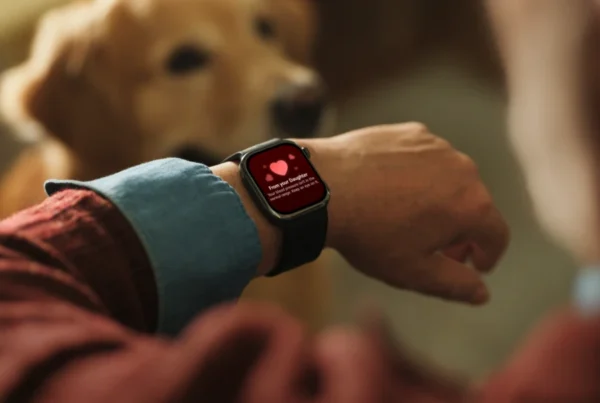
There is a particular moment, somewhere around the second week of wearing a new health tracker, when the relationship changes. You stop checking the numbers out of curiosity and start believing them. The band says you slept badly, so you feel tired. It says your resting heart rate has crept up, so you wonder what you’ve been doing wrong. A small piece of plastic and glass has quietly become a source of truth about your own body.

It is worth pausing on that. Not to be cynical about the technology, because much of it is genuinely useful, but because trust deserves a foundation. So here is a question almost nobody asks: before that device reached you, how did anyone establish that it works?
Two different kinds of accuracy
The first thing to understand is that “accurate” means two separate things, and they are often confused.
The first is clinical validation: does this sensor, in principle, measure what it claims to measure? That’s a research question, answered by studies comparing a device against a gold standard, such as a wrist optical heart-rate sensor against an ECG, or a sleep-staging algorithm against overnight polysomnography in a lab. It’s a question about the design.
The second is manufacturing consistency: does the specific unit in your box work exactly like the one the researchers tested? That’s a factory question, and it’s the one that decides whether the design’s promise actually survives the journey to your wrist.
A brilliantly designed sensor built badly is not a health device. It’s jewellery that produces numbers.
What actually happens on the production line
Inside every wearable is a densely packed circuit board: the optical sensor that shines green light into your skin, the accelerometer that knows when you’ve rolled over, the temperature sensor, the power management, the radio. On a modern band, all of it occupies less space than a postage stamp.
Once that board is assembled, it goes through in-circuit testing before anything is sealed into a case. The board is lowered onto a fixture engineers call a bed of nails: a custom plate holding dozens or hundreds of tiny spring-loaded contacts, each one positioned to touch a specific point on the board to within a fraction of a millimetre. In a few seconds, the tester checks that every component is present, correctly oriented, and performing to specification.
Those tiny contacts are called test probes, and they are the physical interface between a factory’s quality standards and the object you’ll eventually strap to your body. Each one is a miniature piston, built from a barrel, a plunger and a spring, that presses against a contact pad with carefully controlled force. Good ones hold contact resistance below about ten milliohms and survive hundreds of thousands of cycles without drifting. Serious manufacturers plate them in gold or palladium precisely because a probe that degrades gives inconsistent readings, and an inconsistent test is arguably worse than no test at all: it passes boards it should have failed.
There is something quietly reassuring about this. Every health device that works properly does so partly because someone, somewhere, cared about the metallurgy of a component the size of a pencil lead.
What “medical grade” does and doesn’t mean
The phrase appears on a great deal of marketing, and it isn’t regulated in the way most people assume.
A genuinely regulated medical device, such as a continuous glucose monitor, a clinical pulse oximeter or a hearing aid, has been through a formal approval pathway with a body like the MHRA in the UK or the FDA in the US. Its manufacturer works to standards such as ISO 13485, which governs the entire quality system: how the factory is run, how tests are documented, how each unit is traced back to its batch.
A consumer wellness tracker generally has not. It sits in a different regulatory category, one that permits it to report “wellness insights” rather than diagnose anything. That doesn’t make it useless. It does mean the accuracy claim rests on the manufacturer’s own diligence rather than an external audit, which is exactly why the quality of the invisible testing matters so much more for consumer devices than for clinical ones.
The practical signal to look for isn’t the phrase “medical grade” on the box. It’s whether the company names a specific regulatory clearance, publishes validation studies, or states which standard its quality system follows. Companies that have done the work tend to say so precisely. Companies that haven’t tend to say “medical grade”.
How to hold the numbers sensibly
None of this is a reason to distrust your tracker. It’s a reason to use it well.
Trust trends over absolutes. Even a device with a few percent of measurement error is excellent at detecting change, because the error is usually consistent. Your resting heart rate rising over three weeks is real information, whether or not the number itself is exactly right.
Be most sceptical where the physics is hardest. Steps and heart rate at rest are well handled by good hardware. Sleep staging, blood pressure from the wrist, calorie burn and stress scores involve far more inference, and the confidence intervals are wide.
Notice how the device makes you feel. If a poor sleep score reliably ruins your morning, the measurement has stopped serving your wellbeing and started managing it. That’s worth catching early.
Keep the sensor clean and the fit correct. Most real-world accuracy problems are not manufacturing faults. They’re a loose strap, a sensor window clouded with moisturiser, or a device worn too far down the wrist.
A quiet kind of trust
We tend to imagine that trustworthy health technology is built from breakthroughs: new sensors, cleverer algorithms, more data. Mostly it isn’t. It’s built from unglamorous consistency. A probe holding steady contact for its four hundred thousandth test of the year. A batch record filed properly. A board rejected because one reading sat a fraction outside tolerance.
You will never see any of it. But it is the reason the number on your wrist means something, and knowing it exists makes it easier to hold that number the way it deserves to be held, seriously but lightly.
- About the Author
- Latest Posts

Our Editorial Team are writers and experts in their field. Their views and opinions may not always be the views of Wellbeing Magazine. If you are under the direction of medical supervision please speak to your doctor or therapist before following the advice and recommendations in these articles.