Much of the contemporary conversation about breathing begins with an instruction. Breathe through your nose. Breathe into your belly. Slow your breathing to five or six breaths per minute. Make your exhalation longer than your inhalation. Try box breathing, coherent breathing, alternate-nostril breathing, or one of the many other techniques now promoted for better sleep, less anxiety, greater focus, improved health, or expanded consciousness.
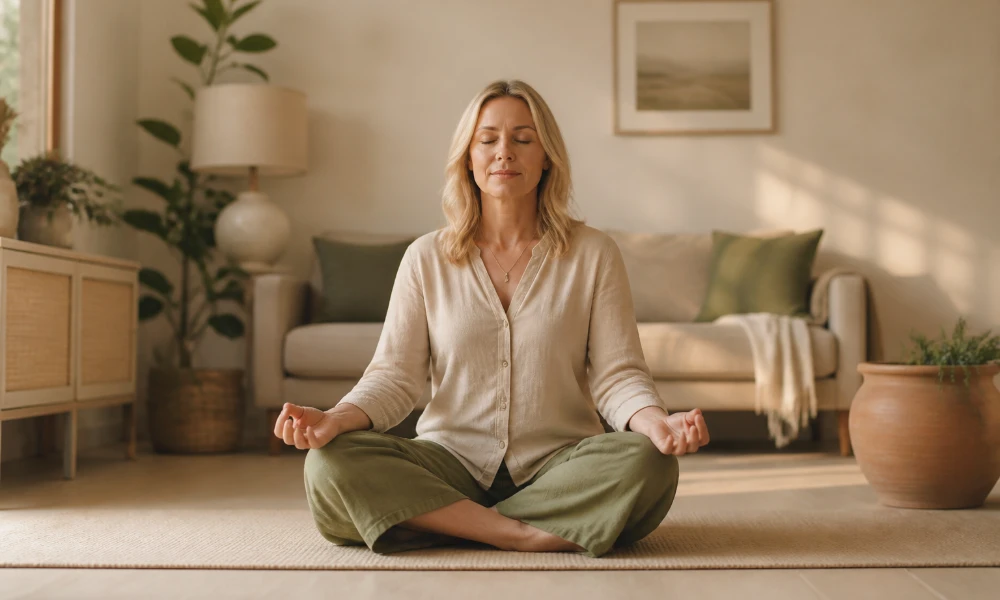
There can be considerable value in intentionally changing how we breathe. That is, after all, the basic premise of pranayama, the diverse breathing practices developed across many centuries of yoga and tantra. Modern respiratory science also makes increasingly clear that deliberately changing the rate, depth, rhythm, and mechanics of breathing can affect our physiology and mental state.
But there is a step that is easily missed.
Before changing the breath, learn to feel it.
This might sound almost too simple. We have been breathing since the moment we were born. Yet most breathing is habitual and unconscious. We generally notice it only when something calls attention to it, such as running up a flight of stairs, laughing hard, becoming frightened, feeling short of breath, or suddenly taking a deep sigh.
Breath awareness begins differently. Rather than immediately trying to make the breath slower, deeper, smoother, or otherwise “better,” we begin by becoming curious about what is already happening.
How are you breathing right now?
Where do you feel movement? In your abdomen? Lower ribs? Upper chest? Does one area move more readily than another? Is the movement symmetrical? Does the breath feel smooth or uneven, spacious or constrained? Is there effort in inhaling? In exhaling? Do your shoulders or neck become involved? What happens at the quiet transition between one breath and the next?
There is no correct answer. The initial task is not correction. It is perception.
Breathing Is Movement
At the physical level, breathing is an exquisitely coordinated movement involving the diaphragm, ribs, intercostal muscles, abdominal wall, spine, pelvic floor, and other structures. During relatively quiet breathing, the diaphragm does most of the work. As it contracts and descends, the dimensions of the thoracic cavity change and air flows into the lungs. The ribs also move, expanding the chest in several directions. With exhalation, these movements largely reverse.
We can understand all of this anatomically. But knowing what the diaphragm does is quite different from feeling the movement of breathing in ourselves.
Try lying comfortably on your back. Place one hand lightly over your upper abdomen and the other somewhere on your rib cage. For several breaths, do nothing.
Notice.
Feel where movement begins. Feel the abdomen rise or widen—or perhaps barely move. Feel the ribs expand and settle. Notice whether the movement beneath one hand seems more pronounced than beneath the other.
Then sit upright and observe again.
The breath will probably feel different. Gravity has changed the relationship among your diaphragm, abdominal contents, ribs, spine, and pelvis. Your postural muscles are now participating differently. Something that seemed obvious lying down may become subtler while sitting—or the reverse.
This is one reason instructions such as “belly breathe” can be misleading when offered as universal prescriptions. Diaphragmatic breathing is important, but natural breathing is not simply abdominal breathing. Healthy respiration involves coordinated movement through the abdomen, ribs, back, chest, and other structures, with the relative contribution of each changing with posture, activity, metabolic demand, health, and circumstance.
Rather than imposing an ideal pattern, first discover your pattern.
The Breath Is Also a Mirror
Our breathing does more than move air. It continuously reflects what is happening in our lives.
Notice your breath when you are relaxed. Then notice it when you are hurried.
What happens when you receive troubling news? When someone criticizes you? When you are absorbed in something beautiful? When you laugh? Become angry? Feel afraid? Fall in love?
Joy, sadness, frustration, fear, concentration, excitement, fatigue, and anxiety all tend to appear in breathing in different ways. We might breathe faster, become shallow, sigh, gasp, hold the breath, or barely notice that we have constrained it.
Posture tells another part of the story. Sitting collapsed over a computer changes the space available for respiratory movement. So does standing upright, walking briskly, lying down, exercising, singing, speaking, or embracing another person.
This makes the breath something like a mirror through which we can peer more deeply into ourselves.
The point is not to look into that mirror critically.
If your breathing is shallow, irregular, asymmetric, or tense, you do not need immediately to label it dysfunctional. First appreciate that this is how you are breathing now. Ask what might be contributing to it.
Breathing is shaped over time by everything from anatomy and illness to emotion, habit, posture, environment, physical conditioning, and the accumulated experiences of living. Your breath today need not resemble your breath yesterday, much less someone else’s idealized breathing pattern.
Feel Before You Fix
This is where breath awareness becomes an important counterbalance to our tendency to turn wellness practices into performance.
We are often given a target and immediately start trying to achieve it. Breathe more deeply. Slow down. Make the belly move. Make the inhale last four seconds and the exhale six.
The moment we begin trying, however, effort enters the breathing process.
That effort is itself worth feeling.
Try deliberately taking a “deep breath.” What happens?
Perhaps it feels wonderful. But perhaps your shoulders rise. Your throat tightens. The inhale becomes noisy or strained. You may discover that what you call a deep breath is really a large upper-chest breath produced with considerable effort.
Now let the breath return to normal.
Feel the difference.
This movement between natural breathing and intentional breathing is one of the richest laboratories we have for learning about ourselves. As awareness becomes more refined, we begin to sense the texture of air at the nostrils, tiny movements of the ribs, pressure changes through the abdomen and chest, and the way the diaphragm responds to changes in position. We notice inhalation, exhalation, and the natural pauses between them.
Gradually, conscious breathing becomes less about making something happen and more about becoming sensitive enough to know what happens when we intervene.
That sensitivity is foundational to pranayama.
A Five-Minute Practice
Lie comfortably on your back, or sit somewhere you can be at ease.
For the first minute, simply breathe. Do not deliberately deepen, slow, or otherwise alter the breath.
Notice where you feel breathing most clearly.
Then gradually broaden your attention. Feel the movement of the abdomen, ribs, chest, and back. Notice whether movement is symmetrical. Sense any unnecessary gripping in your throat, jaw, shoulders, abdomen, or pelvic floor.
Next, notice the four natural phases of breathing: inhalation, the quiet transition after inhalation, exhalation, and the transition before the next inhale.
Do not lengthen the pauses. Simply discover them.
For the final minute, let your attention become less analytical. Receive the breath. Feel your whole body moving subtly with it.
Then ask yourself: What did I notice?
Not: Did I breathe correctly?
Not: Did I achieve the right respiratory rate?
Simply: What did I feel?
Repeat this on different days and in different circumstances. Try it sitting, lying down, after walking, before sleep, or when you feel emotionally unsettled. You may begin noticing patterns that have been present for years but invisible precisely because they were so familiar.
From there, you can experiment intelligently with changing the breath—perhaps making it slower, allowing the exhalation to lengthen, emphasizing diaphragmatic or costal movement, or exploring a formal pranayama technique.
Now the intervention has context.
You are no longer merely following an instruction. You are entering into intimate conversation with your breathing.
Breath awareness is therefore both preparation for pranayama and a practice complete in itself. It teaches us that breathing is not something to conquer or perfect. Some days it will feel open and fluid; other days it may feel tight, shallow, or erratic. Both are worthy of attention.
Our breathing changes because our lives change.
Rather than immediately trying to make it conform to an ideal, we can learn to meet it, feel it, and understand it. From that sensitivity comes a much more intelligent question than “What is the best way to breathe?”
The question becomes: What kind of breathing best serves me here, now, in this body, in this moment?
And before we can answer that, we have to learn to feel.
Written by by Mark Stephens
Author of five bestselling yoga books, including Teaching Yoga and Yoga Therapy. Practicing since 1991 and teaching worldwide since 1996, he has studied and practiced in the ashtanga, Iyengar, and tantra traditions and has engaged deeply with yoga histories and philosophies, somatic psychology, and evidence-based sources. Mark has trained yoga teachers and therapists for three decades and served as the “For Teachers” columnist for Yoga Journal for two years. He lives on California’s central coast.
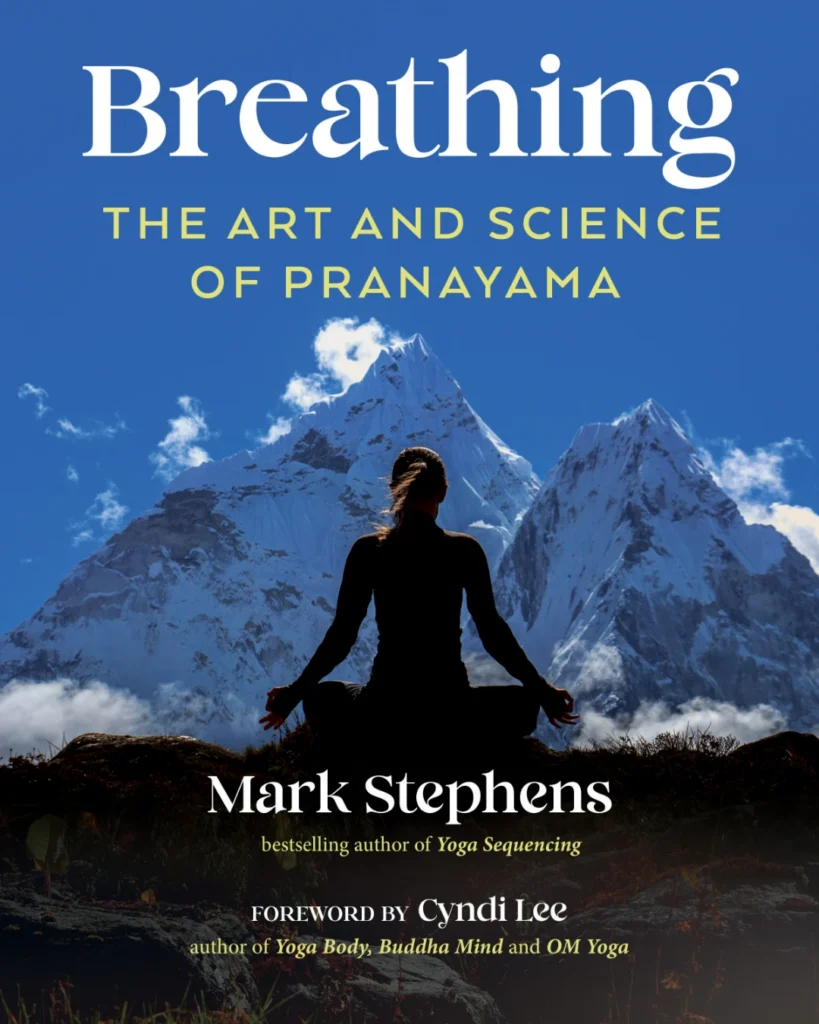
About the Book:
Breathing: The Art and Science of Pranayama, Mark Stephens, Foreword by Cyndi Lee
ISBN: 9798888504390, October 2026, also available as an ebook. $24.99. Healing Arts Pres
- About the Author
- Latest Posts

Our Editorial Team are writers and experts in their field. Their views and opinions may not always be the views of Wellbeing Magazine. If you are under the direction of medical supervision please speak to your doctor or therapist before following the advice and recommendations in these articles.