We’ve become fluent in the language of self-care. We track our sleep, guard our mornings, learn to breathe through stress, and build routines designed to keep us steady. Almost all of that care points inward, and rightly so. But there’s a quieter form of wellbeing that rarely makes the list, one that asks very little of us and gives back something rare: the calm certainty of knowing what to do if someone near you suddenly collapses.
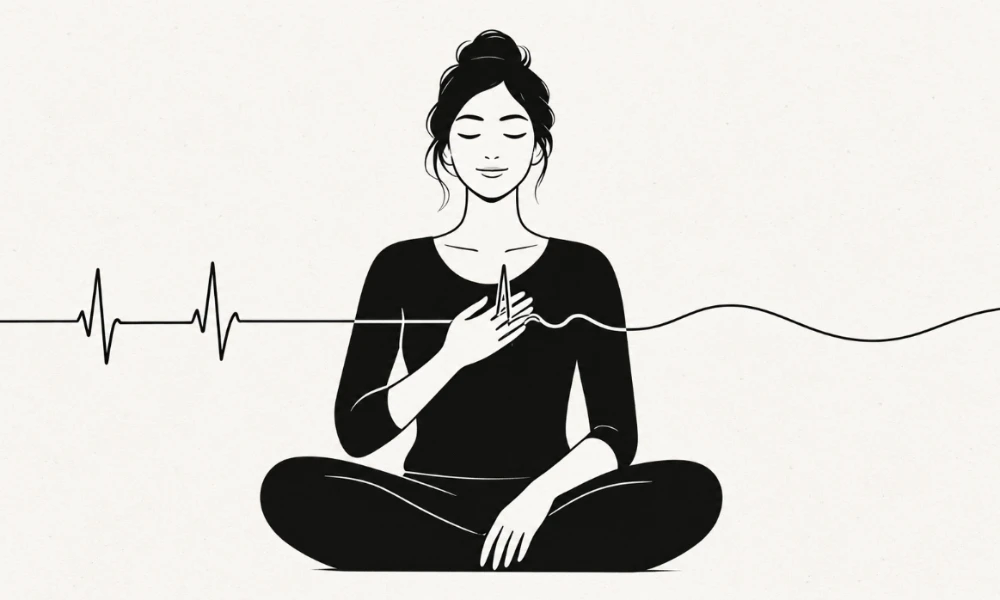
It’s an uncomfortable thought, so most of us set it down quickly. Yet here is the detail that changes the conversation. Around eight in ten out-of-hospital cardiac arrests happen at home or in a private residence. The person whose life you might one day hold isn’t, statistically, a stranger on the pavement. It’s a partner, a parent, a friend at your kitchen table. Learning CPR isn’t really about heroics. It’s about being able to protect the people you love, which is, when you sit with it, the deepest kind of care there is.
The anxiety we rarely name
There’s a particular low hum of fear that lives in the gap between something terrible could happen and I wouldn’t know what to do. We don’t talk about it often, but it’s there, the quiet helplessness we assume we’d feel in a real emergency.
Competence is the antidote to that helplessness. We tend to imagine self-care as softness, rest, warmth, permission to slow down. But it’s also a capability. Building a skill you hope never to use is a way of putting down a worry you’ve been carrying without quite noticing it. You stop feeling like a bystander in your own life’s most frightening possible moment, and start feeling ready for it. That shift, from dread to preparedness, is its own form of peace.
What really happens in those first minutes
None of this needs to be frightening to be honest. When a heart suddenly stops, survival is genuinely fragile: across England, fewer than one in ten people survive an out-of-hospital cardiac arrest, around 7.8% are still alive 30 days later, according to the national OHCAO registry. UK ambulance services respond to roughly 30,000 of these events every year.
But those numbers aren’t fixed, and this is the part worth holding onto. The single greatest influence on whether someone lives is what an ordinary person does in the minutes before the ambulance arrives. Effective bystander CPR more than doubles a person’s chance of survival, and with a defibrillator added into those first minutes, the Resuscitation Council UK puts the increase at two to four-fold.
It helps to clear up a common misunderstanding, too. CPR doesn’t restart a stopped heart, that’s the work of a defibrillator and the paramedics. What it does is keep oxygen-rich blood moving to the brain, buying precious time until help arrives. You are not expected to fix everything. You’re keeping someone here long enough for help to reach them, a far gentler, more achievable thing to carry.
There’s a gap, though, between willingness and readiness. In England, most people do step in: bystanders attempt CPR in around seven of ten cases. Yet a public defibrillator is used in fewer than one in ten. That gap is exactly where a little knowledge changes outcomes.
It’s simpler than the fear makes it look
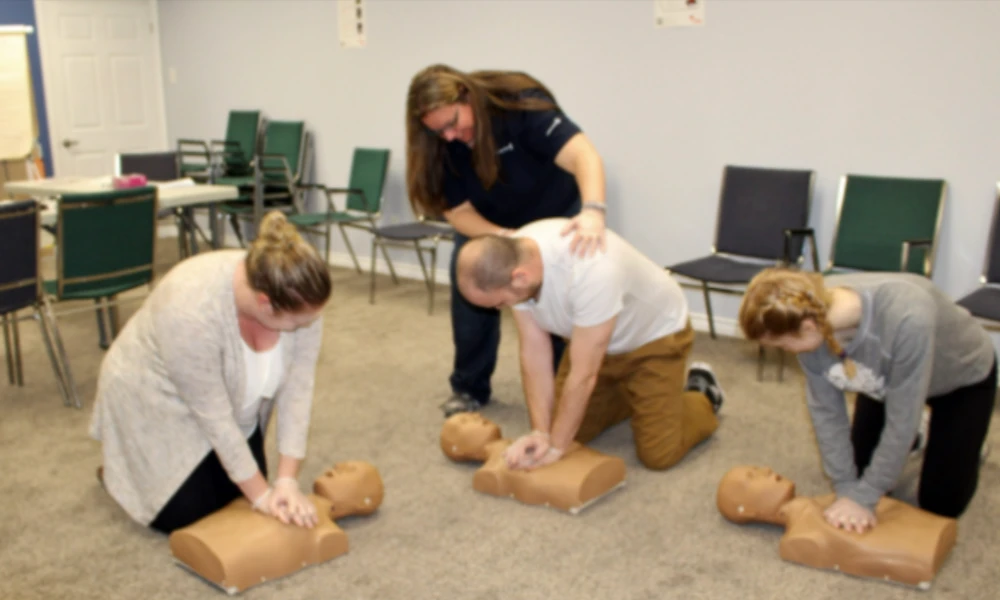
For an adult who has collapsed, you don’t need rescue breaths to make a real difference, hands-only CPR is enough to matter. The Resuscitation Council UK, whose guidance was refreshed in 2025, keeps it deliberately simple: if a person is unresponsive and not breathing normally, call 999 (or your local emergency number) first, then push hard and fast in the centre of the chest 100 to 120 compressions a minute, to a depth of at least 5 cm but no more than 6 cm. Many people find the tempo by pushing in time with the Bee Gees’ “Stayin’ Alive.”
One thing genuinely trips people up, and it’s worth knowing in advance: gasping. Slow, irregular, gaspy breathing after someone collapses is not a sign of recovery. It’s a sign of cardiac arrest and a signal to begin compressions.
A caveat, offered in the same spirit of honesty: reading this is not the same as being trained. Words on a page can inform you, but they can’t give your hands the memory they’ll reach for under pressure. That only comes from doing it.
Why a hands-on class is its own kind of self-care
The real value of a course isn’t the certificate at the end. It’s what happens to you in the room. You feel how firmly you actually have to press. You practise on a manikin until the rhythm stops feeling strange in your body. You pick up a defibrillator and discover it simply talks you through each step out loud, calmly, one instruction at a time. By the time you leave, the fear has been replaced by something steadier, the quiet knowledge that if the moment ever came, your hands would already know the way.
If you can, choose an accredited provider that teaches in person rather than a screen alone. In Ontario’s Durham Region, for example, Durham First Aid, an accredited Canadian Red Cross training partner, runs small, hands-on classes where people practise until the movement feels natural. Wherever you happen to live, the equivalent is worth seeking out: the British Red Cross and St John Ambulance run courses across the UK, and the Resuscitation Council UK’s free online tool, RevivR, can teach the basics in about fifteen minutes.
Peace of mind you build, not buy
Most of the things we reach for in the name of wellbeing are bought and used up a candle, a class pass, a supplement. This one is different. You learn it once, top it up now and then, and carry it for life. It costs an afternoon and returns something no product can: the settled, unglamorous confidence of a person who would know what to do.
Add it to the routine, quietly, alongside the sleep and the breathwork and the walks. Not out of fear, but out of the same instinct that drives all real self-care, the wish to look after yourself and the people you love. And should the day ever come, they will be glad, wordlessly and profoundly, that you did. Because it turns out peace of mind was never just a feeling. Sometimes it’s a skill.
Sources: Resuscitation Council UK (2025 Adult Basic Life Support guidelines; CPR FAQs); British Heart Foundation / OHCAO registry (University of Warwick); NHS ambulance service reporting. Verify figures at publication.
- About the Author
- Latest Posts

Our Editorial Team are writers and experts in their field. Their views and opinions may not always be the views of Wellbeing Magazine. If you are under the direction of medical supervision please speak to your doctor or therapist before following the advice and recommendations in these articles.