
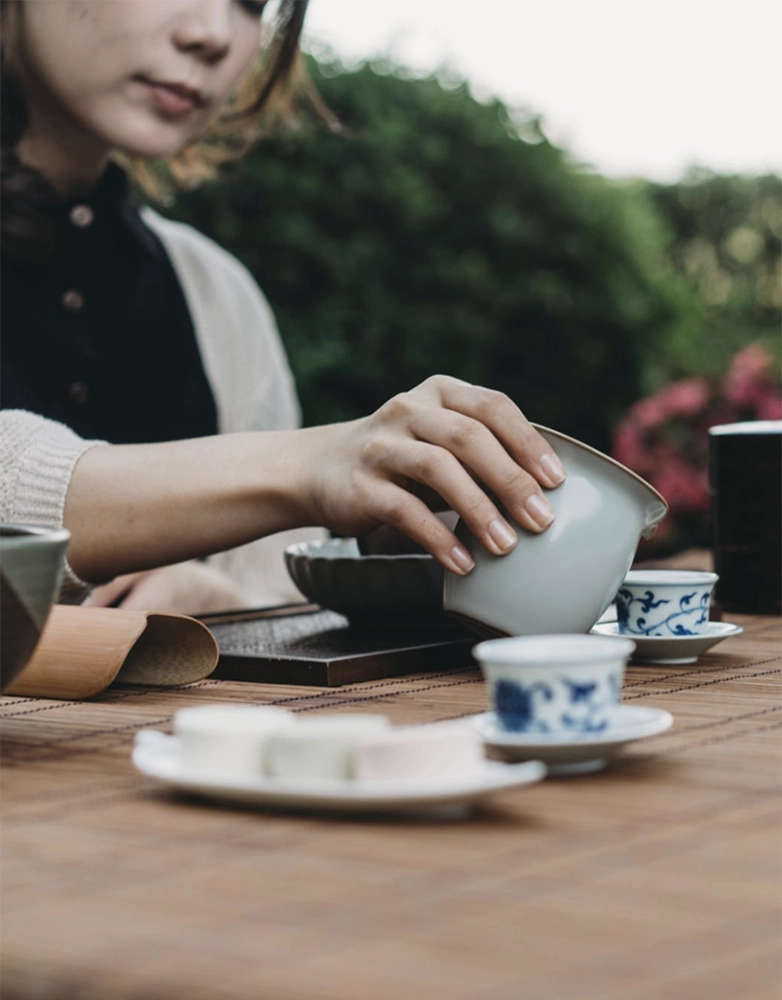
We often sip to stay in motion—coffee ignites our mornings, water fuels our days. Yet, Chinese Gongfu tea is a delightful paradox. It scoffs at efficiency and sneers at speed. Instead, it beckons you to pause. This tea invites you to slow down. Savor each moment and appreciate what’s in your cup.
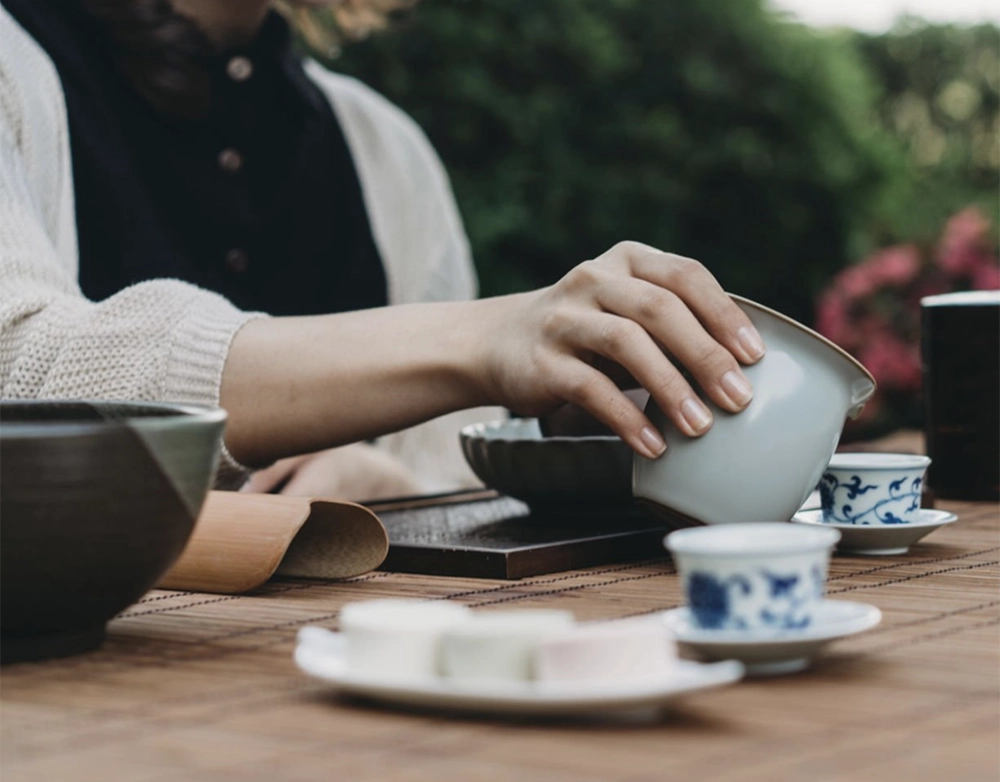
Many people outside China discover Gongfu tea on social media. They see tiny cups, lidded bowls, and fancy pours. At a glance, it looks like a formal ceremony, maybe even a bit intimidating.
Gongfu tea isn’t just a show. It’s a way to focus more on the tea you drink.
What Gongfu Tea Really Is
The word Gongfu (功夫) confuses a lot of people. The term is often linked to martial arts movies, but its original meaning is much wider. Gongfu simply refers to any skill that is developed through time, patience, and effort. You can have Gongfu in cooking, writing, or even driving.
When we apply this to tea, it doesn’t mean following a rigid rulebook. It means learning how the tea responds to you. You are watching how the leaves open up, how the aroma shifts, and how the bitterness fades into sweetness. You don’t need a certificate or years of experience to begin. Just be curious and willing to taste carefully.
Historically, this style grew out of Southern China, famous for its Oolong teas. These leaves are intricate. The Gongfu method is the best way to reveal that complexity, instead of just making one big mug.
Gongfu Tea vs. Western-Style Brewing
The easiest way to get it is to compare it to how we usually make tea in the West.
Western brewing is all about convenience. You put a small pinch of tea in a big mug, add water, and walk away for five minutes. The result is consistent, predictable, and perfect for a busy workday.
Gongfu tea flips the script:
- The Vessel: We use much smaller pots or bowls.
- The Ratio: We use way more leaves.
- The Time: We brew for seconds, not minutes.
Instead of one “big brew,” you get a series of evolving cups. The first steep might be light and floral. The next ones might get deeper, sweeter, or thicker. You aren’t just drinking a beverage; you are observing it change.
Why Short Infusions Matter
Brewing tea for only 5 or 10 seconds sounds crazy to a beginner, but this is the secret sauce of Gongfu tea.
Short infusions aren’t about rushing; they are about control. By brewing in short bursts, you extract the flavor layer by layer, rather than dumping it all out at once.
- Is the tea too strong? Brew it faster next time.
- Is it too weak? Let it sit a few seconds longer.
This feedback loop makes the process feel interactive. The tea responds to what you do, and you respond to the tea.
The Equipment: Less Than You Think
If you look online, you might think you need a museum of pottery to do this. You don’t. A functional setup is incredibly simple:
- A small brewing vessel (usually a Gaiwan or a small teapot).
- A cup or two.
- Leaves and hot water.
That’s it. In fact, many experts prefer this minimalist setup because it removes distractions. Without the fancy gadgets, you focus on what matters: the aroma, the taste, and the texture of the soup.
Why Certain Teas Shine in Gongfu Brewing
You can brew almost anything this way, but some teas really come alive with Gongfu brewing.
Oolong teas are the stars here. Since the leaves are often rolled into tight balls or twisted shapes, they need time to unfurl. With short, repeated infusions, you can watch them slowly open up, showing a unique note each time. You might notice a floral scent, followed by a roasted flavor, and then a lingering sweetness.
The best part is this slow reveal. The tea doesn’t give you all its flavors at once, instead, it tells you a story over 8 or 10 steeps.
Gongfu Tea as a Daily Practice
For a lot of us, this becomes less about analyzing flavors and more about the rhythm of the day.
The movements—pouring, waiting, draining, sipping—create a natural “pause button.” You can’t really multitask while handling a hot Gaiwan. You can’t type an email or scroll TikTok. The process demands your hands and your eyes.
Some people use it as a quiet morning meditation. Others use it to wash off the stress of the day in the evening. There is no “correct” mood. The tea adapts to your life, not the other way around.
Common Misconceptions About Gongfu Tea
There is a myth that you must prepare Gongfu tea in a specific way.” But in reality, this method is built on flexibility.
Water temperature, timing, how much leaf you use—these are variables for you to play with, not laws to obey. What matters is learning how those changes affect the taste. Making mistakes (and drinking bitter tea occasionally) is part of the fun.
Another myth is that it’s only for experts. Many beginners genuinely find Gongfu easier than Western brewing. Short infusions make it harder to overbrew your tea and spoil it.
Chris Lin, founder of SummitBreezeTea, believes beginners do best with a simple setup. Just one small brewing vessel and one or two cups can lead to better results. It’s easier to manage heat, pouring, and infusion time when there’s less to juggle.
Conclusion
At its best, Gongfu tea isn’t something you perform for an audience. It’s something you do for yourself.
You don’t need an expensive setup or deep historical knowledge. A simple bowl and a quiet moment are enough. Over time, you start to notice subtle details—not just in the tea, but in how you feel while drinking it.
That quiet attentiveness is what keeps people coming back to the leaf, year after year. In the end, Gongfu tea isn’t really about mastering the beverage. It’s about learning to slow down. And sometimes, that is exactly what we need.