Your skin has a lot to say. And honestly? It never really shuts up. One decade you’re fighting breakouts, the next you’re staring down hormonal flares or the first real lines forming around your eyes. That’s not failure; that’s just skin being skin. What matters is whether the people you trust with it can keep up.
Modern dermatology, when done right, doesn’t make you start over every time something new shows up. The right clinical team grows with you, and that kind of continuity is worth more than most people realize.
Why Comprehensive Dermatology Actually Changes the Game
Here’s the thing nobody tells you early enough: skin concerns are connected. Acne treatment, acne scar treatment, anti‑aging skincare, cosmetic dermatology, and laser skin treatment, these aren’t separate categories you work through one by one. They overlap, they influence each other, and they need a cohesive strategy rather than isolated appointments.
Consider the numbers. Acne alone affects nearly 50 million Americans annually. That’s an entire population of people who deserve solutions that last beyond a single prescription.
Think of your skin as a long-term project. You prevent what you can, correct what’s already there, and renew as time moves on. That mindset, cumulative and forward-looking, beats reactive treatment every single time. But before you can approach it that way, you have to know who actually belongs in your corner.
Dermatology Vs. Med Spa: Who Should You Actually Be Seeing?
This distinction matters more than people give it credit for. Mixing up these two types of providers doesn’t just waste money, it can genuinely slow your results.
Utah’s communities, nestled between red rock canyons and alpine ridgelines, tend to prioritize wellness in a genuine way. That culture has produced some excellent medically supervised aesthetic practices. For anti‑aging skincare, device-based texture treatments, non-invasive body contouring, and maintenance protocols, a reputable med spa utah practice operating under medical oversight can be a genuinely smart long-term investment.
Board-certified dermatologists sit at the top of the clinical chain for a reason. Severe acne, cysts, unexplained rashes, suspicious moles, hair loss, scarring, these are medical events that require real diagnosis.
Dermatologists can prescribe medications and perform procedures that aestheticians and non-medical providers legally can’t touch. If something is going wrong with your skin in a clinical sense, a dermatologist is your first call. Full stop.
The real advantage comes when you find a practice that handles both worlds. One record. One provider relationship. No retelling your full history at every appointment. That kind of integrated care feels almost rare, but it exists, and it’s worth seeking out.
Taking On Breakouts: What Professional Acne Treatment Looks Like Now
Adult acne and teen acne are not the same problem wearing the same face. Teenagers typically deal with puberty-driven congestion across the T-zone. Adults, particularly women, navigate hormonal jawline flares, stress-related cycles, and mask-related breakouts. Getting that distinction right matters enormously before anything else.
Personalized Acne Treatment Plans That Actually Fit
A solid acne treatment plan doesn’t come from guesswork. It comes from patient history, a real skin exam, and sometimes lab work. Combination therapy, topicals, oral medications, and in-office procedures working in parallel, consistently outperforms single-track approaches. Expect six to twelve weeks before visible improvement, with ongoing maintenance built into the plan to prevent relapse.
Topicals and Orals Worth Knowing About
Evidence-based topicals include benzoyl peroxide, salicylic acid, retinoids, azelaic acid, and antibiotic formulations. For stubborn or hormonally driven cases, dermatologists may bring in oral antibiotics, spironolactone, certain contraceptives, or isotretinoin for severe scarring acne. One principle holds across all of it: start slow, especially with retinoids. Protecting the skin barrier beats overwhelming it.
In‑Office Procedures That Accelerate Results
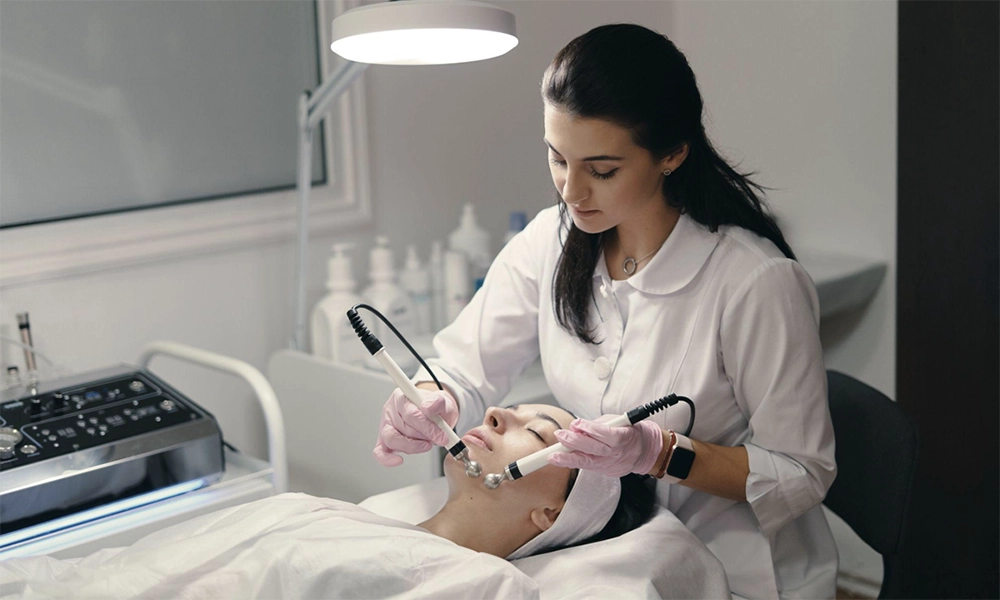
Chemical peels, blue and red light therapies, photodynamic therapy, and targeted laser skin treatment options meaningfully reduce active acne while cutting the risk of long-term scarring. Cortisone injections for cysts can resolve swelling within 24 to 48 hours, genuinely invaluable before an important event. These approaches also reduce dependence on long-term antibiotics, which matters.
Clearing active acne is a real win. But the marks it leaves behind? For many patients, those feel equally discouraging.
Fading What’s Left Behind: Acne Scar Treatment That Delivers
Scars are a different challenge entirely. Matching treatment to scar type isn’t a nice-to-have, it’s the whole strategy.
Identifying Your Scar Type Before You Treat It
Icepick, boxcar, rolling, hypertrophic, and post-inflammatory discoloration each respond to different interventions. An in-person assessment isn’t optional, it’s genuinely the only way to avoid wasting months on the wrong approach.
Laser Skin Treatment for Texture and Deeper Scars
Fractional laser skin treatment, both ablative and non-ablative, holds gold-standard status for texture correction and deeper scarring. Picosecond lasers address discoloration with precision, while RF microneedling rebuilds collagen gradually across a wider range of skin tones with notably less downtime. Results typically emerge over three to six months as collagen remodels, patience isn’t optional here.
Non‑Laser Options That Reach What Lasers Can’t
Microneedling with growth factors, subcision for tethered rolling scars, and focal high-strength acid treatments for icepick scars target what energy devices sometimes miss. Biostimulatory injectables or fillers can restore volume in depressed scar areas. Most patients see meaningful improvement within three to four months of a well-designed combination protocol.
Your Skin Deserves a Real Long-Term Plan
One appointment fixes nothing permanently. Over 80% of dermatology patients on Zocdoc rebooked with the same provider, making them one of the most loyal patient segments in all of outpatient care. That loyalty isn’t accidental. It reflects what good cosmetic dermatology actually feels like in practice: a trusted, evolving relationship that tracks with where your skin is, not just where it was.
From your first real acne treatment to your first injectable, having the right clinical partner makes every step feel intentional rather than reactive. Don’t wait until something goes wrong to start that conversation. Start it now, while you still have the luxury of being proactive.
Real Questions, Direct Answers
Can acne treatment and anti‑aging skincare run simultaneously without irritating skin?
Yes, ingredients like retinoids, niacinamide, and azelaic acid address both concerns at once. A dermatologist can layer or sequence them to minimize irritation and maximize results.
Which laser skin treatment is safest for darker skin tones?
RF microneedling and picosecond lasers are generally well-tolerated across deeper skin tones. Confirm your provider has specific, documented experience with your skin type before committing.
How long before acne scar treatment shows visible results?
Most patients notice meaningful improvement within three to six months, depending on scar depth and treatment type. Collagen remodeling is a gradual biological process, consistency matters as much as the treatment itself.
Do I still need a dermatologist if I already see a med spa provider?
If you’re dealing with cystic acne, suspicious moles, unexplained hair loss, or significant scarring, yes, a board-certified dermatologist should evaluate those concerns before any cosmetic work proceeds.
Are OTC retinols enough for anti-aging, or should I push for a prescription?
OTC retinols work fine for mild maintenance. But prescription-strength tretinoin delivers faster, more consistent improvement for fine lines, texture, and pore refinement, particularly under proper dermatological supervision.