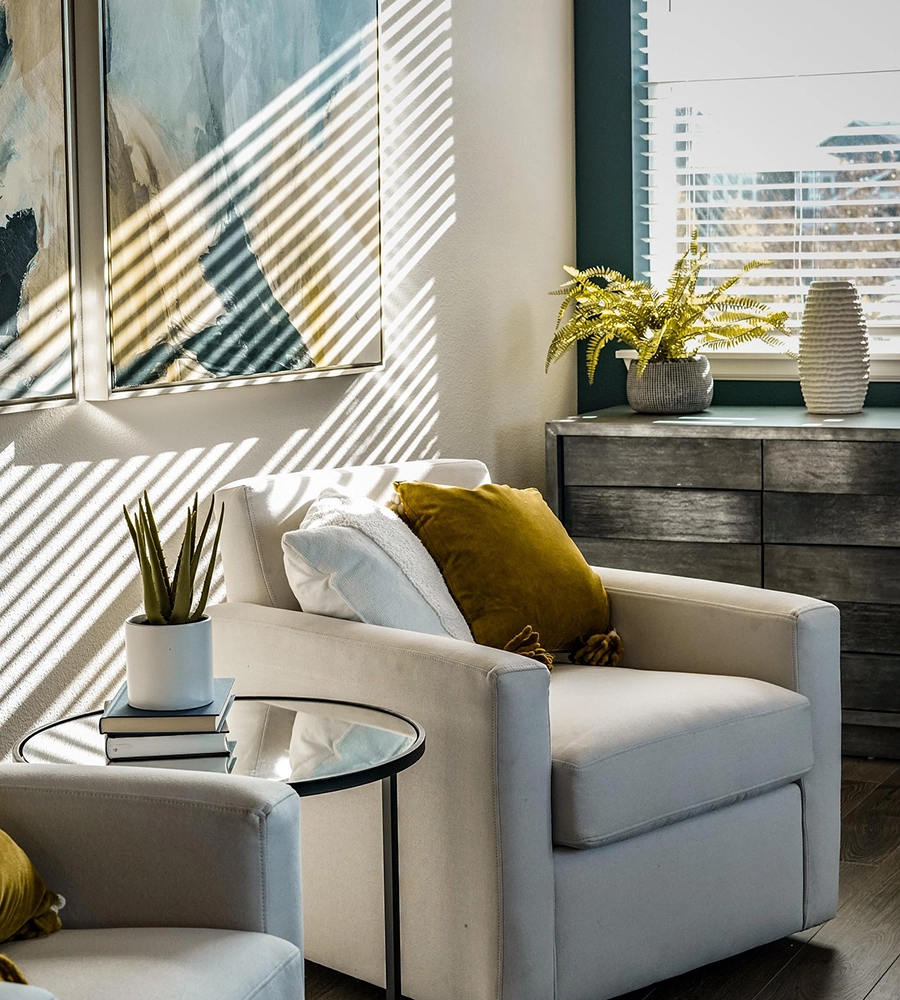
Homes need to do more than just provide shelter. They should be sanctuaries that allow you to recharge, reflect, and relax. It is only with thoughtful design that you can ensure your home supports mental clarity and calm. Whether you’re renovating a room or just refreshing your decor, these tips will help you create a more peaceful and mindful environment.
1. Start with a Clean, Minimal Foundation
Clutter is the enemy of calm. It creates visual noise, which can lead to mental fatigue and stress. Begin by decluttering each room, removing anything that isn’t useful or loved.
Minimalism doesn’t mean stark emptiness; it’s about being intentional with what you keep. Clear surfaces, organised shelves, and a focus on simplicity create space for your mind to breathe.
Invest in concealed storage solutions to keep daily-use items accessible but out of sight. A minimal foundation makes it easier to maintain order and helps your home feel more open and serene.
2. Let Nature In
Bringing nature indoors is one of the most effective ways to foster tranquility because natural elements have a calming effect, reducing anxiety and improving focus.
Incorporate plants, like snake plants, pothos, or peace lilies, to purify the air while adding a soothing green presence, while not forgetting to bring in natural wood, woven textures, and water features through your other furnishings, like your table, rug, or statement pieces.
To complete the process, ensure natural light is available as much as possible. This means keeping window treatments light and airy to let sunshine pour in. If privacy is a concern, consider sheer curtains or frosted window film that maintains brightness without sacrificing comfort.
3. Choose a Soothing Colour Palette
Colour can strongly influence mood. Soft neutrals, pastels, and muted earth tones create a sense of calm and order. Think shades like pale blue, warm beige, sage green, and soft white. Avoid overly saturated or high-contrast colours in spaces meant for relaxation, such as bedrooms and living rooms.
In areas where focus is needed, like a home office, cooler hues such as dusty blue or light grey can promote clarity and mental sharpness.
4. Mindful Material Choices
The materials you choose can make a significant impact on the emotional tone of a space. Opt for natural, tactile materials that feel grounded and comforting. Wood, stone, cotton, and linen will all bring warmth and authenticity to your home, for example.
If you’re considering new flooring, natural stone is a timeless option that blends beauty with tranquility. Best of all, it evokes a spa-like feel while offering durability and visual calm.
Check out the wide range of stone flooring options that can enhance the serenity of your home by visiting mystonefloor.com.
5. Create Zones for Different Moods
Every room doesn’t have to serve a single purpose. Create distinct zones within open-plan areas to suit different activities and moods. A quiet reading nook with soft lighting and plush seating can coexist with a workspace that’s clean, bright, and focused.
Use rugs, furniture placement, or lighting to visually separate these zones. Defining space by mood helps your mind transition more easily between tasks and moments of rest.
6. Personal Touches That Soothe
Lastly, decorate with intention. Include artwork, textiles, or heirlooms that bring you joy and peace, or simply surround yourself with pieces that have meaning, not just style. A curated environment filled with memories and beauty can subtly reinforce calm and clarity every day.
Conclusion
Designing a peaceful home doesn’t require a complete overhaul. With thoughtful adjustments to lighting, colour, layout, and materials, you can transform your space into a calming retreat. These small changes support mental clarity and help you feel more grounded, starting right at home.
Image by Afif Ramdhasuma from Pixabay