Your smile has many years ahead of it. The way you care for it today can influence how comfortable and healthy your teeth and gums remain later in life.
Much like other aspects of your health, oral health benefits from consistency rather than attention only when a problem appears.
Daily brushing and interdental cleaning provide the foundation, while regular visits to a Guelph dentist add professional cleaning and ongoing assessment to that routine. Together, these forms of care can help manage everyday buildup and keep track of how your oral health changes over time.
This guide explains in detail what preventive care involves and why it remains valuable at every stage of life.
What Does Preventive Dental Care Actually Include?
Preventive dental care begins at home. Regular brushing helps control plaque on the surfaces of your teeth, while cleaning between them reaches areas a toothbrush may miss. However, home care is only one part of the picture.
Professional cleanings provide another level of support. Plaque that remains on the teeth can eventually harden into tartar, which cannot be removed effectively with ordinary brushing. A dental hygienist can remove these deposits while also paying attention to areas where buildup tends to return.
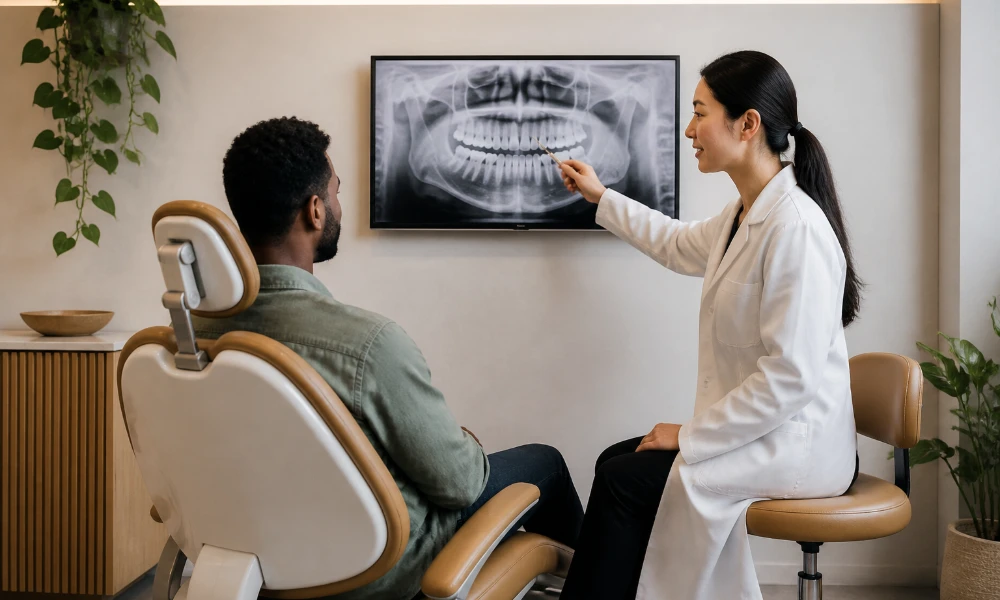
Routine examinations serve a different purpose. They allow the dentist to assess the condition of your teeth and gums, look for changes, and decide whether further investigation is appropriate.
Together, home care and professional monitoring create a more complete preventive routine.
How Does Preventive Dental Care Protect Your Smile Over Time?
The value of preventive dentistry becomes clearer when you look beyond a single appointment. Regular care creates opportunities to manage everyday buildup, monitor changes, and adjust your oral-care routine as your needs evolve.
How do these benefits support your smile in the long run? Let us look at the key ways:
Early Tooth Decay Can Be Easier to Address
Cavities are often associated with toothache, but discomfort is not always the first sign of decay.
A small area of decay may develop without causing an obvious change in how the tooth feels. By the time pain becomes difficult to ignore, the problem may have progressed further than it had when it first began.
Routine dental examinations create an opportunity to look for these changes before symptoms become the only clue. When needed, diagnostic imaging can provide information about areas that are difficult to assess visually.
This does not mean every cavity can be prevented. Rather, regular monitoring can reduce the chance of an unnoticed problem remaining that way simply because it does not hurt.
Your Gums Receive Attention Too
Healthy teeth depend on healthy supporting tissues, yet gums can receive less attention because changes are often subtle at first.
Bleeding during brushing, tenderness, or changes around the gumline may develop gradually. During preventive appointments, the gums can be assessed for signs of inflammation and other changes that may need closer monitoring.
Professional cleaning also removes deposits around the gumline that can contribute to irritation. At home, gentle, consistent cleaning helps maintain that cleaner environment between appointments.
Regular Exams Create a Useful Oral Health History
One dental examination shows what your mouth looks like today. A series of examinations can show how it is changing.
That difference becomes valuable over time. A tooth, gum area, or restoration may not need treatment immediately, but the dentist may decide that it is worth monitoring. At later visits, its condition can be compared with previous findings rather than assessed without context.
Your dental needs can also change with age, health, medications, or previous dental treatment. Having an ongoing record helps put new symptoms or changes into a broader picture.
Preventive care therefore becomes less about isolated appointments and more about following your oral health for a beautiful smile over the years.
Preventive Visits Look Beyond Cavities
It is easy to think of a dental examination as little more than a cavity check. In practice, there is more to assess.
The dentist may look at existing fillings or crowns to see how they are holding up. The gums and other oral tissues can also be examined, while the bite or jaw may receive attention when there are relevant symptoms or concerns.
Adult dental examinations can include oral cancer screening as part of this broader assessment. Diagnostic imaging may also be recommended when clinically appropriate rather than automatically being required at every visit.
Looking at the mouth more broadly matters because maintaining a healthy smile involves more than keeping individual teeth free from decay.
Professional Guidance Makes Home Care More Personal
Most people already know that brushing and cleaning between the teeth are important. The more useful question is whether those habits are working effectively for your particular mouth.
Perhaps plaque repeatedly collects behind certain teeth. Someone with dental restorations may have different cleaning considerations, while changes in gum health can affect which areas need more attention.
Preventive visits create an opportunity to identify these patterns. Advice on brushing or interdental cleaning can then respond to what is actually happening rather than relying entirely on general recommendations.
Over time, those small adjustments can make daily oral care easier to maintain and more purposeful.
Support Long-Term Oral Health With Guelph Village Dental
If you are looking for a dental practice in Guelph that can support both routine oral care and changing dental needs over time, Guelph Village Dental offers care for patients across different stages of life.
The practice provides preventive and family dentistry alongside restorative treatment, dental implants, and other dental services. Preventive care includes professional cleanings and dental examinations, with diagnostic tools available when clinically appropriate.
Having these services within the same practice can also provide continuity as your needs change. You may visit for routine preventive care and later need help with a damaged tooth, a restoration, or another dental concern. In each case, the focus can shift according to what your oral health requires at that point.
Conclusion
Maintaining a healthy smile for years is rarely about one perfect dental appointment. It is the result of what happens between visits as well as the professional care that supports those everyday habits.
Brushing and interdental cleaning help manage plaque at home, while professional cleanings and examinations provide a closer view of how your oral health is changing.
When those parts work together consistently, preventive dental care becomes more than a way to avoid problems. It becomes an ongoing approach to caring for your teeth and gums as your needs change over time.