Language development reflects how a child listens, plans movement, shares intent, and connects with people. Milestones help families notice patterns without turning growth into a rigid checklist. Speech therapy supports early sounds, gestures, words, sentence building, play skills, and social communication through structured clinical practice. With careful observation and caregiver input, therapy helps children use language during meals, school routines, play, and everyday transitions.
Early Support
Between 18 months and 6 years, timely care can address communication gaps before frustration shapes behavior. Families searching for speech therapy in Chesterfield, MO, often need support that considers speech, sensory processing, attention, and social readiness together. A session may track word attempts, imitation, requests, turn-taking, and responses during familiar play.
Milestones Matter
Milestones show what many children do at certain ages, yet they never tell the whole story. A toddler often points, waves, imitates sounds, or follows one-step directions before speaking. Preschoolers usually expand their vocabulary, answer simple questions, describe events, and engage in pretend play. Therapy compares these skills with hearing status, attention span, oral motor control, and interaction style.
Building First Words
First words usually come from routines that feel meaningful. A therapist may model short labels during snacks, books, blocks, dressing, or movement games. The purpose is functional communication, such as requesting help, naming caregivers, refusing items, or choosing an activity. Progress may appear through speech sounds, signs, picture exchange, gestures, or spoken attempts.
Expanding Sentences
Once single words appear, many children need help combining ideas. Therapy may focus on action words, early grammar, location terms, and two-word phrases. A child might practice “more bubbles,” “go car,” or “mommy help” during play. Short models, repeated in context, let children hear language patterns without feeling tested.
Sound Clarity
Speech sound development affects how well others understand a child. Some substitutions are age-expected, while persistent errors may require clinical attention. Therapy can strengthen awareness of lip, tongue, jaw, and airflow placement through structured practice. Clearer speech often lowers frustration and helps children participate more comfortably with peers.
Social Language
Communication includes more than naming objects or repeating words. Children also learn to take turns, read facial cues, greet others, ask questions, and repair confusion. Therapy can build these skills through stories, games, role play, and group routines. Social language support can help children who know many words but struggle to use them in social situations.
Play As Practice
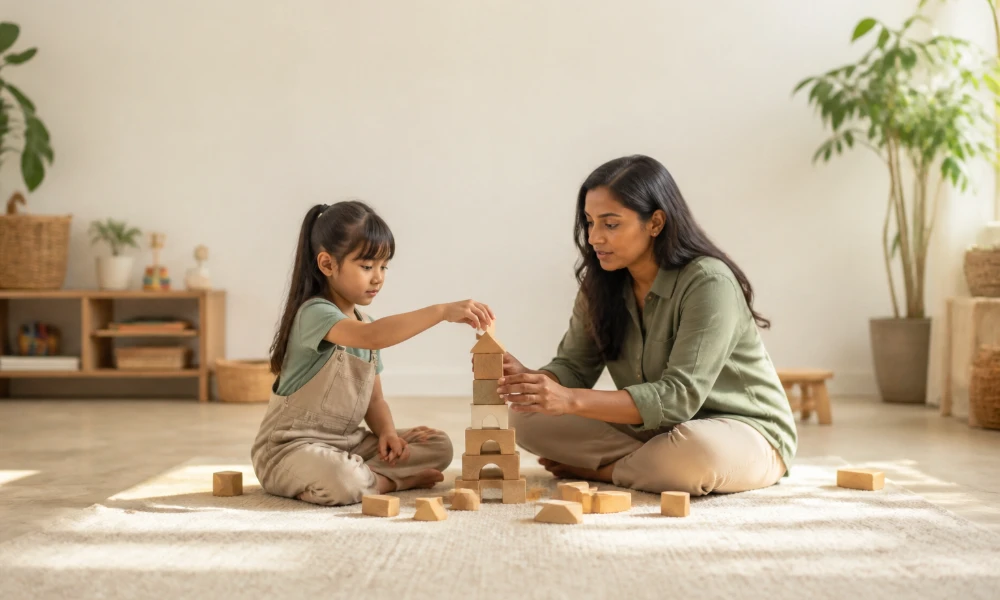
Play gives communication a reason to happen. During pretend cooking, a child can request utensils, describe actions, and follow short directions. With toy trains, a therapist might model stop, go, fast, slow, in, and out. Play-based therapy keeps practice active, observable, and connected to routines children already know.
Family Carryover
Caregivers extend therapy beyond the clinic room. A clinician may suggest brief home strategies, such as pausing for a response, offering two choices, or repeating key words. Families can add language during meals, bath time, dressing, and car rides. Small daily exchanges often provide more practice than one weekly appointment.
Measuring Progress
Effective therapy uses clear targets and regular review. Goals may include new words, longer phrases, better sound accuracy, stronger imitation, or improved response to directions. Data helps the team see which strategies are working and which need revision. Caregiver reports also matter because home observations show how skills transfer into real life.
Team Coordination
Some children benefit from support across several disciplines. Speech therapists, behavior specialists, teachers, physicians, and caregivers may all contribute important observations. Coordination keeps goals consistent and reduces mixed messages. When adults use similar cues and expectations, children can practice communication across learning time, play, meals, transitions, and peer interaction.
Conclusion
Speech therapy supports language milestones by turning daily communication into focused, measurable practice. It can help children use sounds, words, gestures, sentences, and social skills more easily. Progress often depends on early referral, consistent routines, caregiver carryover, and goals that match the child’s profile. With the right plan, children gain clearer ways to express needs, share ideas, and participate in daily life.
- About the Author
- Latest Posts

Our Editorial Team are writers and experts in their field. Their views and opinions may not always be the views of Wellbeing Magazine. If you are under the direction of medical supervision please speak to your doctor or therapist before following the advice and recommendations in these articles.