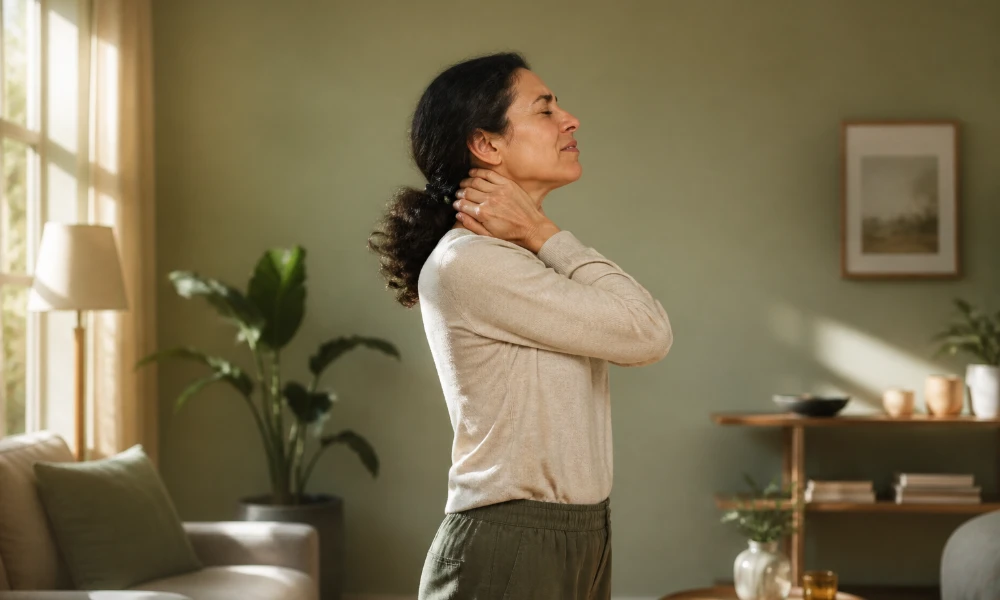
How to Stay Active When Living with Chronic Pain: Small Steps Towards Better Health
By now, over 90% of people will have broken their New Year’s resolutions, many having failed as early as the end of January. However heart-felt and earnest…

Living with persistent pain can make exercise feel daunting, but staying active doesn't have to mean pushing through discomfort or committing to an intensive fitness programme. With the right support, realistic goals and a gradual approach, even small amounts of movement can help improve mobility, confidence and everyday wellbeing.
For many people, the desire to become healthier begins with good intentions. Whether it's a New Year's resolution to exercise more, a determination to improve fitness or simply a wish to feel more comfortable in their own body, making positive lifestyle changes can be surprisingly difficult. When persistent pain is part of everyday life, however, the challenge can be considerably greater.
Chronic pain, generally defined as pain lasting or recurring for more than three months, affects millions of people and can interfere with sleep, mobility, emotional wellbeing and everyday activities. Conditions such as arthritis, fibromyalgia and persistent back pain can make even relatively simple movements uncomfortable, leaving people uncertain about how much activity is safe or beneficial.
Yet research increasingly highlights the importance of appropriate physical activity in managing many forms of persistent pain. Rather than avoiding movement altogether, finding ways to remain active within individual capabilities can help maintain strength, support joint function and improve overall quality of life.
According to the UK's National Institute for Health and Care Excellence (NICE), appropriately tailored exercise programmes can help people with chronic primary pain, a category of persistent pain that cannot be adequately explained by an underlying condition. The evidence suggests that exercise can reduce pain and improve quality of life, although the most suitable approach varies between individuals.
Why movement matters when you live with pain
When something hurts, our natural instinct is often to protect the affected area by moving less. Although rest may be necessary following certain injuries or during acute illness, prolonged inactivity can contribute to muscle weakness, stiffness and reduced physical confidence.
Over time, this can create a difficult cycle. Pain discourages movement, reduced activity makes everyday tasks more demanding, and the resulting loss of strength or mobility can make returning to exercise seem increasingly challenging.
Gentle, appropriately selected physical activity can help interrupt this cycle. Walking, swimming, cycling, stretching and certain forms of yoga or Pilates may all have a place in a personalised movement programme, depending on the cause of pain and individual ability.
The NHS advises that gradually increasing activity can help some people manage persistent pain, while offering wider benefits for physical and mental health. Importantly, the aim is not necessarily to eliminate pain through exercise but to improve function, confidence and quality of life.
Seven practical ways to become more active while managing pain
1. Start small and build gradually
One of the most common mistakes when beginning a new fitness routine is attempting too much too soon. For someone experiencing persistent pain, suddenly increasing physical activity can lead to discomfort, fatigue or a flare-up that makes continuing more difficult.
Instead, begin with a level of movement that feels manageable. This might mean walking around the garden, completing a few gentle seated exercises or taking a short stroll along a familiar route. Some people may comfortably manage ten minutes of activity, while others may need to begin with just two or three minutes.
Consistency is more important than intensity during the early stages. As confidence and physical capacity improve, the duration or difficulty of activities can be increased gradually. A physiotherapist can help establish an appropriate starting point, particularly when symptoms are unpredictable or movement causes significant discomfort.
2. Choose activities that work with your body
Not every form of exercise is suitable for every person, and there is no single activity that works for all types of chronic pain. The most effective approach is often one that combines enjoyment with appropriate physical support.
Swimming and water-based exercise may appeal to people who find weight-bearing activities uncomfortable, as buoyancy can reduce the load on some joints. Walking offers an accessible way to incorporate movement into daily life, while chair-based exercise can help those with limited mobility improve strength and maintain flexibility.
Gentle yoga, tai chi and Pilates may also be useful for some individuals, particularly when sessions are adapted to their abilities. It is important to choose appropriately qualified instructors and explain any existing health conditions before beginning a class.
For people with chronic primary pain, NICE recommends offering supervised group exercise programmes tailored to individual needs, preferences and capabilities.
3. Learn to pace yourself
Managing activity levels is particularly important when living with persistent pain. On days when symptoms are less noticeable, it can be tempting to accomplish everything that has been difficult during more uncomfortable periods. Unfortunately, doing too much can sometimes result in increased symptoms afterwards.
Activity pacing involves finding a sustainable balance between movement and rest. Rather than waiting until pain becomes overwhelming before stopping, it may help to break larger tasks into smaller sections, take planned breaks and spread demanding activities throughout the day.
For example, someone who enjoys gardening might spend a short period tending plants, rest or change position, and return to the activity later rather than attempting several hours of work at once.
This approach is especially relevant for people whose symptoms fluctuate. However, those with conditions involving post-exertional malaise, such as ME/CFS, require specific guidance because activity that exceeds their energy limits can worsen symptoms. Exercise should never be increased automatically regardless of how the body responds.
4. Prepare your body for movement
A gentle warm-up can help prepare muscles and joints for physical activity. Beginning with slower, comfortable movements allows the body to adjust gradually before undertaking more demanding exercise.
For example, someone planning a walk might start at a relaxed pace before increasing their speed, while those attending a movement class may benefit from gentle joint movements and exercises that gradually increase their range of motion.
Stretching can be useful for some people, particularly where muscle tightness is a concern, but it should be comfortable rather than forced. Holding painful stretches or attempting to move beyond a joint's normal range may aggravate symptoms.
If an activity produces new, sharp or worsening pain, stop and reassess. Although some temporary discomfort can occur when adapting to movement, it should not automatically be dismissed as a normal part of getting fitter.
5. Find support and make movement enjoyable
Maintaining motivation can be challenging, particularly when pain affects energy levels, sleep or mood. Having someone to share the experience with can make physical activity more enjoyable and provide encouragement when progress feels slow.
This might involve arranging regular walks with a friend, joining a gentle exercise class or participating in a community wellbeing group. For some, an online programme or physiotherapy-led class may offer a more accessible alternative.
Research into behaviour change also suggests that setting achievable, positively framed goals can improve the likelihood of maintaining new habits. A study published in PLOS ONE involving 1,066 participants found that people who set goals focused on achieving positive outcomes were more likely to report success than those whose goals centred on avoiding unwanted behaviours.
Rather than resolving to stop being inactive, for example, a more encouraging goal might be to enjoy a short walk outdoors three times a week, provided this is manageable for the individual.
6. Explore appropriate pain-management options
For some people, finding effective ways to manage discomfort can make participating in everyday activities easier.
Pain management may involve a combination of physiotherapy, education, psychological support, suitable medication and self-management strategies, depending on the underlying condition. Treatments that benefit one type of pain may not be appropriate for another.
Over-the-counter painkillers, such as paracetamol and ibuprofen, can be useful in certain situations, but they are not without risks. Anti-inflammatory medicines can cause gastrointestinal, kidney or cardiovascular complications in some people, while excessive paracetamol can cause serious liver damage. Long-term or frequent use should be discussed with a healthcare professional.
Drug-free approaches are also available, although their effectiveness varies. Heat or cold treatments, relaxation techniques and certain physical therapies may provide relief for some individuals. Wearable devices that use electrical or electromagnetic stimulation are sometimes marketed for pain management, but evidence varies between technologies, devices and health conditions. Being drug-free does not automatically mean that a treatment is risk-free or clinically proven for every type of pain.
For chronic primary pain specifically, NICE recommends a personalised approach that may include exercise and certain psychological therapies, while advising against routinely initiating several commonly used pain medications for this particular category of pain.
7. Recognise progress beyond the scales or fitness tracker
When people begin an exercise programme, success is often measured by distance travelled, calories burned or physical appearance. For those living with persistent pain, however, meaningful progress may look very different.
Being able to walk to the local shop, climb the stairs with greater confidence, spend time outdoors or participate in a favourite hobby may represent significant improvements in everyday wellbeing.
Keeping a simple record of activity levels, symptoms and how you feel afterwards can help identify what works and reveal changes that might otherwise go unnoticed.
It is equally important to recognise that progress is rarely linear. Some days will be easier than others, and needing to adapt or reduce activity during a difficult period does not mean that previous improvements have been lost.
When should you seek professional advice?
Although staying active can be beneficial for many people living with chronic pain, persistent or unexplained symptoms deserve proper medical assessment. Pain can have many causes, and not every condition should be managed through exercise alone.
Speak to a GP or physiotherapist if pain is affecting everyday activities, becoming progressively worse or preventing you from sleeping. Seek urgent medical assessment for symptoms such as new or progressive weakness, loss of bladder or bowel control, loss of sensation around the groin, or severe pain following a significant injury.
A healthcare professional can help identify whether there is an underlying condition that requires treatment and recommend an activity programme suited to your circumstances.
A healthier lifestyle begins with achievable changes
Improving physical wellbeing is not about forcing the body to meet unrealistic expectations. It is about developing a better understanding of what your body needs, respecting its limitations and recognising the value of gradual progress.
For someone living with chronic pain, success may not mean running a marathon or completing an intensive fitness challenge. It might be the freedom to enjoy a walk in nature, spend an afternoon with family or return to an activity that once brought pleasure.
By focusing on manageable goals, appropriate support and movement that feels meaningful, it is possible for many people to improve their physical confidence and quality of life.
Ultimately, the most sustainable healthy habits are not necessarily the most ambitious. They are the ones that can become a positive, realistic and enjoyable part of everyday living.
Research and further reading
These sources can be included as editorial references at the end of the article:
NICE: Chronic pain assessment and management guidelines — recommendations covering exercise, psychological therapies and pain management.
NHS: 10 ways to reduce pain — practical advice on movement and managing persistent pain.
PLOS ONE: A large-scale experiment on New Year's resolutions — research into goal-setting and behaviour change.
Medical disclaimer: This article provides general educational information and does not replace individual medical advice. People experiencing persistent pain or managing an existing health condition should consult an appropriately qualified healthcare professional before making significant changes to their exercise routine, medication or treatment.
Filed underArthritis, Heart health, Chronic pain, Injury & recovery, Yoga & Pilates, India & Sri Lanka

About the author
Rachel BransonFounder & Editor in Chief
With over 30 years in publishing and a background in Naturopathic Medicine, she has made it her mission to challenge mainstream health narratives and empower people to take control of their wellbeing. Now expanding her vision across the Atlantic, Rachel is bridging UK and US audiences with inspiring stories, trusted insights, and pioneering partnerships that align with a new era of health innovation.