
Purine synthesis is the set of metabolic pathways (a series of chemical reactions) that create purine nucleotides. Various cellular processes, including DNA and RNA synthesis, energy transfer, and cell signaling, involve purine nucleotides because of their unique structure and versatility.
For example, the adenine and guanine bases of purine nucleotides (adenosine and guanosine) are the foundational building blocks of DNA and RNA.
The purine salvage pathway is one of the two major metabolic pathways for purine synthesis. This pathway uses Hypoxanthine-Guanine Phosphoribosyltransferase (HPRT1), an active protein that is an essential enzyme that recycles purine bases by reattaching hypoxanthine and guanine to a ribose sugar.
| The second major pathway is the de novo pathway. |
This article analyzes the biochemical function of the HPRT1 active protein, its pathological effects, and its role as a research-grade reagent.
Enzymatic Function and Molecular Characteristics
Catalytic Mechanism
HPRT1 facilitates the transfer of a phosphoribosyl group from the co-substrate, 5-phosphoribosyl-1-pyrophosphate (PRPP), to a purine base within the purine salvage pathway. It converts hypoxanthine into inosine monophosphate (IMP) and guanine into guanosine monophosphate (GMP).
The HPRT1 reaction has a specific order.
- The HPRT1 enzyme binds to 5-phosphoribosyl-1-pyrophosphate (PRPP) co-substrate.
- The HPRT1 enzyme binds to either hypoxanthine or guanine purine base.
- After both 5-phosphoribosyl-1-pyrophosphate (PRPP) and a purine base (either hypoxanthine or guanine) have bound to the enzyme, the HPRT1 enzyme facilitates the transfer of the phosphoribosyl group from PRPP to the purine base. This key step creates the final product.
- Finally, the HPRT1 enzyme releases the new purine nucleotide.
Structural Attributes
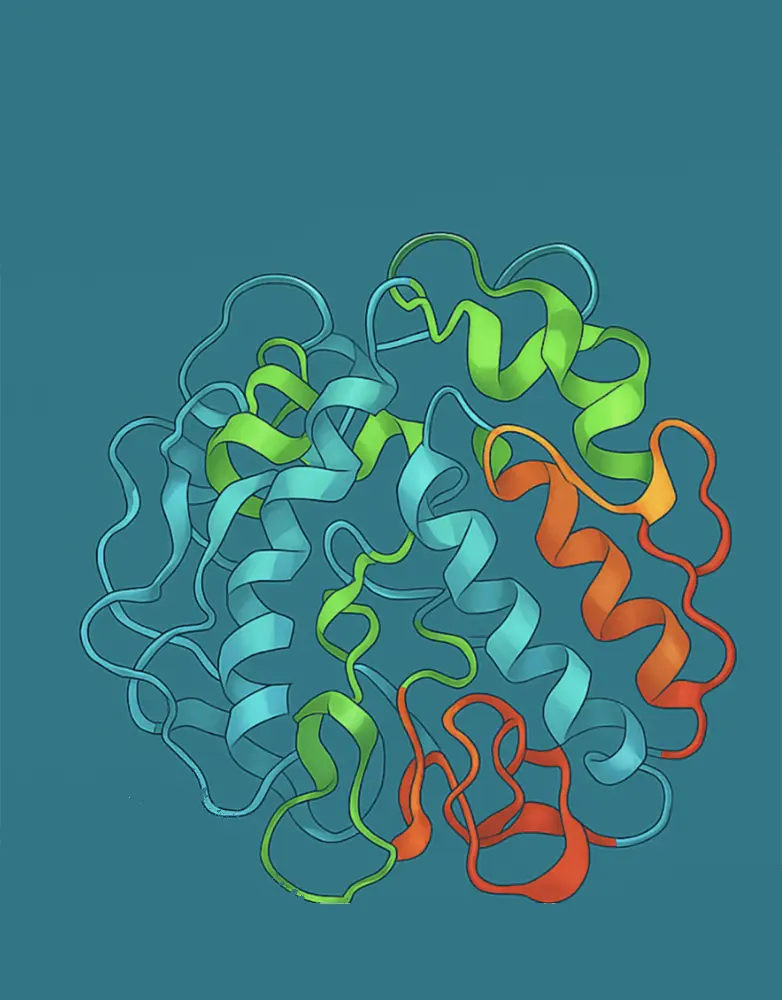
This active protein is composed of four identical polypeptide subunits, which are symmetrically arranged to form the functional complex, giving it a defined quaternary structure.
The interface between subunits contains multiple active sites to precisely accommodate both the PRPP and purine base substrates.
These active sites have amino acid residues that play an important role in substrate recognition and binding.
HPRT1 as a Reagent in Modern Research
The role and precise study of HPRT1’s function heavily depend on the quality recombinant HPRT1 protein. Cellular components or other enzymes can introduce impurities during protein preparations, which can lead to inaccurate and non-reproducible results.
A standardized active liquid protein preparation of HPRT1 is a crucial tool in modern research.
HPRT1 produced using recombinant technology in a controlled laboratory environment ensures purity and which in turn leads to reliability, validity, and reproducibility.
Applications
Enzyme Kinetics
Researchers rely on active liquid protein to accurately determine maximum reaction velocity (Vmax), Michaelis constant (Km), and other key kinetic parameters. This allows precise measurement of the enzyme’s catalytic efficiency and analysis of the binding and inhibitory effects of potential drugs.
High-Throughput Screening (HTS)
High-Throughput Screening (HTS) allows rapid screening of thousands of small molecules. These assays require a reliable supply of active HPRT1 protein to ensure consistent results.
Structural Biology
Techniques like X-ray crystallography require a pure and correctly folded protein to determine the three-dimensional structure of HPRT1.
Conclusion
The Hypoxanthine-Guanine Phosphoribosyltransferase (HPRT1) enzyme serves as a powerful research tool for advancing our understanding of purine metabolism. The study of its structure and catalytic function is vital for developing targeted therapeutic strategies and novel small-molecule inhibitors.
FAQs
What is the difference between HPRT1 and HGPRT?
HPRT1 is the official gene symbol for the human enzyme. On the other hand, HGPRT is the traditional and more commonly used name for the same protein.
How is a recombinant HPRT1 protein typically produced for research purposes?
It’s produced by inserting the HPRT1 gene into a host organism, like bacteria. The host then produces the protein, which is then purified to ensure it is highly pure and active for research.
What are the most common methods for assaying HPRT1 enzyme activity in a lab setting?
Radiolabeling assays, coupled enzyme assays, and high-performance liquid chromatography (HPLC) are the most common methods for assaying HPRT1 enzyme activity in a lab setting.
- About the Author
- Latest Posts

Our Editorial Team are writers and experts in their field. Their views and opinions may not always be the views of Wellbeing Magazine. If you are under the direction of medical supervision please speak to your doctor or therapist before following the advice and recommendations in these articles.