Choosing a powered mobility device is about more than comparing features. It’s about finding what helps your loved one move safely and confidently through their home and community.
If you’re considering enclosed mobility scooters for sale, you’re likely looking for weather protection and peace of mind during outdoor trips, not just basic transportation.
Understanding Your Loved One’s Daily Reality
Before looking at specific models, take a few minutes to think through how and where the device will actually be used. This simple assessment can help you avoid two common frustrations: buying equipment that doesn’t fit through doorways or choosing a device that works at home but creates new safety concerns.
Here’s what to consider:
- Measure the spaces where it matters most. Check your narrowest doorway and tightest corner, especially bathroom doors and hallway turns. These are usually the trouble spots.
- Walk through a typical day. Think about the most frequent trips: nighttime bathroom visits, getting to the kitchen, outdoor errands, loading into vehicles. Where does your loved one spend most of their time?
- Note any obstacles. Look for thresholds, steps, steep driveways, or uneven outdoor surfaces like gravel or cracked pavement.
- Think about charging and storage. Where will it plug in? Will the charging cable create a tripping hazard? Is there room to park it without blocking exits?
- Consider transportation needs. Will it need to fit in a car trunk? Load into a van? Are you planning to use rideshares or public transit, or will it stay primarily at home?
- Identify moments that feel risky. Transfers from bed to device, reversing in tight spaces, navigating in and low light, or moving across wet floors. These are the situations where the right features really matter.
Which Type Fits Your Situation?
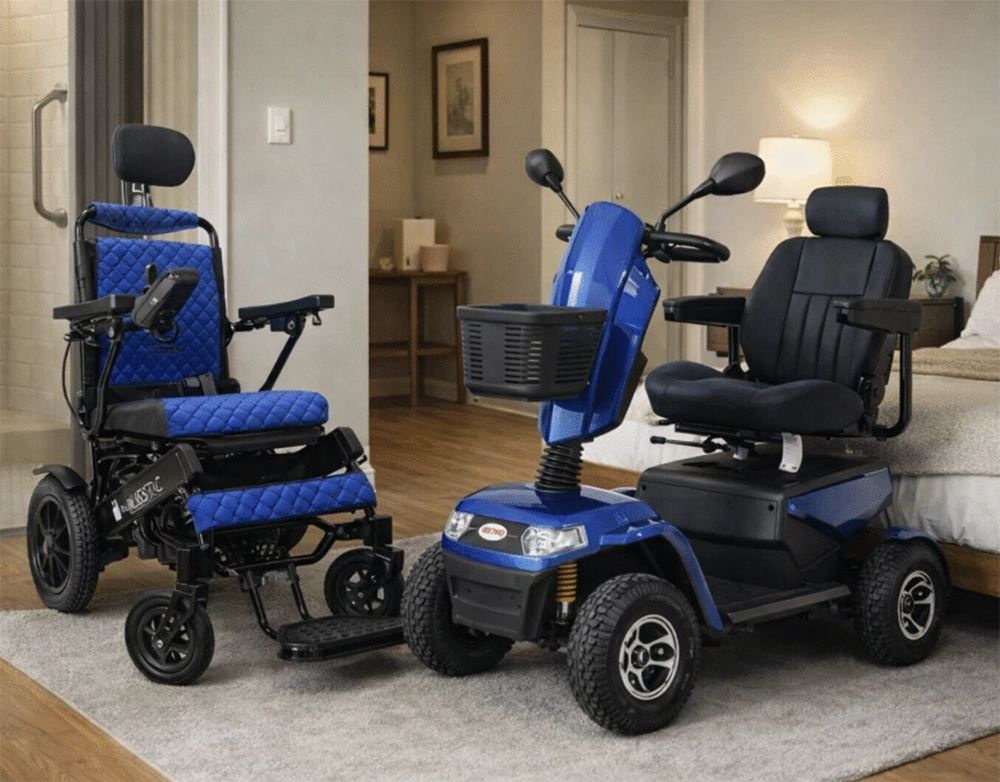
- If tight indoor spaces and longer sitting periods are priorities, an electric wheelchair often provides better maneuverability and seating support.
- If outdoor errands and straightforward controls are more important, a mobility scooter usually offers easier operation and better outdoor performance.
- If weather protection is essential, a covered mobility scooter or fully enclosed mobility scooter becomes worth serious consideration.
Making Your Home Safer for Mobility Device Use
The goal isn’t to renovate your entire home. It’s to address the specific areas where falls, collisions, and difficult transfers tend to happen. Small, targeted changes often make the biggest difference in daily confidence and safety.
Bathroom Safety Comes First
Bathrooms combine slippery surfaces, tight turns, and rushed movements. According to the CDC, about 1 in 4 adults age 65 and older fall each year, with over 14 million falls reported annually. Many of these happen in bathrooms, making this room worth extra attention.
Simple changes that reduce bathroom risks:
- Place non-slip mats near the shower and sink, especially where water tends to splash.
- Improve lighting along the path from bedroom to bathroom, and consider a small nightlight for late-night trips.
- Create clear turning space by moving bins, narrow shelving, and anything that reduces maneuvering room.
- Keep daily-use items at waist height to avoid reaching and twisting during grooming.
- Install grab bars near the toilet and shower entrance to support safe transfers
- Wipe up water quickly and treat wet tile floors as a slipping hazard.
How device choice affects bathroom access:
- Electric wheelchairs often handle tighter turns more precisely, depending on the drive system and wheelbase length.
- Enclosed mobility scooters add width due to the protective cabin, so they work best when doorways are at least 32 inches wide and turning areas are generous.
Entry, Exit, and Threshold Safety
Even a small threshold can cause a device to tip or wheels to slip during the transition. This is where instability and anxiety about tipping often show up.
Practical fixes that smooth entry and exit:
- Use threshold ramps where needed to create gentle transitions instead of abrupt bumps
- Choose low-profile, non-slip door mats that won’t catch on wheels or footplates
- Clear the path by relocating shoe racks and umbrella stands.
- Add outdoor lighting and reflective markers if your loved one will be coming and going in low light.
- If you’re using a ramp, make sure it has side rails and a stable, non-slip surface.
Device considerations for doorways:
- Scooters usually handle outdoor approaches well, but can be awkward when making the final turn through a doorway.
- Electric wheelchairs offer more precision at thresholds when space is tight, though tire type and traction still affect performance.
Hallways, Floors, and Living Spaces
Even if your loved one won’t be using stairs with their device, stairways still pose fall risks when people attempt to navigate them on foot quickly.
Safety steps for common areas:
- Remove loose rugs or secure them with non-slip backing
- Keep hallways clear of extension cords, storage baskets, and furniture that narrows the path
- Mark stair edges with high-contrast tape and ensure handrails are sturdy
- Avoid placing charging stations where cables cross walking routes or create tripping hazards.
A practical reminder: Most mobility scooters and electric wheelchairs aren’t designed for stairs. If your home has multiple levels, plan to keep daily activities on one floor or explore lift solutions with an occupational therapist.
Kitchen Safety and Access
Kitchens create create challenges through tight corners, clutter, and the combination of hot surfaces and hurried movements.
Changes that support kitchen independence:
- Designate a clear parking spot that doesn’t block the stove, oven, or emergency exits
- Move frequently used items to mid-shelf height to reduce bending and reaching
- Use pull-out shelves or lazy Susans to avoid twisting and overreaching
- Keep floors dry, especially around the the sink and refrigerator.
How the device affects kitchen use:
- Electric wheelchairs may allow a closer approach to counters depending on the armrest height and footplate design.
- Mobility scooters typically keep users a bit farther from work surfaces, which can work fine in open kitchen layouts.
Bedroom and Nighttime Safety
Nighttime combines low visibility with urgency, which is why many falls happen on the path from bed to bathroom. The World Health Organization notes that older adults face the highest risk of serious injury from falls, with 20 to 30 percent of older people who fall suffering moderate to severe injuries in the United States.
Nighttime safety measures that help:
- Keep a clear, repeatable path from bed to bathroom.
- Add soft glow lighting along the route rather than relying on bright overhead lights.
- Park the mobility device in the same spot every night so your loved one doesn’t have to search for it in the dark.
- Keep essentials like water, glasses, and a phone within easy reach to reduce sudden standing and turning.
For more detailed information on fall prevention, the National Institute on Aging provides helpful guidance in their resource on Falls and Fractures in Older Adults.
Why These Safety Steps Matter
Falls are a leading cause of injury among older adults, and the numbers aren’t small. Understanding this risk isn’t about creating fear. It’s about making practical decisions that preserve independence and reduce caregiver stress.
Beyond preventing injuries, a well-thought-out mobility setup reduces anxiety for everyone involved. When your loved one can move confidently through their home and community, they maintain the social connections and daily routines that support overall wellbeing. You’ll also find that caregiver burden decreases when the environment supports safe, independent movement.
The financial reality matters too. The cost isn’t just the mobility device itself. It’s the device plus the home modifications that make it truly usable. A $3,000 scooter that won’t fit through doorways ends up costing more in frustration and unused equipment than a $2,500 wheelchair that integrates smoothly into daily life.
For helpful context on typical costs for aging-in-place modifications, Forbes offers a practical breakdown in their guide on Aging in Place Remodeling.
A Practical Approach to Planning
Instead of trying to do everything at once, break the process into manageable phases:
- Phase 1: Choose your device category. Start by deciding between an electric wheelchair and a mobility scooter based on where it’ll be used most, indoor space constraints, and daily routines.
- Phase 2: Measure and identify risk zones. Confirm doorway widths, turning radiuses, and problem areas like the bathroom, entryway, hallways, and bedroom.
- Phase 3: Address the highest-priority safety concerns first.
- Phase 4: Add comfort, storage, and transportation solutions.
Budget-friendly Safety Upgrades That Make a Real Difference:
- Improve lighting along key routes and add nightlights where your loved one moves after dark
- Declutter turning areas and removing trip hazards
- Install threshold ramps and non-slip surfaces in areas where water is present
- Reposition storage to reduce reaching, bending and twisting.
Where Enclosed Mobility Scooters Make the Most Sense:
If your loved one needs to run outdoor errands regularly and weather, wind, or temperature create barriers to getting out, an enclosed electric scooter can restore that freedom. Fully enclosed mobility scooters work especially well for longer community trips where comfort and protection build confidence. Many users appreciate the car-like experience that enclosed designs provide while keeping the straightforward operation of a scooter.
If you’re exploring options and want to compare models, look for features that match your loved one’s specific needs: turning radius for indoor use, ground clearance for outdoor terrain, weight capacity for safety, and battery range for typical trips. Most reputable retailers offer detailed specifications, customer reviews, and return policies that let you test the device in your actual home environment.
The goal is finding a mobility solution that reduces barriers rather than creating new ones, so your loved one can maintain the routines and connections that matter most to them.
- About the Author
- Latest Posts

Our Editorial Team are writers and experts in their field. Their views and opinions may not always be the views of Wellbeing Magazine. If you are under the direction of medical supervision please speak to your doctor or therapist before following the advice and recommendations in these articles.