The aging process doesn’t just affect our skin and hair—it dramatically impacts our teeth, smile, and lower third of face. Just like our hair turns gray, our teeth begin to show signs of wear. They become gray or yellow as we lose enamel—the hard, white, outer layer that gives teeth their bright appearance. Over time, daily habits like eating, brushing, and exposure to acid wear down that enamel. As it thins, the darker, yellower dentin beneath starts to show through, giving the teeth a dull, translucent, or discolored look.
Why Whitening Doesn’t Always Work
Traditional whitening treatments—whether in-office or at home—work by removing stains from the outer surface of the tooth. This is highly effective when you’re young and your enamel is thick. But in your 40s and 50s, the discoloration isn’t just a stain—it’s the color of your internal tooth structure that shows through more since the enamel is thinner. The enamel is so thin and clear that whitening won’t make a significant difference. The outer surface can be clean and stain free, but still look yellow or gray due to the dentin underneath showing through.
Shorter Teeth and Facial Collapse
As we age, we don’t just lose enamel on the front of the teeth—we lose it on the biting surfaces too. Years of chewing and grinding wear down tooth height, which causes our teeth to show less when we talk or smile. This collapse of bite shortens the lower third of the face, making the chin appear more prominent, the upper face look longer, and the skin around the mouth slightly more wrinkled due to the compression of soft tissues.
To prevent this, many younger patients are advised to wear night guards. But for patients in their 40s and beyond, this enamel loss has often already occurred, requiring the lost enamel to be replaced.
Cosmetic Dentistry as Anti-Aging Medicine
This is where cosmetic dentistry—and specifically anti-aging veneers—comes into play. What we’re doing isn’t just cosmetic. We’re restoring what was lost.
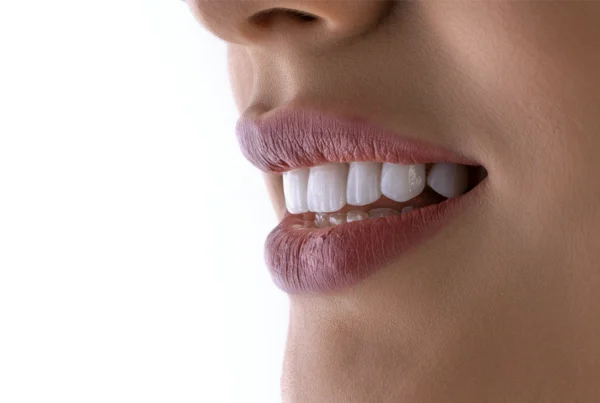
By using porcelain materials that have the same properties of enamel, we can rebuild the front and biting surfaces of the teeth. Often, this doesn’t require removing any tooth structure or even using anesthesia. We’re simply adding back the layer of enamel that was worn away with time.
- On the front surfaces, this restores brightness and eliminates the dull, translucent appearance.
- On the biting surfaces, it rebuilds height and volume, restoring the lower third of the face to its original proportion.
This gives patients what we call a dental facelift—a non-surgical lift that stretches the skin naturally by bringing back the facial structure they had 20 or 30 years ago.
Why It’s Often Better Than a Traditional Facelift
We frequently recommend patients consider this kind of treatment before opting for a traditional facelift. Here’s why:
- Predictability: Working with teeth and hard tissue allows for precise and predictable results.
- Better Surgical Outcomes: If a patient still chooses to pursue a facelift later, it’s important that their bite is restored first. Plastic surgeons need to work from the patient’s final facial structure—not one that will change after dental restoration.
- Sometimes It’s Enough: Many patients find that after a dental facelift, they don’t need additional surgical intervention at all.
Restoring Symmetry for a More Youthful Appearance
Another key component of aging is facial asymmetry. As we age, we tend to chew more on one side, causing uneven wear. This results in muscle hypertrophy on one side and weakening on the other, leading to subtle but noticeable asymmetry.
By restoring the enamel and bite, we help rebalance the mouth—leading not only to an immediate cosmetic improvement but also to a gradual rebalancing of facial muscles. Over time, patients often regain more symmetry and a naturally attractive appearance.
Supporting the Lips and Cheeks
Tooth and bone loss also reduce support for the cheeks and lips. With less volume, the lips may appear thinner, and the cheeks less full. By restoring tooth structure—and sometimes adding a bit more to compensate for bone resorption—we can bring back that support and enhance overall facial aesthetics.
The Results: Natural, Youthful, and You
What’s most exciting about anti-aging veneers is that the results are dramatic and natural. We don’t try to give patients a completely new look—we aim to restore the look they had when they were younger. Most patients prefer this approach because it harmonizes better with the rest of their face. Subtle tweaks can be made, of course, but the goal is a natural return to a more youthful smile.
Ultimately, this treatment goes far beyond the teeth. We’re not just focused on making teeth look good—we’re focused on how the entire face looks when you smile. Bright white teeth alone aren’t the goal. A beautiful, natural smile that enhances the lips, the eyes, and the balance of the entire face is what truly turns back the clock.
Let me know if you’d like to add a title image, call-to-action, or patient testimonials. I can also reformat this for a blog post, brochure, or landing page if you need.