
Rethinking Our Relationship with Doing Nothing
As more people celebrates busyness, boredom has become something we try to eliminate as quickly as possible.
We scroll, schedule, distract and fill every spare moment — often without even realising it.
But in Episode 22 of Well, That’s Awkward, Susan Osman and Rachel Branson pause to ask a simple but surprisingly complex question:
What if boredom isn’t the problem… but part of the solution?

What Is Boredom — and Why Do We Avoid It?
Boredom is often described as that restless, uncomfortable feeling when nothing seems to hold our attention.
It can feel like:
- A lack of stimulation
- A sense of dissatisfaction
- An urge to escape the present moment
- Or even a deeper questioning of purpose
In modern life, boredom is almost treated as a failure — something to fix immediately.
We’ve been conditioned to believe that:
- Being busy equals being productive
- Constant stimulation equals happiness
- Stillness equals wasted time
But this episode challenges that narrative.
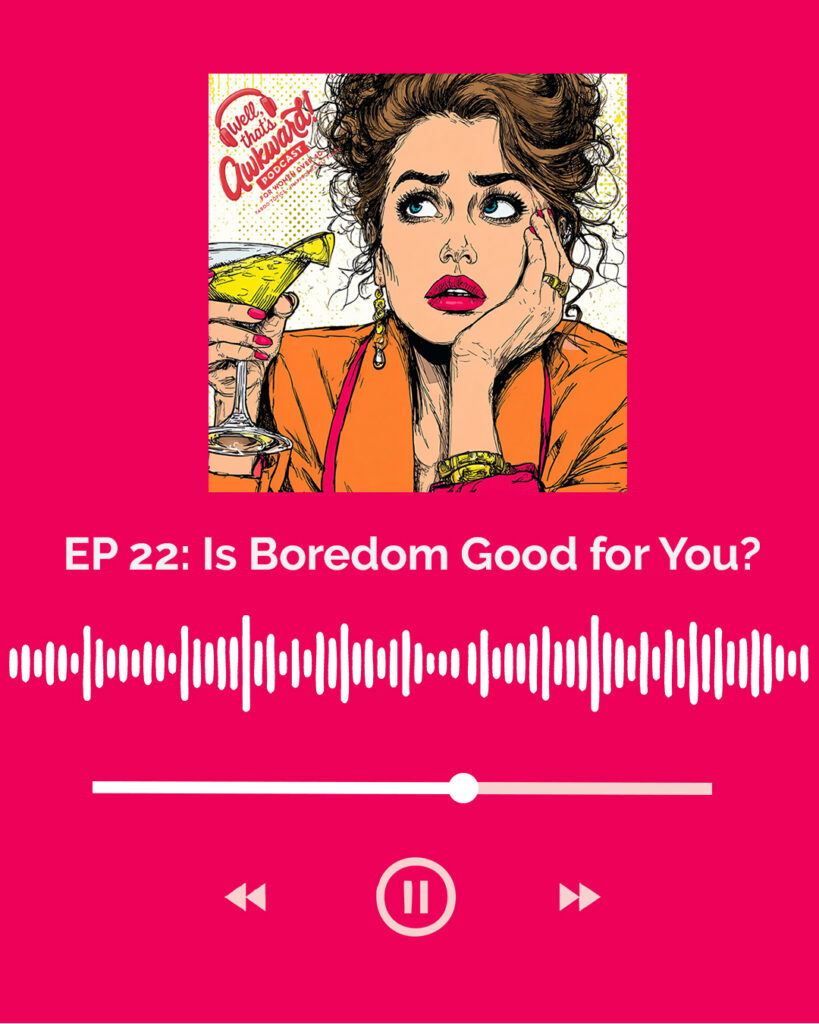
Listen on Acast
“I Never Get Bored” vs “I Need Boredom”
One of the most interesting dynamics in this episode is the contrast between Susan and Rachel’s experiences.
Susan shares that she rarely, if ever, feels bored — raising questions about whether some people are naturally wired to seek constant engagement or stimulation.
Rachel, on the other hand, recognises boredom as something she does experience — and is beginning to see it differently.
Instead of viewing boredom as something negative, she explores the idea that it may be an essential part of her creative process.
This contrast opens up a wider conversation:
Is boredom something we’re meant to eliminate — or something we’re meant to listen to?
The Hidden Benefits of Boredom
While boredom feels uncomfortable, research and lived experience suggest it may play an important role in our wellbeing.
1. Boredom Creates Space for Creativity
When the mind isn’t occupied, it begins to wander — and this is often where ideas emerge.
Many creative breakthroughs happen not when we’re focused, but when we’re doing very little.
2. It Supports Nervous System Regulation
Constant stimulation keeps the nervous system in a heightened state.
Moments of boredom can act as a reset — allowing the body and mind to slow down.
3. It Encourages Self-Reflection
Without distraction, we’re more likely to notice our thoughts, feelings and desires.
This can lead to greater clarity about what we actually want — rather than what we’re conditioned to do.
4. It Signals Change
Boredom can be a sign that something in our life no longer feels aligned.
Instead of numbing it, listening to boredom may reveal where growth is needed.
Are We Overstimulated?
One of the key themes in this episode is how modern life has removed almost all opportunities to feel bored.
With smartphones, social media, streaming and constant notifications, there is always something to fill the gap.
But this raises an important question:
What are we losing by never allowing ourselves to be bored?
Filling every spare moment may feel productive — but it can also be:
- Mentally exhausting
- Creatively limiting
- Emotionally numbing
The conversation gently challenges whether our need to stay constantly occupied is actually serving our wellbeing.
Is Doing Nothing Actually Good for You?
There is often guilt attached to doing nothing.
Many people feel they should always be achieving, improving or moving forward.
But Episode 22 invites a different perspective:
What if doing nothing is not wasted time — but necessary time?
Time to:
- Process
- Reset
- Imagine
- Reconnect
Rather than seeing boredom as something to escape, it may be something to allow — even welcome.
A Conversation About Stillness, Creativity and Self-Awareness
As always, Well, That’s Awkward blends honesty with curiosity.
This episode explores:
- Why some people never feel bored
- Why others may need boredom to function creatively
- Whether constant busyness is masking deeper discomfort
- The relationship between boredom and wellbeing
- How stillness might support clarity and purpose
And, of course, there are a few relatable and awkward moments along the way.

Listen to Episode 22 of Well, That’s Awkward
If you’ve ever felt uncomfortable doing nothing… or wondered why you instinctively reach for your phone the moment you have a spare second, this episode offers a refreshing and thought-provoking perspective.
Susan Osman and Rachel Branson invite you to reconsider boredom — not as something to avoid, but as something that might quietly support your wellbeing, creativity and sense of direction.
Because sometimes, the moments that feel the most empty… are the ones that create space for something new.