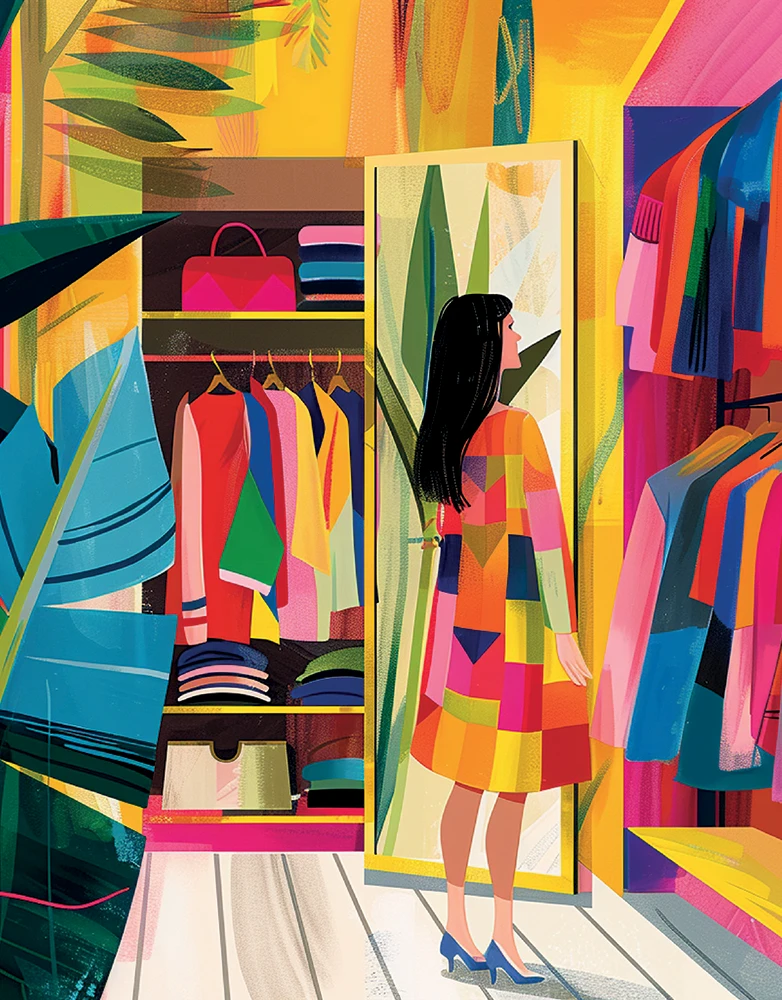
There are moments in life when words fall short. Grief, burnout, heartbreak, and identity shifts —they move through us not in language, but in sensation. We wake up, and suddenly the clothes we once wore with ease feel wrong. Too sharp. Too loud. Too small. A blazer that once made us feel powerful now scratches at the skin. A dress that once made us feel seen now feels like it’s showing too much. We stand in front of our closets, blinking at a wardrobe that no longer fits – not just physically, but psychologically. This isn’t about size. It’s about state. Because when we’re healing from loss, burnout, trauma, or seismic change, our style shifts long before we can articulate why.
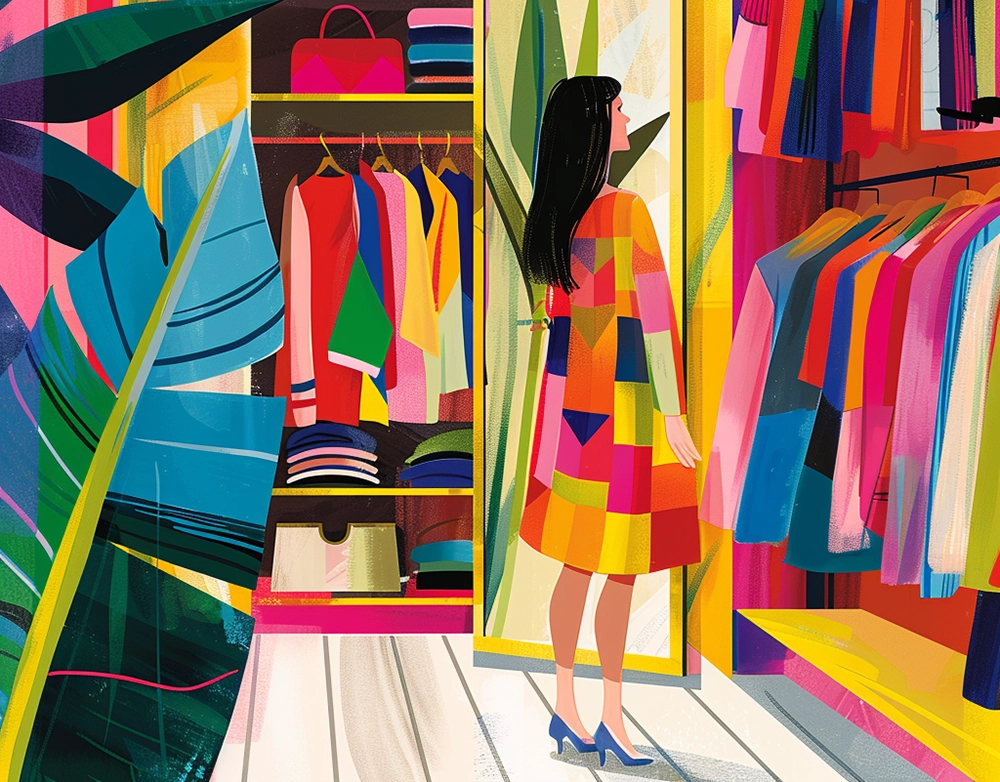
The Body as Barometer
The first thing to go is usually structure. When someone is in the early stages of grief or collapse, they often reach for softness, an oversized jumper, slouchy knits, drawstring trousers. Texture becomes more important than trend. The body seeks safety. In fashion psychology, we refer to this phenomenon as enclothed cognition: the idea that what we wear can influence our emotional state, and vice versa (Adam & Galinsky, 2012). But this isn’t about surface-level makeovers. It’s about micro-shifts in our wardrobe that mirror inner change.
After my own burnout, the kind that creeps in like fog and lingers long after the fire, I couldn’t wear anything with a waistband. My skin felt raw. My threshold for discomfort was zero. I rotated the same soft, pale-blue cashmere sweater for weeks. It wasn’t stylish. It wasn’t strategic. But it was the only thing I could bear. At the time, I didn’t know this was healing. I thought I was failing. I know better now.
Style as Somatic Ritual
When the nervous system is dysregulated, whether from grief, trauma, chronic stress, or burnout, we become hypersensitive. Clothing that once went unnoticed suddenly screams. Tags itch. Seams press. Fastenings feel impossible. This is not vanity. This is biology.
Clothing, like touch, can be soothing or activating. Weighted garments, for example, can mimic deep pressure therapy. Flowy fabrics can help regulate sensory overload. Warm tones can subconsciously evoke safety, while dark tones may offer a sense of armor. Healing often begins when we unconsciously re-dress ourselves in ways that allow the nervous system to exhale.
In my practice, I often witness clients turning to clothing as ritual during periods of loss or transformation. One laid out a “grief robe” – a long cotton kimono she wore every evening after her husband passed, like a soft permission slip to feel. Another rebuilt her wardrobe entirely after divorce, starting with a single pair of trousers that finally fit her new body. These acts might seem small, but in fashion psychology, we know they hold power. Clothing becomes a tool, not to mask pain, but to mark transition.
From Disconnection to Reclamation
Loss doesn’t always look like mourning. Sometimes it looks like reinvention. After a long illness, a career upheaval, or a move across countries, we are not the same. And neither is our wardrobe. During these moments, we often enter what I call a “Style Suspension”, a liminal space where old clothes feel wrong, but new ones haven’t been found yet. This can feel disorienting, especially in a culture that prizes polished appearances. But in truth, this messy middle is a sign of self-rebuilding. There’s a reason many people cut their hair or change their style after trauma or major change. These acts are not frivolous; they are attempts to claim agency when everything else feels out of control. The same way we rearrange furniture after heartbreak or deep-clean after loss, we recalibrate our outer world to reflect a shifting inner one.
Fashion isn’t always about self-expression. Sometimes, it’s about self-protection. Sometimes, it’s about coming back home to ourselves.
The Psychology of Texture, Shape, and Safety
Each element of clothing plays a psychological role in healing. Texture provides comfort or grounding. Soft cotton, fleece, silk, these often mimic the sensation of being held. They regulate.
Structure returns when we’re ready to re-engage. The reintroduction of buttons, collars, and waistbands, for example, signals readiness to be seen again.
Whilst colour can shift our mood or reflect our state. Muted tones often dominate early grief. Vibrancy may return when energy does.
A Silhouette holds emotional symbolism. Oversized shapes may feel safe, while body-hugging ones require a level of self-possession that may not return until later stages of healing.
Understanding these shifts can reduce shame. So often, we judge ourselves for “letting ourselves go” during hard times. But what if softness was survival? What if elastic waistbands were self-love? What if not dressing up was the most honest way of saying, “I am in it right now, but I’m not gone.”
Memory in the Seams
Clothes carry memory. This is more than a metaphor. Trauma researcher Cathy Caruth (1996) describes how trauma lives not in the event, but in the body’s response to it. And our clothes, the ones we wore during crisis or comfort, often hold those echoes.
You may find yourself unable to wear a shirt you had on during a breakup. Or you may never throw out a hoodie worn by someone you lost. These attachments aren’t irrational. They’re emotional anchors. Sometimes we let go. Sometimes we fold them away, tucked into a drawer like a soft archive.
I still own the sweater I wore through burnout. I don’t wear it anymore, but I keep it. Not as a failure, but as a reminder, I got through, and this green thing held me when I couldn’t hold myself.
Rebuilding the Wardrobe = Rebuilding the Self
As we begin to heal, our style may return, but often in a new form. Clients often report that what once felt like “them” no longer does. That’s not a regression. That’s an update. Healing isn’t about returning to who we were. It’s about becoming who we’re becoming. And often, that becoming starts in the closet. Not with shopping sprees or style overhauls, but with noticing:
What no longer feels like me?
What makes my body feel safe?
What am I avoiding – and why?
What item makes me feel a flicker of aliveness?
These questions are the real makeover. One based not in appearance, but in alignment.
Clothes as Compass
What we wear while healing can tell us what we need.
If you’re in sweatpants every day, maybe you’re not lazy, maybe you’re exhausted. If you’re only wearing black, maybe it’s not about style, maybe it’s about grief. If your wardrobe is a chaotic mix of sizes, moods, or silhouettes, maybe your identity is still reshuffling. That’s okay.
There is no wrong way to dress while healing. But there are tender ways. Honest ways. Adaptive ways. And perhaps that’s the most compassionate shift of all; letting our clothes reflect who we are, not who we think we should be.
What we wear when we’re healing isn’t about trends, or status, or “getting back out there.” It’s about finding softness in a harsh world. Structure in a shapeless moment. And beauty not in the mirror, but in the mirror of survival. Because sometimes, healing looks like finally zipping up your favourite coat again. And sometimes, it looks like never wearing it again at all.
Written By: JENNIFER HEINEN, fashion psychologist
DISCOVER: stylmynd.com
- About the Author
- Latest Posts

Our Editorial Team are writers and experts in their field. Their views and opinions may not always be the views of Wellbeing Magazine. If you are under the direction of medical supervision please speak to your doctor or therapist before following the advice and recommendations in these articles.