Why Thought Leadership Matters in Today’s Professional Landscape
No matter what industry you’re in, you can easily see how many differing opinions are out there.
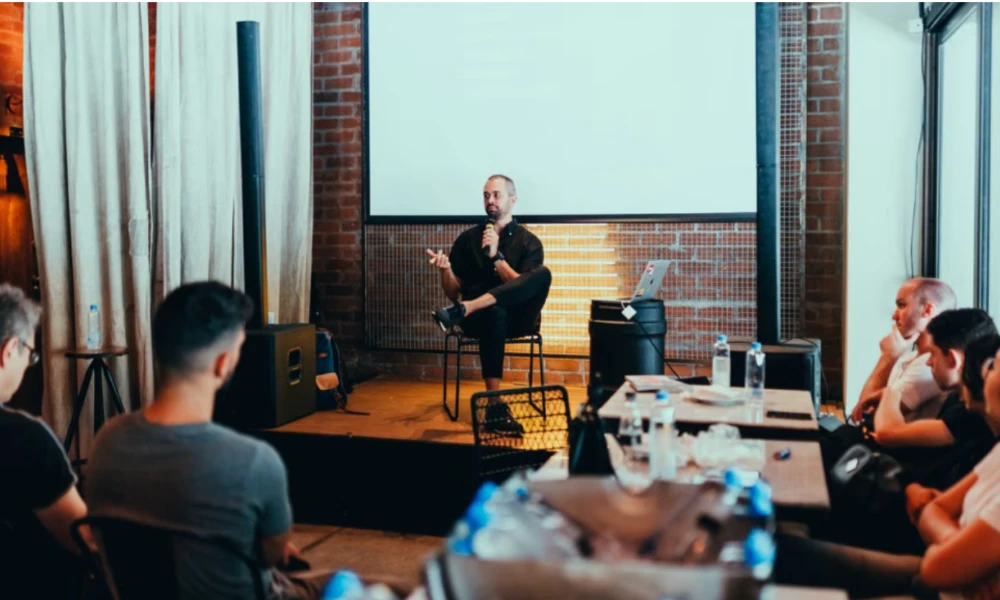
No matter what industry you’re in, you can easily see how many differing opinions are out there.
On LinkedIn, in comment sections, in meetings, and even in casual conversations, people are constantly sharing takes on topics they may or may not fully understand. That’s not new. People have always had opinions. But most of them don’t really change how other people think or make decisions. They mostly add to the noise.
So, how do some people manage to influence millions of people among all this noise?
The answer is: thought leadership.
What Actually is Thought Leadership?
Most people misunderstand opinions with thought leadership. Thought leadership is not posting opinions randomly on LinkedIn or Twitter. Most people already do that. And most of it doesn’t really change how anyone thinks.
Real thought leadership is when someone has learned something through years of expertise and helps others solve a problem differently with a new perspective.
Unlike opinions, thought leadership is quieter. Thought leaders rarely say ‘Hey, here’s my take’; they say, ‘Here’s what I’ve been noticing, and here’s how we can solve it.’
See the difference?
Why Thought Leadership Has Become More Important Today
We don’t live in a time when access to information was the problem. If anything, we have the opposite problem now. There’s too much information everywhere.

Every field is full of articles, videos, courses, tools, and advice. So access is no longer the advantage. What actually matters now is interpretation. Every person has a different perspective and thinking ability. They may learn something under the tutelage of the same teacher and yet can have a completely different understanding of the topic.
Therefore, thought leadership has become more important than ever. It sits in the gap between information and meaning.
In any professional setting, there are experts everywhere. But experts who make the best sense of everything and influence people and industry are real thought leaders.
What Does Thought Leadership Require?
No one truly becomes a thought leader just by talking more or trying to seem smarter than others. It usually develops in a much simpler way when you try to start understanding your own experience properly and learn how to turn it into something others can easily learn from.
There are lots of people with great ideas who can’t express their ideas clearly. The concepts are difficult to follow, so the impact ends up being weak. Thought leadership, on the other hand, lets ideas be simple and clear enough for others to understand and apply without confusion.
You also need to be consistent. One strong idea doesn’t create influence; you become influential when you consistently show patterns of clear thinking and steady perspective.
Long-Term Career Impact of Thought Leadership
Thought leadership is not a title; it’s a habit.
People have the misguided belief that they can become a thought leader at a certain point in their career. In fact, this is rarely the case.
It’s a habit that shows up when someone explains why they made a decision instead of just sharing the result. It shows up when professionals reflect on what didn’t work and why. It shows up when people try to make sense of their own experience in a way that someone else could actually learn from.

In some fields, this depth of thinking often develops with advanced academic pathways, like gaining a Doctor of Philosophy in Nursing, Doctor of Education, Doctor of Business Administration, Master of Science, etc., where professionals spend years building a deeper research-based understanding of their field. But the real point isn’t the title itself. It’s the mindset behind it: the willingness to understand things deeply and contribute that understanding back into the profession in a useful way.
That idea applies across almost every industry in some form. When someone applies thought leadership in their work, over time, people remember them for how they think and act. In the long term, careers aren’t influenced by how early you complete your projects, but by how people think about your approach, opinions, and thought process in the long term.
If you consistently communicate ideas clearly, people start associating you with a certain way of thinking. That becomes part of your professional identity. And that identity often opens doors that job titles alone don’t. But it only works if you’re consistent.
Responsibility That Comes With Thought Leadership
The moment your thinking starts reaching other people, it naturally comes with a bit of responsibility.
Sometimes, not everything that sounds right in a post actually works in real life, and not every strong opinion holds up when things get more complex. It’s easy to simplify things too much in theory, but real-life situations don’t follow a neat and simple explanation.
There’s also this thing that happens when someone makes a very confident comment, and it gets more attention than a careful one, but in the end, a careful idea wins.
So, if you are a thought leader with an influence on people, you need to be more honest without overclaiming things. You don’t have to be perfect. There's no one who can be perfect in all cases. But you should make sure that what you’re saying doesn’t just make sense in theory but also when it’s applied in real life.
Thought leadership doesn’t mean being famous. There are too many famous people on social media. But they are not all thought leaders.
Thought leaders are clearer in how they think and how they share their ideas with other people.
This ability makes them gain a better understanding of their industry, and as a result, professional environments welcome such people with open arms.