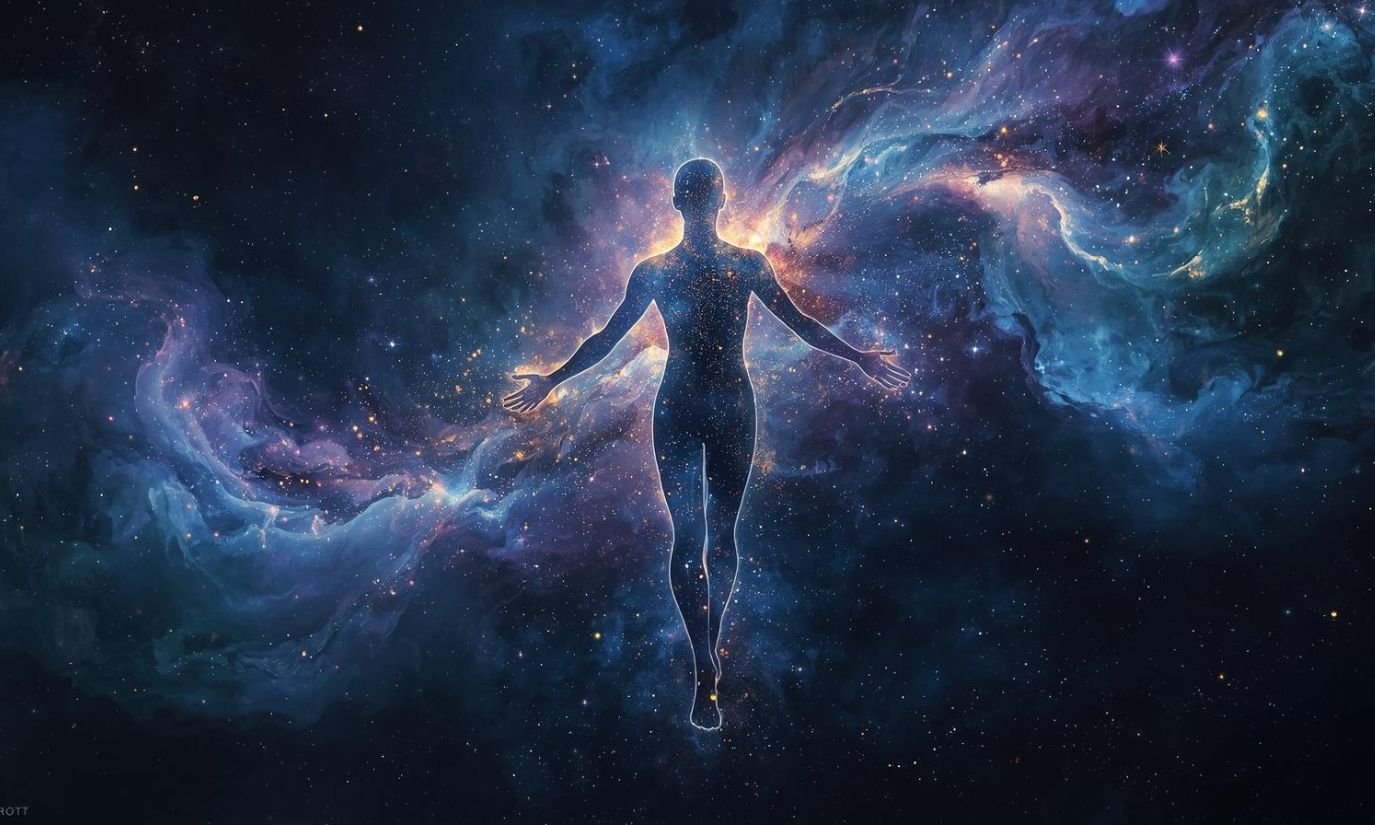
You and I have an amazing history of development that goes back billions of years. It is thought-provoking, occasionally, to remember that every element in our bodies came from the earliest debris, the stardust that formed our solar system. We are truly all made of Stardust, but that is only the beginning of this miraculous story.
When we think of our ancestors, our parents, grandparents, great-grandparents, great-great-grandparents and so forth, we may wonder how our present lives are influenced by all these people from long ago, but that is but an infinitely small part of the story of your making.
Whereas primitive man had great respect for their ancestors and had traditions of respect and gratitude for them, modern man has, to a large extent, lost this close connection and respect for our ancestors. This may, in part, be why mankind struggles to live in harmony with one another.
We have come to focus increasingly on the differences that set us apart, be it our skin colour, our nationality or religion. Right at this moment, with the conflict in the Middle East and Ukraine, it is clear for all to see and note how destructive it is for all of us.
However, much more damage arises from another ancient culture loss that is central to most surviving primitive societies.
These so-called “primitive people” have retained great respect, almost reverence, for their environment. They are routinely grateful to every tree they cut down to use or every plant they consume, often planting a new one to ensure the survival of their environment.
Modern man has almost lost this “primitive” understanding and sees the whole environment, whether living or lifeless, such as minerals or the earth, as their right to exploit or destroy.
There is a great book published almost twenty years ago that describes the existential dangers of this behaviour. It is essential reading for us all, entitled “The Last Hours of Ancient Sunlight” by Thom Hartmann. Perhaps if we could learn to see the bigger picture, our future might be better for mankind and the earth?
What I would like us all to remember is that our ancestors are not just the few thousand relatives recorded in our family trees, but must include the billions of our other ancestors from Homo erectus to Homo sapiens, and also the trillions of our other ancestors preceding man, the primates, and why stop there? Your ancestors and mine include all the animals, plants and the first simple organisms that initiated life on earth!
Yes! Surely we would behave differently if we all recognised the grass we walk on, the insects we see, the birds we hear and all living things are part of our family tree?
Yes, the beautiful oak tree you admire or the flower you just picked could both be your ancestors!
Now that’s a life and world-changing thought!
Michael Lingard BSc (Econ) D.O.
- About the Author
- Latest Posts

Michael Lingard, a regular contributor to Wellbeing Magazine for the past 18 years. A passionate promoter of real health care and would like to see a paradigm shift in modern medicine; from a disease & pathology based system to a health and ethology based system.