The American Dental Association reports that nearly 4 million Americans currently wear braces or aligners, with clear aligner use growing 27% annually as adults increasingly seek discreet orthodontic options. This surge reflects a fundamental shift in how people approach dental care — moving beyond basic maintenance to view orthodontic treatment as an investment in both appearance and long-term health.
For individuals considering smile correction, the choice between traditional braces and clear aligners involves more than aesthetics. Treatment effectiveness, lifestyle impact, and even broader health benefits now factor into decisions that were once purely cosmetic. Understanding how clear aligners work and who benefits most from them helps prospective patients make informed choices that align with their specific goals and circumstances.
How Do Clear Aligners Move Teeth Effectively?
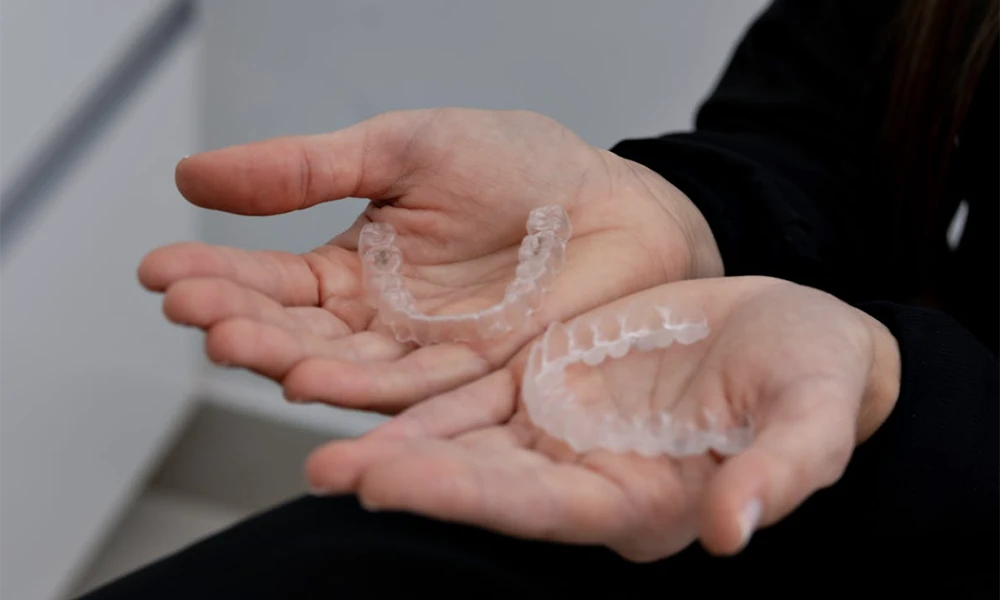
Clear aligners leverage precise biomechanical principles to create controlled tooth movement through a series of custom-fitted trays. Each aligner applies gentle, continuous pressure to specific teeth, gradually shifting them into predetermined positions calculated through 3D treatment planning software. The process relies on controlled force application — typically 50-200 grams of pressure per tooth — which stimulates cellular activity in the periodontal ligament surrounding tooth roots.
The treatment begins with digital impressions that create an exact model of your current bite. Computer algorithms then map the optimal movement pathway for each tooth, breaking the journey into incremental steps of approximately 0.25mm per aligner stage. This precision allows orthodontists to predict and control not just the final positioning, but the sequence and timing of each movement phase.
What makes this system particularly effective is the removability factor combined with compliance tracking. Modern aligner systems include wear-time indicators that help both patients and practitioners monitor treatment adherence. Unlike braces, which apply constant pressure, aligners can be removed for eating and cleaning, then reapplied to continue the movement process. The key lies in wearing each set for 20-22 hours daily, allowing the controlled pressure to maintain cellular activity in the periodontal ligament.
Recent advances in aligner material science have improved treatment predictability significantly. The thermoplastic materials used today maintain consistent force delivery throughout the wear period, while new attachment systems — small tooth-colored bumps bonded to specific teeth — provide additional leverage points for complex movements like rotations and intrusions.
What Benefits Do Clear Aligners Offer Compared to Braces?
How Do Clear Aligners Enhance Daily Comfort and Convenience?
Clear aligners eliminate the sharp edges, protruding wires, and metal brackets that make traditional braces notoriously uncomfortable. The smooth plastic surface reduces soft tissue irritation, while the absence of emergency visits for broken hardware appeals to busy professionals and students. Aligner wearers report significantly fewer instances of mouth sores, tongue cuts, and cheek abrasions compared to their counterparts with metal braces.
The removability advantage extends beyond comfort to social situations. Important meetings, special events, or professional presentations don’t require the self-consciousness often associated with visible metal orthodontics. This psychological benefit proves particularly valuable for adults who might otherwise delay treatment due to professional concerns. Additionally, the ability to remove aligners for photos, public speaking, or intimate moments provides flexibility that fixed appliances simply cannot match.
Maintenance becomes considerably simpler without the complex cleaning requirements of traditional braces. No special threaders, interdental brushes, or water flossers are mandatory — though they remain beneficial for overall oral hygiene.
Why Do Clear Aligners Allow More Dietary Freedom?
Traditional braces come with an extensive list of forbidden foods: sticky candies, hard nuts, crunchy chips, and chewy breads all pose risks to brackets and wires. Clear aligner wearers face no such restrictions. The ability to remove aligners before eating means you can continue enjoying corn on the cob, caramel apples, and crusty bread without fear of orthodontic emergencies.
This dietary freedom has practical implications beyond mere convenience. Many brace wearers develop nutritional deficiencies or eating pattern changes due to food restrictions, particularly during the initial adjustment period when chewing becomes painful. Aligner patients maintain normal eating habits throughout treatment, supporting better overall health and treatment compliance. The psychological benefits shouldn’t be underestimated either — maintaining normal social eating experiences reduces the lifestyle disruption often associated with orthodontic treatment.
What Are the Health Benefits of Clear Aligners Beyond Appearance?
The advantages of properly aligned teeth extend far beyond cosmetic improvement, affecting multiple aspects of physical health that many patients don’t initially consider. Periodontal health improvements rank among the most significant long-term benefits. Crowded or overlapping teeth create hard-to-clean areas where bacteria accumulate, leading to gingivitis and potentially more serious gum disease. Straighter teeth are easier to brush and floss effectively, reducing inflammation and supporting healthier gum tissue throughout life.
Sleep quality often improves following alignment treatment, particularly for patients whose crowding or bite irregularities contributed to breathing difficulties. Proper tooth positioning can create more space for the tongue, potentially reducing mild sleep apnea symptoms and snoring. While severe sleep disorders require specialized treatment, many patients report better rest and increased energy following orthodontic correction.
TMJ pain relief represents another unexpected benefit for some aligner patients. Misaligned teeth often force the jaw into unnatural positions during chewing, creating strain on the temporomandibular joint. When those who want to straighten teeth with Invisalign achieve proper bite alignment, they frequently experience reduced jaw tension, fewer headaches, and decreased facial muscle fatigue. The gradual movement process of aligners also tends to be gentler on the TMJ compared to the continuous pressure of traditional braces.
Digestive health can improve as well, though this benefit takes time to manifest. Properly aligned teeth enable more thorough chewing, which begins the digestive process more effectively. Better food breakdown in the mouth means less strain on the stomach and intestines, potentially reducing digestive discomfort for individuals who previously rushed through meals due to chewing difficulties.
Who Is Best Suited for Clear Aligner Treatment?
Clear aligners work most effectively for mild to moderate orthodontic issues, including spacing problems, minor crowding, and certain bite irregularities. Patients with gaps between teeth often see excellent results, as aligners excel at closing spaces through controlled movement. Similarly, mild rotations and tilting respond well to aligner therapy, particularly in the front teeth where aesthetics matter most.
Crowding cases present more complexity but remain treatable in many instances. The key factor is severity — overlapping that can be resolved through expansion or minor tooth movement typically succeeds with aligners, while severe crowding requiring tooth extraction may need traditional braces for optimal results. Age plays a role too; adult patients with fully developed jawbones often achieve more predictable outcomes than teenagers whose mouths are still changing.
Common misconceptions about treatment limitations lead many potential patients to dismiss aligners prematurely. While complex cases involving significant bite corrections or major tooth rotations may indeed require traditional orthodontics, the treatment scope has expanded considerably with technological advances. Modern aligner systems can address overbites, underbites, and crossbites that were previously considered unsuitable for clear aligner therapy.
However, certain conditions remain poor candidates for aligner treatment. Severe skeletal discrepancies, significant vertical movement requirements, and cases requiring precise root parallelism typically demand the continuous control that only fixed appliances provide. Additionally, patients with poor oral hygiene habits or those unwilling to commit to 20-22 hours of daily wear should honestly assess whether the compliance requirements match their lifestyle realistically.
The consultation process helps distinguish between suitable and marginal cases. Advanced imaging and treatment simulation software now allow orthodontists to predict outcomes with remarkable accuracy, showing patients exactly what their results should look like before treatment begins.
What Factors Impact Success in Clear Aligner Treatment?
Patient compliance dominates all other factors in determining treatment success. The 20-22 hour daily wear requirement isn’t arbitrary — it’s based on the biological processes that enable tooth movement. Wearing aligners for only 12-14 hours daily can extend treatment time significantly or compromise final results entirely. Many failed aligner cases trace back to inconsistent wear patterns rather than treatment planning errors.
Treatment planning sophistication has improved dramatically with computer modeling advances, but the human element remains crucial. Experienced orthodontists understand how to sequence movements, when to use attachments, and how to modify plans when teeth don’t respond as predicted. The initial treatment plan serves as a roadmap, but successful practitioners remain flexible enough to make adjustments throughout the process.
Oral hygiene maintenance becomes even more critical during aligner treatment. Aligners trap bacteria against teeth if proper cleaning isn’t maintained, potentially leading to decay or gum disease that interrupts treatment progress. Patients must brush after every meal before reinserting aligners and clean the aligners themselves regularly to prevent bacterial buildup and odor development.
Post-treatment retention deserves equal attention to the active movement phase. Teeth naturally want to return to their original positions, making retainer compliance essential for maintaining results long-term. Many patients who achieve beautiful smiles during treatment lose their improvements within months due to inadequate retention protocols.
Regular monitoring appointments allow practitioners to track progress and make necessary adjustments. Unlike braces, which provide constant feedback during monthly visits, aligners require patients to communicate any fit issues or concerns proactively. Successful aligner patients tend to be engaged participants who ask questions and follow through with recommended modifications to their treatment plan.
The financial investment in clear aligner treatment typically justifies itself through improved oral health, enhanced self-confidence, and reduced need for future dental work. For patients who meet the clinical criteria and commit to the compliance requirements, the combination of aesthetic improvement and health benefits makes clear aligners a compelling choice for achieving lasting smile goals.
- About the Author
- Latest Posts

Our Editorial Team are writers and experts in their field. Their views and opinions may not always be the views of Wellbeing Magazine. If you are under the direction of medical supervision please speak to your doctor or therapist before following the advice and recommendations in these articles.