Each June, Juneteenth prompts national reflection on the unfinished work of equity in American life, and maternal health has become one of its most urgent frontiers. Black mothers experience perinatal mood disorders at markedly higher rates than the national average, and they receive adequate care far less often. Public attention tends to surge around childbirth and then recede, yet the emotional weight these mothers carry rarely follows that timeline. The disparities that shape a Black woman’s mental health during pregnancy often persist through the toddler years, school-age parenting, and well beyond. Understanding why those experiences remain underrepresented, and how lowering the obstacles to professional support, including online platforms such as BetterHelp, can matter differently for communities that have faced the steepest barriers, is the part of the story that headlines tend to leave out.

A Disparity Measured in Numbers
The statistics describe a gap that is difficult to overstate. Almost 40% of Black mothers and birthing people experience a maternal mental health condition, according to the Maternal Mental Health Leadership Alliance, which also reports that Black women are about twice as likely as white women to experience these conditions, yet roughly half as likely to receive treatment. Underreporting compounds the problem, with the same organization noting that more than half of postpartum depression cases among women of color go undocumented. Separate clinical research reinforces the treatment gap. One analysis, summarized by the Policy Center for Maternal Mental Health, found that Black women were half as likely as white women to begin treatment for postpartum depression and waited longer between delivery and the start of care. The consequences extend beyond the individual, since untreated maternal mental health conditions are associated with effects on infant development, family stability, and long-term outcomes for children. Figures like these are sometimes cited in isolation, but together they outline a consistent pattern in which higher need meets lower access at nearly every step of the journey.
Why the Story Rarely Continues Past Postpartum
Public conversation about maternal mental health tends to concentrate on the weeks immediately following birth, framing postpartum depression as a discrete episode with a clear endpoint. For many Black mothers, the reality is far more continuous. The chronic stress associated with discrimination does not pause once an infant grows older. A study on race-related stress and postpartum mood statistically linked experiences of racism to perinatal mood and anxiety disorders, suggesting that the same forces shaping mental health during pregnancy keep exerting pressure through later stages of parenting. Cultural invisibility plays a role as well, since the dominant image of maternal struggle in media and clinical training has not historically centered Black women’s experiences. The result is a narrative that closes the chapter prematurely. A mother may be several years past delivery and still carrying the cumulative effects of stress, caregiving, and a healthcare system that overlooked her earlier needs. Material addressing mental health throughout motherhood is beginning to reflect this longer arc, though it remains scarce relative to the need.
The Barriers Behind the Numbers
Several interlocking obstacles help explain why the disparities endure. Qualitative research with Black women health professionals points to limited access to resources, the absence of universal screening, and a fragmented healthcare system as recurring themes that disadvantage Black mothers seeking support. Stigma operates on top of these structural gaps. Some mothers attribute depressive symptoms to personal weakness rather than a treatable condition, and a history of medical mistrust, grounded in documented mistreatment, can make clinical settings feel unwelcoming. Practical constraints add further friction, including the cost of care, scarce childcare, inflexible work schedules, and a shortage of providers who share or understand a patient’s cultural background. The scarcity of culturally concordant care is its own obstacle, as a mother may travel far or wait long to find a professional who recognizes the role that racism and community expectations play in her experience. Each barrier alone is significant; in combination, they form a filter that screens out many of the people who most need help. Addressing them requires change at the policy and clinical levels, yet it also creates an opening for approaches that remove some of the everyday friction standing between a mother and a first conversation with a professional.
Why Reducing Friction Can Matter Differently
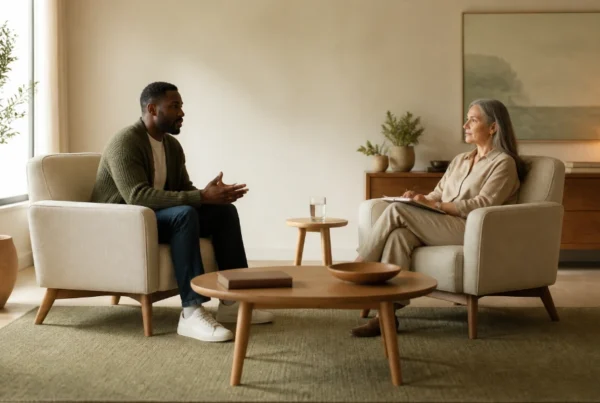
Lowering the everyday obstacles to care holds particular weight for communities that have faced the steepest ones. Online platforms attempt to do exactly that. As one of the largest online therapy services, BetterHelp connects users with a broad network of licensed mental health professionals and lets them choose how they communicate, whether through phone, live video, in-session chat, or asynchronous messaging. For a mother without reliable childcare or a flexible schedule, the option to meet from home can turn an impossible appointment into a manageable one. The matching process is designed to account for stated preferences, which can help a user find a therapist working with BetterHelp who understands her cultural context, a factor that research identifies as meaningful for engagement and trust. In a community discussion led by a therapist working with BetterHelp who advocates for BIPOC mental health, participants explored how people can begin treating therapy as an ongoing practice rather than a step reserved for moments of acute distress. Representation and accessibility, taken together, address two of the barriers that the statistics make plain.
What Research Suggests About Accessible Support
Evidence for virtual mental health care has grown alongside its adoption. An analysis of more than 60 studies summarized by UCLA Health concluded that remote sessions can support people experiencing anxiety, depression, and post-traumatic stress, indicating that the format itself need not limit the quality of care a person receives. Independent reviewers echo the accessibility case. A widely referenced evaluation of online therapy options from Healthline highlighted the range of communication methods and the breadth of the available therapist pool, while a detailed review of the platform’s features from Innerbody weighed both the strengths and the limits of BetterHelp. For Black mothers navigating a system that has historically underserved them, this body of work does not promise a particular outcome. It does suggest that flexible, professionally delivered support can be a credible avenue for those who might otherwise remain among the untreated majority, the data describes.
Holding Space for What Online Care Cannot Fix
Accessible counseling is one piece of a larger picture, and candor about its limits matters. Individuals facing a mental health emergency or symptoms that call for in-person evaluation should seek immediate local care or contact emergency services rather than wait for a scheduled session. Online platforms also cannot dismantle the structural inequities that produce these disparities in the first place, from gaps in screening to the social determinants that shape who becomes ill and who gets seen. Those changes depend on policy, clinical training, and sustained investment in culturally responsive care. What a service like BetterHelp can do is shrink the distance between a mother and a qualified professional, and for communities where that distance has long been greatest, the difference is meaningful. As Juneteenth invites reflection on equity that remains incomplete, the mental health of Black mothers, across every stage of motherhood, rather than only the weeks after birth, stands as one honest measure of how far that work still has to go.
- About the Author
- Latest Posts

Our Editorial Team are writers and experts in their field. Their views and opinions may not always be the views of Wellbeing Magazine. If you are under the direction of medical supervision please speak to your doctor or therapist before following the advice and recommendations in these articles.