For many of us, the home gym has evolved far beyond a treadmill in the spare room or a set of dumbbells tucked away in the garage. As our understanding of recovery, stress management and long-term wellbeing grows, the next generation of home gyms is beginning to look more like a private wellness space.
Once you have created a place to move, strengthen and challenge your body, the question becomes: what do you add to support recovery?
For those looking to complete their home gym set-up, a sauna and cold plunge could be the natural next step. From traditional Finnish-style saunas and modern infrared cabins to indoor, outdoor and hybrid wellness spaces, heat and cold therapy can turn a functional workout area into a place designed for both performance and restoration.
Why Add a Sauna to Your Home Gym?
Exercise is only one part of the wellbeing equation. Recovery matters too.
A home sauna creates a dedicated transition between physical effort and rest. Rather than finishing a workout and immediately returning to emails, household jobs or the demands of the day, stepping into a sauna encourages you to slow down.
Heat exposure causes the heart rate to rise and blood vessels to dilate, increasing blood flow to the skin and muscles. Sauna bathing is also associated with relaxation and has been studied for its potential cardiovascular benefits when practised regularly.
Research into traditional Finnish sauna bathing has attracted particular interest. Studies have found associations between frequent sauna use and cardiovascular health outcomes, although sauna should always be considered part of a wider healthy lifestyle rather than a replacement for exercise, medical treatment or other evidence-based health interventions.
The biggest advantage of having a sauna at home may, however, be something much simpler: consistency. When your sauna is a few steps away from your exercise space, it becomes much easier to incorporate heat therapy into a regular routine.
Traditional Sauna or Infrared Sauna: Which Is Best for a Home Gym?
One of the first decisions is whether to choose a traditional sauna or an infrared sauna. Both create a warming experience, but they work differently.
Traditional Sauna
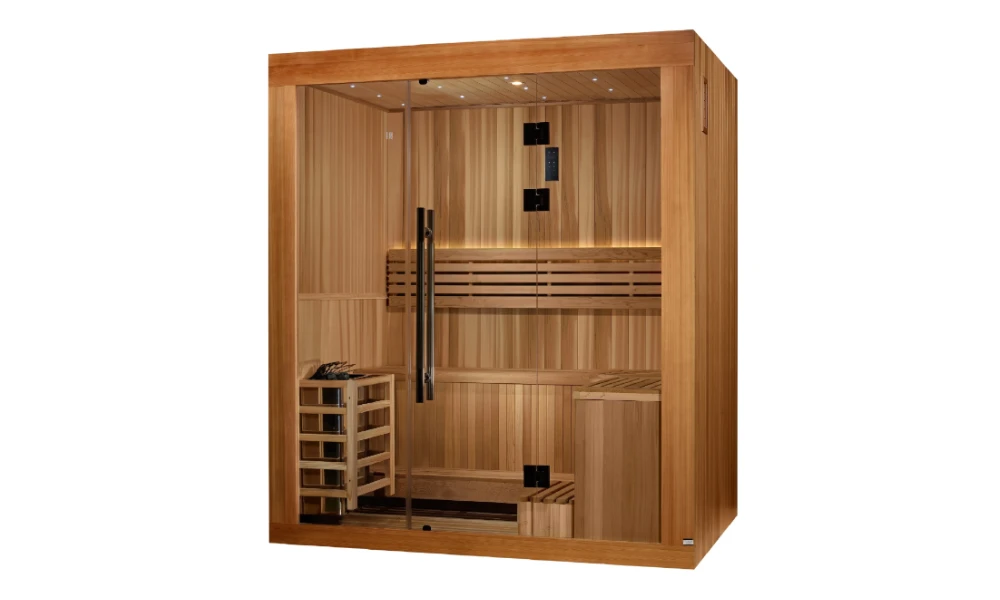
A traditional sauna heats the air around you, typically using an electric or wood-burning heater with sauna stones. Water can be poured over the heated stones to create bursts of steam known in Finnish sauna culture as löyly.
This is the classic sauna experience: higher temperatures, deep warmth and the sensory ritual of heat, steam and cooling down.
A traditional sauna may suit you if you:
- Want an authentic Finnish-style sauna experience
- Enjoy higher temperatures
- Like the option of adding humidity by pouring water onto sauna stones
- Have space for the necessary electrical supply and ventilation
- Want to create a dedicated indoor or outdoor sauna area
Traditional saunas generally require more planning than infrared models, particularly when it comes to power requirements, ventilation and installation. According to RecoSauna’s guidance, many traditional indoor models require dedicated electrical provision, while warm-up times can also be longer than for some infrared units.
Infrared Sauna
An infrared sauna works differently. Rather than primarily heating the surrounding air, infrared technology uses radiant heat to warm the body more directly.
Infrared saunas generally operate at lower air temperatures than traditional saunas, which some people find more comfortable. Depending on the model, they can also be relatively straightforward to incorporate into a home gym, spare room or dedicated wellness room.
An infrared sauna may suit you if you:
- Prefer a lower-temperature experience
- Want a compact indoor option
- Have limited space
- Want faster warm-up times
- Prefer a more modern, technology-led wellness experience
Some infrared models use different wavelengths of infrared energy, while premium full-spectrum systems may combine near-, mid- and far-infrared technology. Features can also include digital controls, lighting, audio and pre-programmed sessions.
For a home gym where convenience and space are priorities, infrared can therefore be an attractive option.
Can You Have an Indoor Sauna in a Home Gym?
Yes. Depending on the model and your available space, a sauna can be integrated directly into a home gym or positioned in an adjoining room.
An indoor sauna can work particularly well in:
- A converted garage
- A basement gym
- A large spare room
- A purpose-built garden room
- A dedicated home wellness suite
Before buying, it is important to consider the practical requirements rather than choosing on appearance alone.
Think about:
- Available floor space and ceiling height
- Electrical requirements
- Ventilation
- Flooring and moisture management
- Access for delivery and installation
- Clearance around the sauna
- Proximity to a shower or cold plunge
- How you will move safely between heat and cold
Some infrared saunas can be easier to accommodate because certain models use standard residential electrical supplies and require less complex installation. Traditional saunas may need a dedicated higher-voltage circuit and professional electrical work.
The goal should be to design the room as a complete experience rather than simply finding an empty corner for another piece of equipment.
What About an Outdoor Sauna?
If your indoor home gym is already full, look outside.
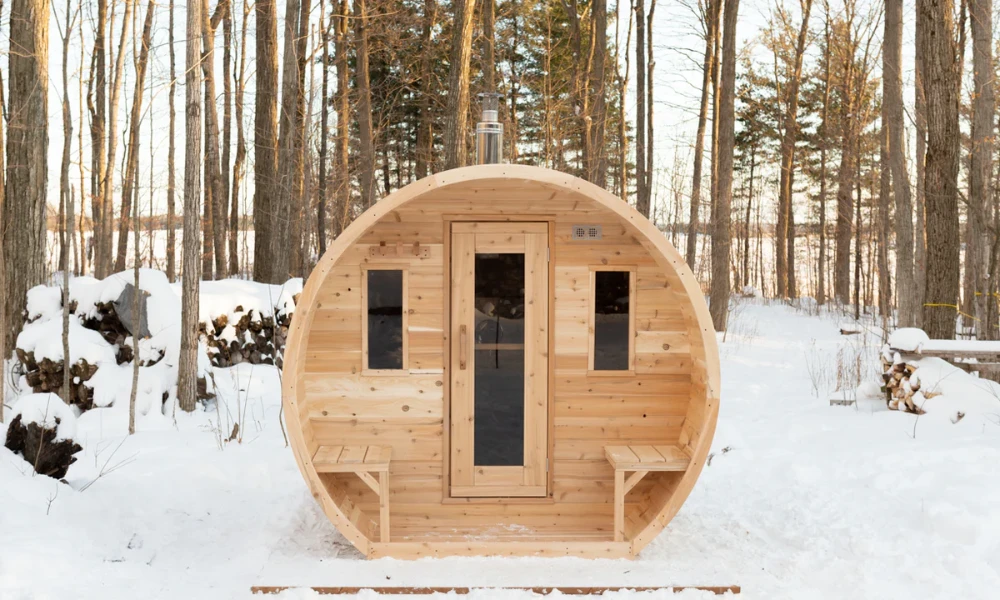
An outdoor sauna can transform a garden into an extension of your home wellness space. Barrel saunas, cabin saunas and contemporary outdoor sauna rooms can create a destination in their own right.
There is also something psychologically appealing about physically leaving the house or gym and stepping into a separate sauna space. It creates a ritual: workout, sauna, cool down and return.
An outdoor set-up can work particularly well when combined with a cold plunge positioned nearby.
For homes with more space, you could create an entire outdoor recovery zone with:
- A traditional sauna
- Cold plunge
- Outdoor shower
- Relaxation seating
- Privacy screening
- Soft lighting
- A sheltered changing area
The result is less like a home gym and more like having your own private wellness retreat.
The Rise of the Hybrid Indoor-Outdoor Home Wellness Space
You do not necessarily have to choose between an indoor and outdoor set-up.
One of the most interesting trends in home wellness is the hybrid indoor-outdoor space.
Imagine a home gym with large glass doors opening onto a terrace or garden. The exercise equipment remains indoors, while the sauna and cold plunge sit just outside. Alternatively, an indoor infrared sauna could be used for quick everyday sessions, while a traditional outdoor sauna becomes part of a longer weekend ritual.
A hybrid design can make the transition between movement, heat, cold and nature feel seamless.
This type of arrangement is particularly appealing because it reflects a broader change in how we think about the home gym. It is no longer simply somewhere to burn calories. It can become a space that supports strength, cardiovascular fitness, mobility, recovery, relaxation and mental wellbeing.
Why Add a Cold Plunge?
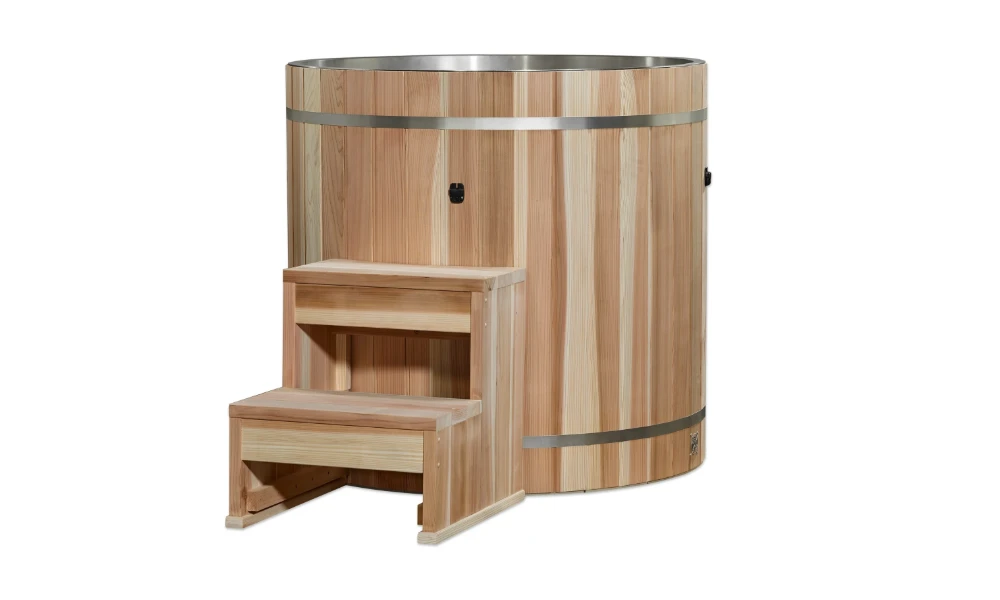
If the sauna brings the heat, the cold plunge creates the contrast.
Cold-water immersion has become increasingly visible within the wellness and fitness worlds, but the practice of moving between heat and cold is far from new. In Finnish sauna culture, cooling down in cold water has long formed part of the sauna ritual.
RecoSauna describes the traditional pattern simply: heat, cold and rest, often repeated over several rounds.
Cold-water immersion creates a rapid physiological response. Blood vessels constrict, breathing changes and the body works to maintain its core temperature. Many people also describe the experience as mentally energising and mood-shifting.
For people who train regularly, cold plunges are often used as part of a recovery routine, particularly after intense endurance exercise. However, timing matters. Some research suggests that immediately using cold-water immersion after every resistance-training session may potentially interfere with some of the adaptations associated with muscle growth.
If building muscle is your primary goal, you may therefore prefer to separate regular cold plunges from your strength workouts rather than automatically jumping into cold water after every session.
The Potential Health Benefits of Sauna Use
Regular sauna bathing has been studied for a range of potential benefits.
These may include:
Cardiovascular Support
Heat exposure increases heart rate and blood flow as the body works to regulate temperature. Long-term observational research from Finland has found associations between frequent sauna bathing and lower cardiovascular risk.
Relaxation and Stress Management
A sauna creates something increasingly rare in modern life: a warm, quiet space where there is very little to do.
For many people, the ritual itself becomes valuable. Phones are put away, the body relaxes and attention shifts from external demands to physical sensation and breathing.
Post-Exercise Recovery
The warmth of a sauna may feel particularly soothing after exercise. Increased circulation and the opportunity to sit quietly can help create a deliberate recovery period after training.
Sleep and Evening Relaxation
Many people find an evening sauna session helps them wind down before bed. The combination of heat exposure followed by gradual cooling can become part of a calming nighttime routine.
A Greater Commitment to Recovery
Perhaps one of the most overlooked benefits is behavioural. When you invest in a dedicated recovery space, you are more likely to make recovery an intentional part of your routine rather than something you only think about when you are exhausted or injured.
What Are the Benefits of Cold-Water Immersion?
Cold plunging is being studied for its potential effects on exercise recovery, mood and the body’s response to stress.
Possible benefits may include:
- Reduced perception of muscle soreness after some forms of exercise
- A feeling of increased alertness
- Support for recovery following intense physical activity
- A deliberate practice for managing the body’s response to discomfort
- A powerful psychological sense of achievement
However, more is not necessarily better. Extreme cold or excessively long immersion is not required to create a meaningful experience.
Beginners should approach cold exposure gradually and safely. Water temperature, duration and individual health all matter.
Creating a Heat and Cold Recovery Routine at Home
Once you have a sauna and cold plunge, the temptation can be to make every session as intense as possible. But a home wellness routine should be sustainable.
A simple sauna-led routine might look like this:
- Complete your workout.
- Rehydrate and allow your heart rate to settle.
- Spend a short period in the sauna according to your experience and tolerance.
- Cool down gradually or use a brief cold plunge if appropriate for you.
- Rest and allow the body to return towards its normal temperature.
- Repeat only if you are experienced, comfortable and well hydrated.
RecoSauna’s guidance on traditional contrast practice describes a cycle of approximately 10–15 minutes of heat, followed by a short period of cold exposure and then rest. This is an example rather than a universal prescription: individual tolerance varies, and beginners should start conservatively.
The aim is not to prove how much discomfort you can tolerate. The aim is to create a ritual that you genuinely want to return to.
How to Choose the Right Sauna and Cold Plunge for Your Home
Before investing, begin with your lifestyle rather than the equipment.
Ask yourself:
How much space do I have?
A compact infrared sauna may work well in an indoor home gym, while a larger traditional sauna might be better suited to a garden or purpose-built wellness room.
What experience do I want?
If you love high heat, sauna stones, steam and ritual, a traditional sauna may be the better choice.
If you prefer lower temperatures, quicker warm-up times and a modern indoor installation, infrared may be more suitable.
How often will I realistically use it?
The best home wellness equipment is not necessarily the most expensive. It is the equipment that becomes part of your life.
Do I want an indoor, outdoor or hybrid set-up?
Consider the entire journey through the space. Where will you exercise? Where will you sauna? How will you cool down? Where will you rest?
What installation work is required?
Check power supply, drainage, ventilation, flooring, delivery access and local requirements before ordering. Traditional saunas in particular may require professional electrical installation.
Specialists such as RecoSauna offer a range of traditional, infrared and outdoor sauna options alongside cold-plunge equipment, making it possible to compare different approaches according to available space and personal preferences.
Safety: Who Should Be Careful With Saunas and Cold Plunges?
Heat and cold exposure are not suitable for everyone.
Anyone with cardiovascular problems, uncontrolled blood pressure, a history of fainting, certain medical conditions or concerns about medication should seek appropriate medical advice before beginning an intensive sauna or cold-water routine.
Pregnant women should also seek professional guidance.
Never use a sauna when severely dehydrated or under the influence of alcohol, and leave immediately if you feel dizzy, faint, confused or unwell.
Cold plunges also require caution. Sudden immersion can trigger an involuntary cold-shock response, including rapid breathing and changes in heart rate and blood pressure. Beginners should start gradually, avoid practising alone where there is a risk of becoming unwell, and never treat extreme temperatures or long immersion times as a competition.
Is a Sauna and Cold Plunge Worth Adding to a Home Gym?
If you already have a home gym and use it regularly, adding recovery facilities can change the way you experience the entire space.
A treadmill helps you train. Weights help you become stronger. A yoga mat creates space for mobility and stretching. But a sauna and cold plunge introduce another dimension: the practice of recovery.
Whether you choose a compact infrared sauna beside your exercise equipment, a traditional Finnish-style sauna in the garden, or a hybrid indoor-outdoor wellness space with heat, cold and room to rest, the most important consideration is how the set-up fits into your everyday life.
The ultimate home gym may not be the one with the most equipment.
It may be the one that helps you understand when to push — and when to recover.
Frequently Asked Questions
Can I put a sauna in my home gym?
Yes. Many infrared and traditional saunas can be installed in home gyms, garages, basements and dedicated wellness rooms, provided the space meets the model’s electrical, ventilation, clearance and installation requirements.
Is an infrared sauna better than a traditional sauna?
Neither is universally better. Traditional saunas provide higher ambient temperatures and the option of löyly steam from water poured onto heated stones. Infrared saunas operate differently and are often chosen for their lower air temperatures, compact designs and potentially simpler indoor installation.
Can a sauna be installed outdoors?
Yes. Outdoor barrel, cabin and box-style saunas can be used to create a dedicated garden wellness area. The model must be designed for outdoor use and installed on an appropriate base.
Should I have a cold plunge next to my sauna?
Positioning a cold plunge near a sauna can make heat-and-cold routines more convenient. The surrounding area should be designed for safe movement, with suitable non-slip surfaces and easy access.
Should I cold plunge immediately after strength training?
Not necessarily. If maximising muscle growth is a priority, you may wish to separate frequent cold-water immersion from resistance training because immediate post-exercise cold exposure may influence some training adaptations.
How can I create a complete home wellness space?
Think beyond exercise equipment. A complete home wellness space might combine strength and cardio equipment with mobility space, a sauna, cold plunge, shower and a comfortable area for rest and recovery.
- About the Author
- Latest Posts

Our Editorial Team are writers and experts in their field. Their views and opinions may not always be the views of Wellbeing Magazine. If you are under the direction of medical supervision please speak to your doctor or therapist before following the advice and recommendations in these articles.