Few people embody resilience quite like Bear Grylls. From scaling mountains and crossing some of the world’s most unforgiving landscapes to inspiring millions through his television adventures, he has built a career on proving that the greatest survival tool we possess is our mindset. This September, Bear will take to the stage at the Health Optimisation Summit, where he will share the lessons he has learned about resilience, performance, wellbeing and his latest venture, Modern Savage, a wellness brand inspired by reconnecting modern living with the instincts and strength of our ancestors.
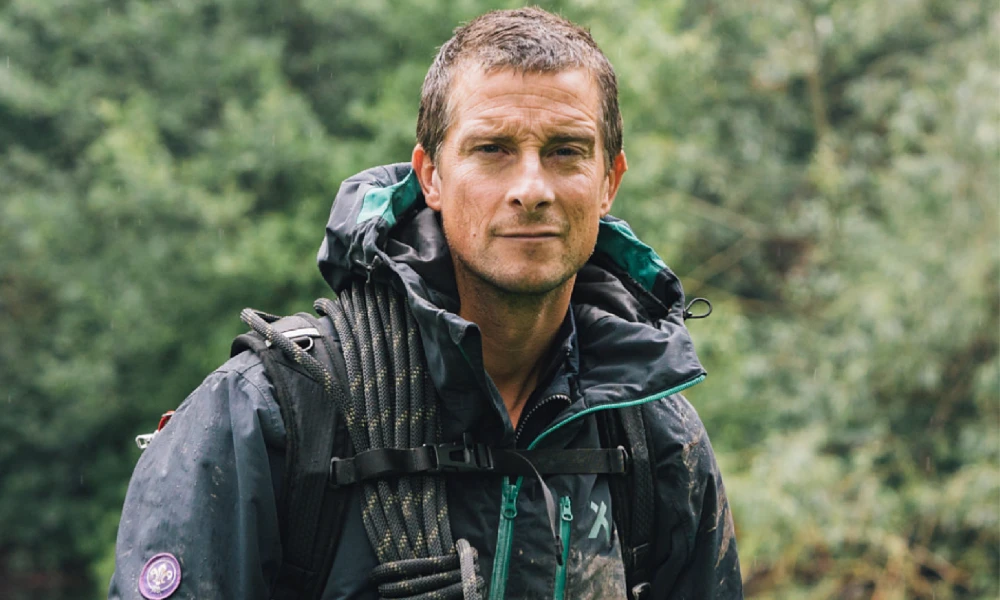
Bringing together many of the world’s leading experts, innovators and pioneers in health, longevity and human performance, the Health Optimisation Summit has become one of Europe’s premier events for anyone looking to optimise their physical and mental wellbeing. Bear’s appearance is expected to be one of the highlights of this year’s programme, offering an inspiring reminder that while technology and science continue to transform our understanding of health, some of the most powerful lessons for living well can still be found in the wild.
If you’ve ever watched someone survive in the wilderness, it can seem as though the greatest challenges are finding food, building shelter or navigating hostile terrain. In reality, the biggest battle often takes place inside our own minds. Long before thirst or hunger become a problem, fear, panic and self-doubt begin to creep in.
After decades of expeditions across deserts, mountains, jungles and oceans, I’ve come to believe that the greatest survival lessons aren’t just for adventurers. They are lessons for everyday life. We may spend more time in offices than forests, but the same principles that help us thrive in the wild can also help us navigate family life, work, health challenges and the uncertainty that modern living often brings.
Perhaps that’s why so many people are rediscovering nature. The outdoors strips life back to its essentials. It reminds us that resilience isn’t something we’re born with; it’s something we build, one challenge at a time. Here are five lessons the wild continues to teach me.
1. Adapt quickly and choose optimism
The wilderness rarely follows your plans. Weather changes, equipment fails, routes disappear and unexpected obstacles appear without warning. The people who cope best aren’t always the strongest or the most experienced. They’re the ones who adapt.
Life works much the same way. We cannot control every circumstance, but we can choose how we respond. A positive mindset isn’t about pretending everything is perfect; it’s about believing that there is always another way forward. When you stop fighting reality and start looking for solutions, opportunities begin to appear where problems once stood.
2. Stay calm when life feels overwhelming
One of the first rules of survival is simple: don’t panic.
Panic narrows your thinking, clouds your judgement and wastes precious energy. Whether you’re lost on a mountainside or facing a difficult conversation at work, the ability to slow your breathing and regain perspective is one of the greatest skills you can develop.
I’ve learned that courage isn’t the absence of fear. Courage is staying calm enough to make the next good decision despite it. Often that’s all any of us need to do: not solve everything at once, simply take the next sensible step.
3. Respect nature because it always deserves your humility
Nature is an extraordinary teacher, but it doesn’t reward arrogance.
Mountains don’t care about your achievements. Rivers don’t change course because you’re in a hurry. The natural world constantly reminds us that we are part of something far greater than ourselves.
That sense of humility is increasingly valuable in modern life. Spending time outdoors reminds us to slow down, pay attention and reconnect with the rhythms we’ve largely forgotten. The more respect we show nature, the more she gives back through perspective, clarity and a renewed appreciation for what really matters.
4. Don’t fear discomfort
Modern life is remarkably comfortable, yet many of us have become less resilient as comfort has increased.
Cold water, steep climbs, wet boots and long days outdoors all have something in common: they remind us that discomfort is temporary. More importantly, they remind us that we are usually capable of far more than we imagine.
Growth almost always lives on the other side of discomfort. Whether that’s taking your first hike, trying a cold-water swim, sleeping under the stars or simply putting your phone away for an afternoon walk, every small challenge strengthens both body and mind. We don’t become resilient by avoiding difficulty. We become resilient by moving through it.
5. Never give up
Some of my toughest expeditions have taught me the same lesson again and again: the moment you most want to quit is often the moment you’re closest to breaking through.
Persistence isn’t glamorous. It’s rarely dramatic. More often it’s about putting one foot in front of the other when progress feels painfully slow. Small steps still move you forward.
Life will knock every one of us down at some point. What matters isn’t avoiding those moments but choosing to stand back up, however many times it takes.
As our lives become increasingly digital and disconnected from the natural world, perhaps the greatest lesson the wild offers is also the simplest. Nature doesn’t just test us; it restores us. It reminds us that resilience, courage and optimism have always been part of who we are.
Sometimes, all we need to do is step outside and remember.
DISCOVER:
- About the Author
- Latest Posts

Our Editorial Team are writers and experts in their field. Their views and opinions may not always be the views of Wellbeing Magazine. If you are under the direction of medical supervision please speak to your doctor or therapist before following the advice and recommendations in these articles.