Home healthcare in general and the international home healthcare sector in particular are currently experiencing a gradual but dramatic transformation. While mobility aids, oxygen concentrators, hospital beds and respiratory support equipment remain essential products in home healthcare provisioning, the definition of homecare has broadened substantially; sensory health–particularly hearing care–has become an integral component of family, caregiver and elder-care provider considerations of healthy aging at home.

Age-related hearing loss, commonly referred to clinically as presbycusis, affects an ever-increasing portion of the global population and should no longer be seen as unavoidable inconvenience; healthcare professionals now recognize its link to social withdrawal, cognitive fatigue and even accelerated mental decline among older adults – thus shifting hearing care out of clinical settings into homes and communities worldwide.
This shift has been driven by regulatory change. In the US, for instance, FDA’s Over-the-Counter Hearing Aid Ruling established a clear pathway for adults with mild to moderate hearing loss to purchase hearing aids without prior prescription or professional fitting – opening up new opportunities for importers, distributors and home healthcare providers alike to access nonprescription devices that fit seamlessly alongside existing home medical equipment portfolios.
Buyers face the difficulty of selecting from among an array of over-the-counter hearing aids available today, spanning basic amplifiers to complex digital instruments. Organizations looking for reliable solutions for their clients need to pay particular attention.
Hearing Health Belongs in Homecare
Hearing loss affects more than just ears; when older adults struggle to hear, their brain works harder to make up the difference and this often leads to listening fatigue, leading them to avoid conversations, phone calls and social events altogether – leading many into isolation which has been linked with depression, anxiety and faster cognitive decline in multiple studies.
Home healthcare providers are well suited to address this challenge. Unlike traditional audiology clinics, they already have access to the home environment and understand daily routines, family dynamics and practical challenges faced by older adults. By adding hearing support services into existing care services they can improve outcomes while fortifying client relationships.
To ensure their services can operate effectively, providers require devices that are reliable, user-friendly and come complete with relevant regulatory credentials – thus making vendor selection essential.
What to Look for When Selecting a Non-Prescription Hearing Aid
OTC hearing aids often have internal technology that is invisible to end users, yet plays an instrumental role in how well the device functions in daily life. Low-cost amplifiers simply increase volume; they don’t distinguish between speech and background noise and therefore make conversations even harder to follow.
Modern digital hearing aids utilize multichannel processing to divide sound into narrow frequency bands, enabling the device to amplify only those frequencies where hearing loss exists, thus maintaining natural speech quality. Advanced systems also feature feedback suppression, noise reduction, and automated environment detection – features particularly beneficial for elderly users who may prefer not having to adjust settings manually.
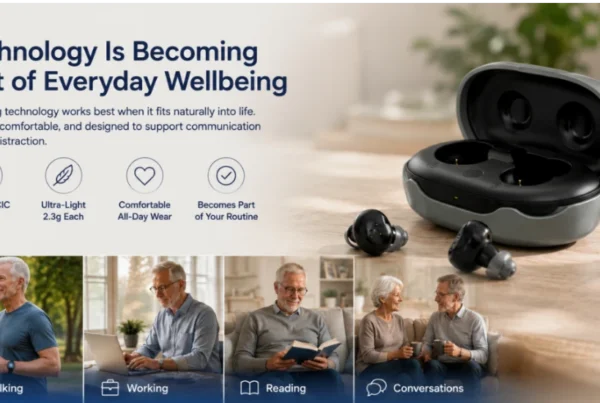
Rechargeable batteries can also be an important consideration. For seniors with limited dexterity, changing tiny batteries every few days is often difficult and frustrating; with a rechargeable device featuring an easy charging case this task becomes much simpler.
Durability is also key when selecting hearing aids; hearing aids must withstand being worn all day in bathrooms, kitchens and outdoor environments – moisture resistance and solid build quality will reduce the likelihood of failure and costs for replacements.
Manufacturer Role in Securing Customer Satisfaction
Distributors and private-label importers place great importance on the manufacturer behind their product. A reliable supplier should offer clear documentation, consistent quality control measures, and verified certifications – in the US this could mean FDA registration or clearance, while CE marking under MDR could be relevant in Europe; while globally ISO 13485 certification provides strong evidence of an established quality management system.
Many buyers now look for over-the-counter OTC hearing aid manufacturers offering factory-direct pricing, OEM/ODM options, and regulatory support to lower risk and streamline import procedures. This approach reduces complexity while streamlining import processes.
JINGHAO Medical is one example of a manufacturer operating in this space. They produce otc hearing aids fda approved aimed at American consumers with CE MDR certification for European distribution. JINGHAO Medical’s product offerings for older adults include rechargeable BTE and ITE models that feature 16-channel processing, adaptive feedback suppression and IP68 water resistance features such as 16-channel processing capability and IP68 water resistance ratings.
JINGHAO stands out in the home healthcare sector because not only can its technology keep up with market needs, but its manufacturing scale too. Based in Huizhou, China and boasting in-house R&D and automated production lines, it ensures consistency of quality and reliable supplies for growing markets.
An Ideal Approach for Home Care Providers
Home healthcare companies require hearing aids that require minimal involvement from staff or family. Users should be able to put it on themselves in the morning, go about their day as usual and charge it back up at night if necessary. Adjustments should also be easy; perhaps through smartphone app or discrete button.
Devices should also be cost-effective enough to fit within an affordable homecare package while still offering performance that makes a real difference to quality of life – this balance between cost and clinical value is what the OTC category was created to do.
As the home healthcare market evolves, hearing support may soon become as standard as mobility assistance or respiratory care. Providers who recognize this early and partner with qualified manufacturers will be best equipped to serve their clients while expanding their businesses.
- About the Author
- Latest Posts

Our Editorial Team are writers and experts in their field. Their views and opinions may not always be the views of Wellbeing Magazine. If you are under the direction of medical supervision please speak to your doctor or therapist before following the advice and recommendations in these articles.