
Holiday Heaven
As most of you who follow my articles and social media pages know, over the last ten years I’ve been to the little known island of Hydra in Greece an hour…
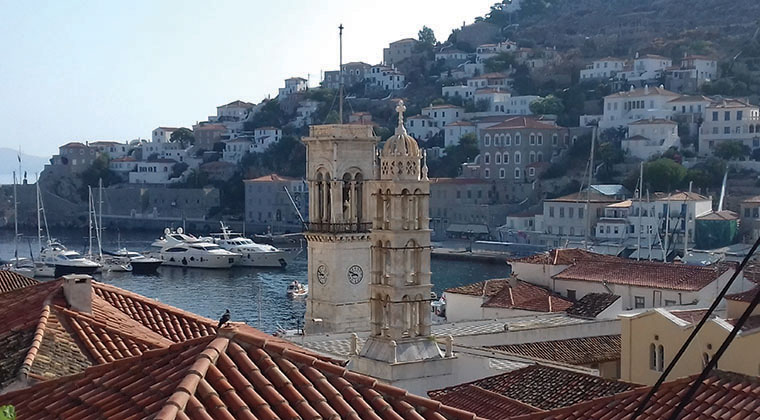
As most of you who follow my articles and social media pages know, over the last ten years I’ve been to the little known island of Hydra in Greece an hour and half by boat from the Athenian port of Piraeus. I first arrived, frazzled and in dire need of a break back in 2009. The moment I landed in the little port I realised this would be a place that I would return to over and over. Many people thought I was crazy and said why not visit other parts of the world but having travelled a lot in my early 20’s through vast parts of South East Asia I wanted a second place to call home. I certainly found it amongst Hydra’s tavernas and cobbled streets.
Hydra is very unusual. Primarily because it has no cars and it’s a small island of only about 2,000 inhabitants. Think St Tropez but in the 1950’s, with echoes of elegant days gone by. The architecture is mostly 18th century with strict regulations on building and painting, to stay in keeping with it’s age and beauty. It’s like walking into a Farrow and Ball catalogue! Well known for the birth place of Leonard Cohens’ Bird on a Wire (he has a house there), Sophia Loren’s film Boy on a Dolphin, the back drop for a Bond film and more recently Kate Moss seen walking round its’ streets, the island has in interesting history. It’s the most understated place I’ve been to, cohabited and visited by artists, writers and lots of elegant people floating around in linen. It‘s quiet there as well and I’ve found a peace and tranquillity much needed to balance my busy lifestyle. Apart from the beautiful architecture and beaches what I really love about the island is the food. I’ve spent the past three weeks living off fava beans, black eyed bean salad, zucchini balls, eggplant salads, halloumi, sardines, calamari, cuttle fish, tomato fritters washed down with barrel loads of rose wine. An hours swim every morning has kept me fit as have the miles of daily walking. It is so unusual not having any cars, motorbikes or even bicycles but you soon get used to walking everywhere. Any heavy lifting is done by donkeys who move anything from local shopping to fridges and washing machines up and down the hills. The only hint of any moving vehicle is the one dirt truck that collects the waste and the tiny ambulance nestled next to the cottage hospital.
Greek hospitality is charming - they cannot do enough for you. Generous portion sizes not only with the main dishes but overflowing carafes of their finest wine. They want you to enjoy yourself. I’ve written about this countless times but its important to reiterate. The Mediterranean diet is really quite wonderful. It is one of the most researched diets in the world and has the best outcomes for Alzheimer’s, cancer, and inflammatory health issues, particularly the Cretan diet which boasts one of the few places in the world with the most centenarians.
Two of my favourite dishes were Fava beans and Eggplant (aubergine) salad. Here are the recipes if you’d like to try them at home:
Fava beans
500g yellow split peas 2 chopped red onions 2 cloves of chopped garlic 1 litre of warm water 1/3 cup of olive oil Thyme Salt and pepper Rinse the split peas in plenty of water. Heat a large pot over medium high heat, add 2-3 tbsps of olive oil, chopped onions, garlic and thyme and sauté. As soon as the onions start to caramelise add the peas and blend. Pour in the warm water and the olive oil, turn the heat down to medium and season well with salt and pepper. Simmer with the lid on for about 40-50 minutes until the split peas are thick and mushy. While the split peas boil, some white foam will probably surface on the water. Remove the foam with a slotted spoon. When done pour in the lemon juice and transfer the mixture to a food processor. Mix until the peas become smooth and creamy like a puree. Serve the fava with a drizzle of oil, a tbsp of diced onion and some chopped parsley. You can add more garlic and lemon juice according to your preferences!Eggplant Salad
4 large purple eggplants (aubergine) 1/2 red onion 1 clove of garlic 125ml olive oil 4 tbsps of lemon juice 3 tbsps of parsley Bake the eggplants in a preheated oven at 200c for about an hour. You can bake them whole or sliced depending on the time available. If you choose to bake them whole use a fork to make some holes on the eggplants place on a tray and bake for an hour. You only need to use the flesh of the eggplants and dice and pulp. Place the pulp and other ingredients in large bowl and mix with a wooden spoon (you can mash using a fork). Let the dip cool down in the fridge to allow the flavours to mingle. You can use as much garlic and lemon juice to suit tastes. I would use three cloves in this for my personal preference. I found on Hydra loads of mountain greens being served (a cross between chard and spinach), plenty of pulses and garlic and drank 2-3 litres of water daily due to the heat and increased exercise. When patients and clients of mine travel they are often encumbered by sluggish bowels or constipation. Eating different sorts of food can change your daily bowel patterns as can the local water (if you can drink it). Generally it’s good advice to keep moving, travelling can mean a lot of sitting around. Keep hydrating and eating soluble fibre where and when you can get it - even if it means carrying around some oatcakes, nuts and carrot sticks. For every alcoholic drink you consume, equal that with water and you won’t go far wrong. You could also travel with a stool softener, probiotics (keep them in the fridge if you can) or those travelling further afield Biocare do a great product called Travelguard. There is nothing worse than feeling bloated in swimwear. In the Mediterranean I’m not sure why you wouldn’t eat the local food as it’s so healthy, high in Omega 3 and 9 fatty acids, protein, fibre and low in sugar and processed foods. Unless you don’t eat fish what better way to pass the evening talking with friends over grilled sardines and huge salads while toasting with chilled rose! To help manage constipation whilst you are on holiday and to make sure it doesn’t get in the way of your plans Dulcolax has a free guide including tips and health swaps at myconstipationrelief.com/uk Kate does not endorse Dulcolax or any other medicine. To contact Kate please call on 01323 737814/310532 or go to www.katearnoldnutrition.co.ukFiled underCancer, Dementia & memory, Addiction & alcohol, Greece

About the author
Kate ArnoldNutrition Consultant
Kate has been a Nutrition Consultant for 25 years and practises Lifestyle Medicine. To date she has seen 12,500 clients and patients and has vast experience and knowledge on nutrition and impacts on health. She specialises in fatigue syndromes and the gut microbiome and its role in complex health issues.