My dad still wears a watch his father gave him in 1978. The leather strap has been replaced four times. The crystal is scratched across the twelve in a pattern I’ve never been able to describe without sounding sentimental. He puts it on every Sunday before church and most Saturdays before yard work, and he can tell you exactly where he was the day he received it (a Sears parking lot in Toledo, if you’re curious).
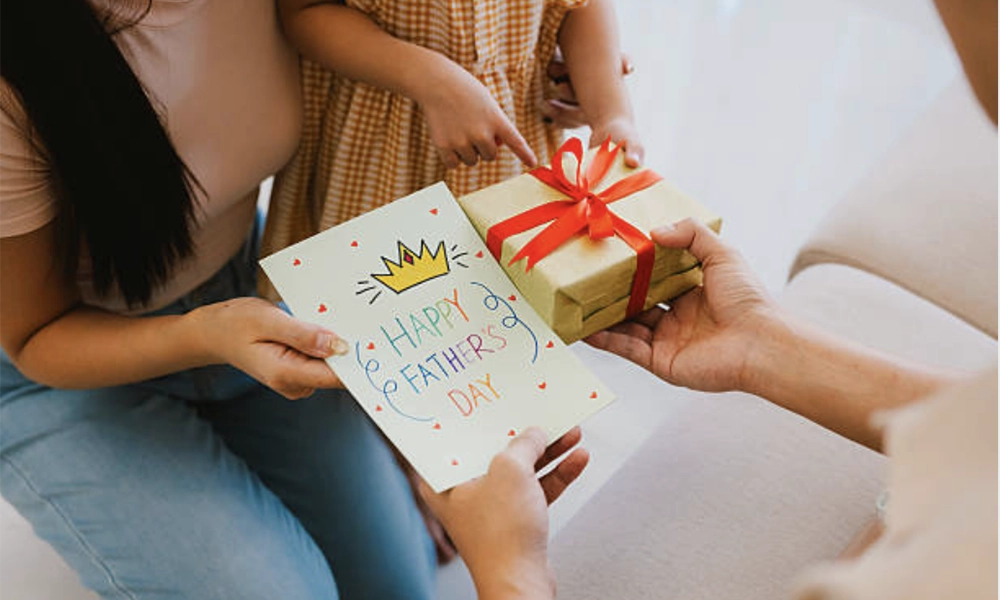
That watch is the reason I think most Father’s Day gifts fail. We tend to buy the holiday, not the man. A novelty mug about being the world’s okayest dad is a joke that lands once, maybe twice if he’s generous. Father’s jewelry, on the other hand, or a tool he’ll actually grab on a Tuesday, has a chance of outliving the occasion. The bar for a good gift isn’t whether he smiles when he opens it. It’s whether you’ll see him using it in five years.
This guide is about how to clear that bar. It isn’t a list of the fifteen trending gadgets of June 2024. It’s a way of thinking about your father, your stepfather, your father-in-law, or whoever you’re shopping for, that should hold up regardless of what’s in stock.
Start with what he already replaces
The easiest tell for a great gift is something he buys for himself, badly, on repeat. My uncle used to lose reading glasses constantly, four or five pairs a year, the cheap drugstore kind. When my cousin finally took him to an actual optometrist and got him a proper pair with a case and a cord, he wore them for years. Eventually he lost those too, but that’s a different story.
Walk through his house. Look at his bathroom counter and his car console. What’s worn out? What’s the cheap version of itself? There’s decent behavioral economics research suggesting people chronically under-invest in things they use every day, defaulting to whatever was on sale the week they happened to need it. I can’t cite chapter and verse, but you’ve probably done it yourself. The thing he touches every morning is probably the thing he’s underspent on.
A few examples that have worked for people I know:
• A real leather wallet to replace the nylon velcro one from a trade show in 2011
• A proper chef’s knife if he cooks with whatever came in the block set from his wedding
• A wool overshirt if his idea of a jacket is the free fleece from a 10K he ran in 2008
• A heavy ceramic mug if he drinks coffee from whatever’s clean
The point isn’t luxury. It’s upgrading a frequent, beat-up object he’d never replace on his own.
Why jewelry is underrated for men
There’s an old assumption that men don’t wear jewelry, or wear a wedding band and call it done. That assumption is out of date, and has been for a while. Men’s fine jewelry has been one of the faster-growing categories in U.S. retail for the last several years, with signet rings and chains leading the way.
My own dad, the watch guy, started wearing a thin gold chain in his sixties after my mom gave him one for no occasion in particular. He was skeptical for about a week. Then he wasn’t. He still wears it.
What I like about jewelry as a gift is that it sidesteps the problems clothing has. A ring sizer is cheap, a chain length is forgiving, and unlike a gadget, none of it goes obsolete in eighteen months. If you want a sense of what men are actually wearing now, this overview of https://www.vrai.com/journal/post/fathers-day-jewelry walks through the main categories in a useful way, even if you don’t buy from them.
One practical note: if he’s never worn jewelry, don’t start him on a statement piece. A simple bracelet or a lapel pin is a better on-ramp than a heavy curb chain. You can always add. You can’t un-give.
Match the gift to the room he loves
Every dad I know has a favorite room. The garage, the kitchen, the den, the porch, the home office. The gift that works is usually the gift that belongs in that room.
My father-in-law’s favorite room is his garage. He’s restored two cars in there and is working, slowly and over my mother-in-law’s objections about the smell, on a third. When my wife gave him a Snap-on torque wrench two Christmases ago, he carried it around the house for an hour like a kid with a new toy. A book about cars would have been fine. The actual tool was the bullseye.
If his room is the kitchen, think cast iron, a good knife, a Thermapen. If his room is the den, maybe a turntable cartridge upgrade or a reading lamp that doesn’t look like it belongs in a hotel. If his room is outside, a real axe or a fishing reel he’s mentioned by name. The failure mode here is buying for the room you wish he had. Don’t get the grill guy a sous vide if he’s never expressed interest. Meet him where he is, not where you’d prefer he be.
Experiences are good. Most experience gifts are bad.
There’s a popular argument, going back to research out of Cornell in the early 2000s, that experiences make better gifts than objects. The argument is mostly right. The way people execute on it is mostly wrong.
A generic experience voucher (“a cooking class!” “a hot air balloon ride!”) puts the planning burden back on the recipient and usually expires unused. I’ve watched this happen twice in my own family. The better version is a specific, dated, already-booked experience that includes you.
What I mean: a Saturday at a specific minor league baseball game, tickets already printed, hotel booked nearby so nobody has to drive home. A guided fly fishing trip on a specific river with a specific guide on a specific weekend. Two seats at a barbecue joint three hours away that he’s mentioned wanting to try, with the drive built in as part of the day.
The specificity is the gift. “Let’s go do something sometime” is not.
A note on sentimentality without the cheese
There’s a category of gift that gets dismissed as sappy and shouldn’t be. A framed photo he’s never seen. A handwritten letter from his now-adult kid. A digitized box of old home videos he assumed were lost in a basement flood.
The trick is to skip the mass-produced version. A laser-engraved cutting board that says “Best Dad Ever” is the cheese. A photograph of him at twenty-six holding you as a newborn, printed properly and framed in something that won’t fall apart, is not. The difference is whether it could have been made for anyone.
If you have access to old photos, his, your mom’s, a grandparent’s albums, spend a Sunday scanning them at 600 dpi. Pick three. Print them at a real lab, not a drugstore kiosk. Sixty dollars, give or take, and it outperforms most things you could buy.
What to do if you’re stuck
If none of this clicks, here’s the fallback I use. Ask him directly what he replaced most recently and was annoyed about. Not what he wants. What he replaced.
The answers are usually revealing, sometimes weirdly so. “My belt finally broke.” “Had to buy new work boots because the soles came off in the driveway.” “My headphones died on the plane last week.” Those sentences are gift briefs. Buy him the version of that thing he’d never buy himself.
If he’s the kind of man who genuinely has everything, which is rarer than people claim, lean into jewelry, a donation in his name to something specific he actually cares about (not a generic nonprofit, the local trail association or veterans group he actually mentions), or time. Block a weekend on your calendar. Tell him. Show up.
The watch on my dad’s wrist, honestly, isn’t an expensive watch. It’s a Seiko from a department store. What makes it the gift of his life is that his father bought it for him on a specific afternoon and meant it. That part is free. The rest is just picking something worthy of the gesture.
- About the Author
- Latest Posts

Our Editorial Team are writers and experts in their field. Their views and opinions may not always be the views of Wellbeing Magazine. If you are under the direction of medical supervision please speak to your doctor or therapist before following the advice and recommendations in these articles.