The largest environmental risk to public health throughout much of the world is air pollution. Ina world increasingly reliant on transport, however, governments are going to have to start getting more creative to cut down on thos nasty emissions. The solution, at least on a local level, may lie in what had for years been merely a figment of artists’ imaginations.
Taking to the skies in a personal airborne vehicle has long been the stuff of sci-fi. William Heath’s satirical March of Intellect design from 1829 had an “airborne whale-gargoyle” conveying people around, while balloons carried what looks like a stage full of people over water. Similarly, German chocolate company Hildebrands depicted walking on water (humans and horses) in a 1910 postcard, “Dispensing with Bridge and Ferry”.
We’ve arguably become a bit less optimistic over the decades, especially after Marty McFly’s hoverboard never came to fruition. Yet, we’ve never let go of some of the classic ideas about transport, like the flying car. So, good news – flying taxis may just be three years away from London’s streets, providing a high-tech way to lower emissions over the city and improve public wellbeing in the long term.
Attractions
London is a natural candidate for futuristic transport, as a popular tourist hub. The EnjoyTravel website places London at number eleven on its list of the most visited cities in the world, with 20.3 million visitors per year. By comparison, the top city, New York, receives 62.2 million tourists, closely followed by Los Angeles (55 million) and Paris (44 million).
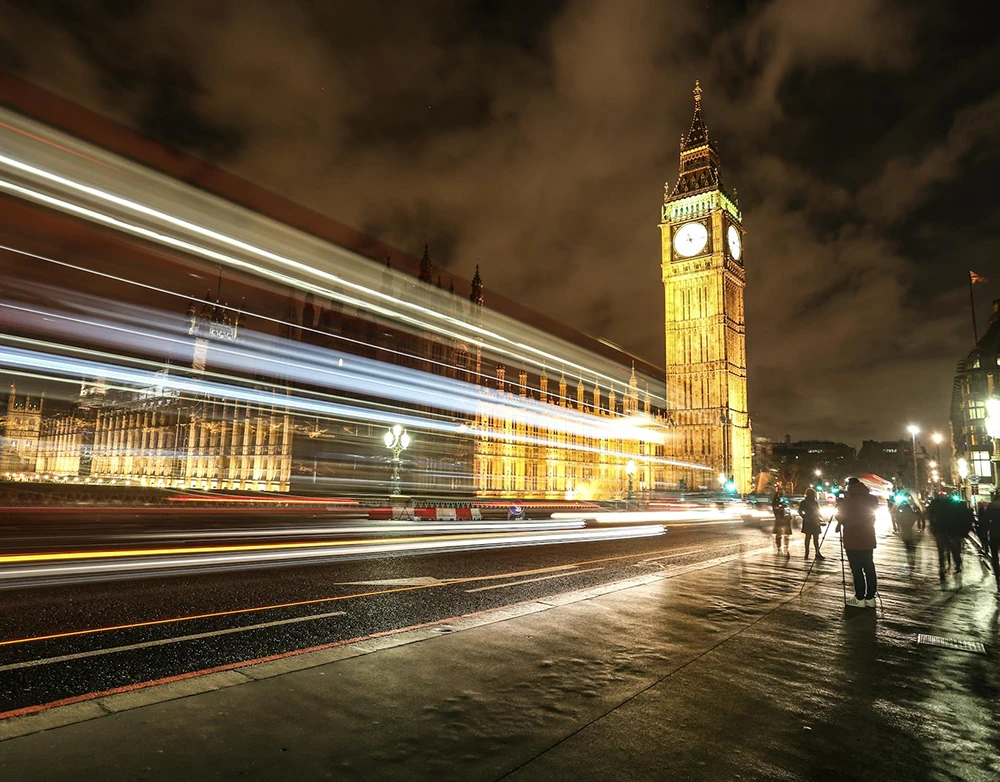
Source: Pexels.
Attractions in the English capital include the Tower of London, The London Dungeon, and the London Eye – although, at the close of the year, things get distinctly colourful. The Christmas lights switch-on is ceremonial on Oxford Street and Regent Street, while tour buses take in the festive colour throughout the city.
London also boasts a European answer to Las Vegas, the fourth-most visited city, across its many secret (and not-so-secret) squares. The Hippodrome Casino on Cranbourn Street, Leicester Square, offers three “uniquely-themed” casinos in its brick-and-mortar location. The operator streams some of its roulette tables to its website, including Live Hippodrome Roulette online.
All this gives people lots of places to be. Local environmental rules, like the Congestion Charge and ULEZ, haven’t proven popular with drivers, however. That’s not to mention London’s famous tube and road traffic.
Emissions
Vertical Aerospace’s Valo aircraft is part-plane, part-helicopter. It’s capable of taking off and landing vertically, and should offer a more permanent solution to congestion and pollution in London. The Valo is a “zero emission alternative” to earth-bound taxis, according to the BBC.
Currently, the London Datastore website says the city had significant CO2 emissions in 2023, with 28.6 million tonnes released. This was down 4.7% over the previous year. On a longer scale, emissions in the capital had fallen 37% since 1990 and 44% since 2000. Interestingly, both population and overall consumption have increased over the same period.
While it has yet to meet with Civil Aviation Authority approval, Vertical Aerospace seems pretty confident of a 2028 fly-out. The Valo can travel up to 150mph, reducing the 22-mile journey from Canary Wharf to Heathrow from an hour to 12 minutes.
Vertical Aerospace’s new taxi might ring alarm bells for black cab drivers, as the cost of a journey could, eventually, be comparable to any other taxi. At launch, journeys will likely come with a premium price tag, at least until a fleet of Valos is established.
Between electric cars, bicycles, and air-cabs, London seems to be taking a stance against both carbon emissions and petrol cars. Technologies aren’t proven by their own marketing material, though, so we might have to wait until the early 2030s to see if Vertical Aerospace’s Valo has the wings to fly.
Until then, we’ll have to continue to endorse the hybrid or full-electric vehicles we already have to keep the famous London smog out of our lungs.