Most of us treat the morning after a few drinks as a problem of willpower: drink more water, eat a fry-up, push through. But the heavy head, queasiness and low-grade dread that can arrive the next day are not a moral failing. They are the visible end of a chain of chemistry that started the moment alcohol entered your system.

Understanding that chain is the first step to recovering from it more gracefully.
Why the Morning After Feels So Rough
When you drink, your liver breaks alcohol down into acetaldehyde before converting it mainly into acetate, which the body can then process further. Acetaldehyde is more reactive and toxic than alcohol itself, and while your body usually clears it efficiently, a big night can produce more than the liver can comfortably process at once.
At the same time, alcohol acts as a diuretic, flushing out water along with electrolytes such as sodium, potassium and magnesium. Add disrupted sleep, inflammation, irritated digestion and a dip in blood sugar, and you have a fairly complete recipe for why the next day can feel so rough.
This is why a hangover rarely feels like one single symptom. It can show up as thirst, nausea, headache, tiredness, low mood, shakiness, sensitivity to light, poor concentration or the particular kind of anxiety that often appears after a heavy night.
Why Water Alone Only Solves Part of the Problem
Hydration matters, but water alone does not replace the minerals you may have lost. Nor does it address the wider stress alcohol places on the body as it is broken down.
A more considered approach to recovery usually looks at several levers together: rehydration with electrolytes, replenishing nutrients such as B and C vitamins, supporting normal energy metabolism, and helping the body manage oxidative stress while it returns to balance.
That last point is where the amino acid L-cysteine has drawn scientific attention. The body uses cysteine to make glutathione, one of its important antioxidants, which helps manage oxidative stress and reactive by-products generated as alcohol is metabolised.
In a randomised, double-blind, placebo-controlled study published in Alcohol and Alcoholism in 2020, participants who took L-cysteine reported lower levels of nausea, headache and next-day anxiety than those given a placebo. It is worth being honest about the limits: the trial was small, involved only male participants and was funded by a supplement company, so it points to a promising mechanism rather than a settled cure.
Still, it helps explain why cysteine now appears in many modern recovery formulas.
Recovery Is a Stack, Not a Single Hero Ingredient
The most sensible takeaway from current research is that no single ingredient does the heavy lifting. Recovery is better thought of as a stack: fluids and electrolytes to rehydrate, vitamins to replenish what alcohol may deplete, and antioxidant support to help the body manage its own clean-up process.
Botanical ingredients such as milk thistle, ginger and green tea extract are also often added for their traditional and antioxidant associations. The evidence behind each varies, so bold individual claims should be treated with healthy scepticism.
This is also the logic behind newer supplements designed around the morning after. Formulas such as UPSWING hangover recovery bring vitamins, amino acids and plant-based ingredients into a convenient capsule format rather than asking people to assemble several separate products. The appeal is less about a magic bullet and more about simplicity: making it easier to follow a sensible recovery routine when you are tired, dehydrated and short on patience.
How to Read the Supplement Aisle Without Being Sold To
If you do explore supplements, a little label literacy goes a long way.
Online, products in this category are often grouped under search terms like best hangover pills, though that phrase can be misleading if it suggests a cure. The more useful question is simpler: what is actually inside, at what dose, and does the brand explain its formula clearly?
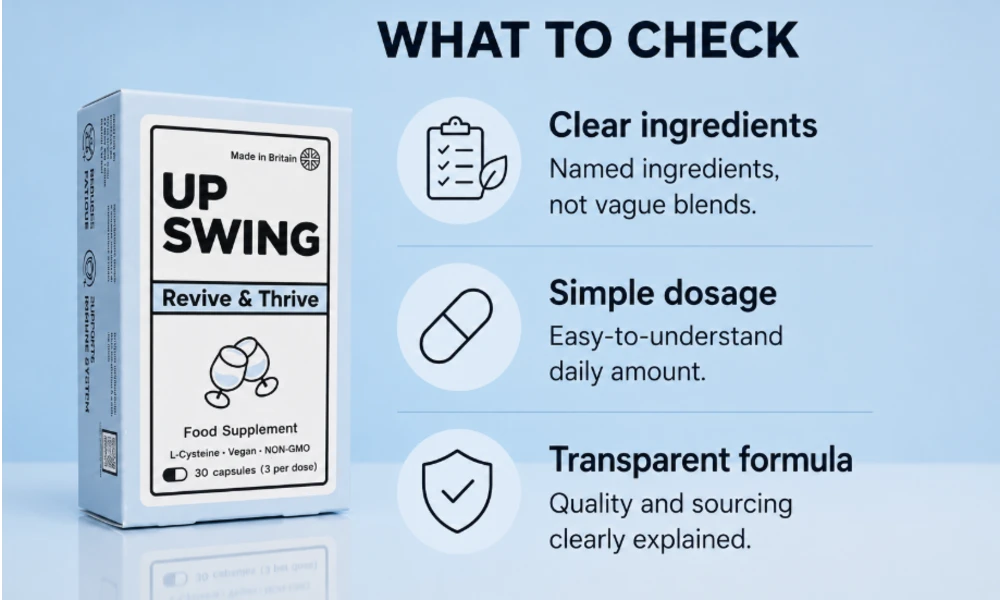
Look for transparent ingredient lists, recognisable electrolytes and vitamins, and a manufacturer that explains where and how the product is made. Be wary of anything promising to erase the consequences of heavy drinking entirely. Supplements can support a recovery routine, but they do not licence overdoing it.
It is also worth remembering the wellness fundamentals that no capsule replaces. Pacing your drinks, alternating with water, eating before you go out and protecting your sleep will always do more for how you feel than anything you take afterwards.
The Gentle Morning-After Reset
The morning itself rewards patience over heroics.
Start with water and, if you have one, an electrolyte drink. Follow it with a balanced breakfast that includes protein and complex carbohydrates to help steady blood sugar. Eggs, oats, yoghurt, toast, avocado, soup or a simple rice bowl can all be more useful than a greasy meal that leaves your digestion working even harder.
Daylight and gentle movement can also help lift a flat mood, even if that only means a short walk around the block. If your sleep was broken, rest where you can. The body is already doing the work of recovery; your job is to stop making that work harder.
One thing worth skipping is the so-called hair of the dog. Another drink may dull symptoms briefly, but it only postpones the recovery your body is already trying to complete.
The science of recovery is genuinely interesting, but the healthiest version of a good night out is still one your body does not have to work too hard to undo.
The morning after does not have to be a write-off. Treat it as a recovery process with a few understood supports — hydration, replenishment, rest and antioxidant support — and you give your body a fairer chance to feel like itself again.
- About the Author
- Latest Posts

Our Editorial Team are writers and experts in their field. Their views and opinions may not always be the views of Wellbeing Magazine. If you are under the direction of medical supervision please speak to your doctor or therapist before following the advice and recommendations in these articles.