
Being told you’re “almost” a candidate for LASIK can feel more confusing than getting a clear yes-or-no. That in-between space can feel more confusing than helpful. You’re not ruled out, but you’re not fully in either, which leaves a lot of unanswered questions about what actually matters in the decision.
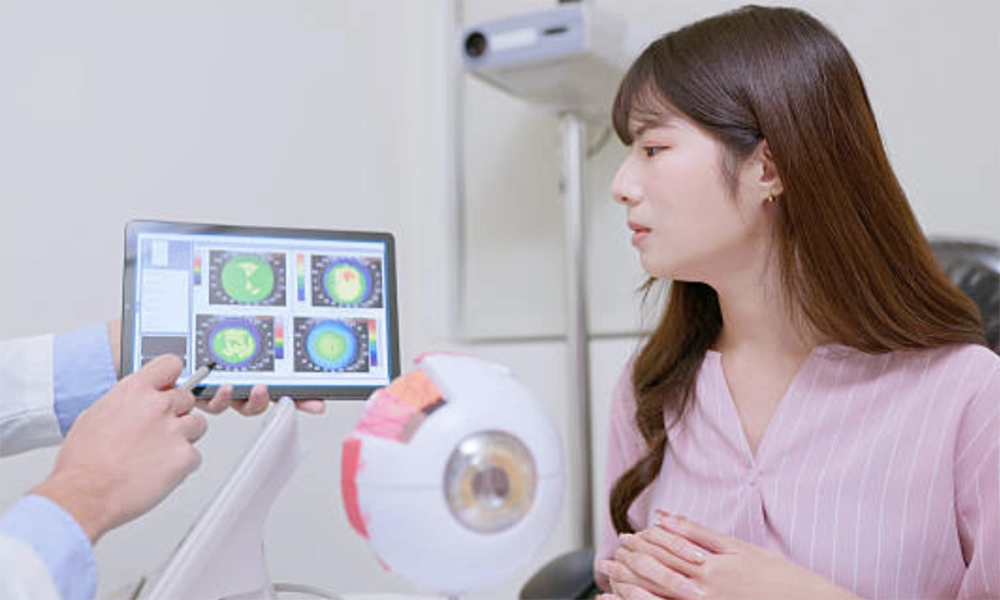
For many people, this procedure works exceptionally well when certain conditions line up—stable vision, healthy corneas, and prescriptions within a treatable range. But not every case fits neatly into that category.
If you’re exploring options around Minneapolis, you’ve probably already noticed that candidacy isn’t always as straightforward as it sounds online. Being a “borderline candidate” doesn’t mean the procedure is off the table—it usually means the decision requires a closer look at how different elements interact.
Below are six common factors that may place someone in this category, along with what they mean moving forward.
1. Your Vision Prescription Is Still Changing
It’s easy to assume LASIK candidacy is a simple yes or no, but subtle changes in vision can quietly complicate that assumption. When a prescription continues to shift—even slightly—it introduces unpredictability that makes long-term results harder to lock in.
This is where, for many, exploring localized options for vision correction—such as lasik in Minneapolis becomes part of a broader conversation around timing rather than just eligibility. Instead of treating prescription strength as a fixed number, surgeons tend to look at how it has evolved over time and whether those changes follow a stable pattern.
To create a fuller picture before moving ahead, practices like Chu Vision Institute typically extend evaluations beyond recent readings. This helps determine how the eyes have behaved across multiple visits and if waiting could lead to a more reliable outcome. That shift in perspective reframes the decision entirely, turning it into a question of timing and consistency rather than a straightforward qualification.
2. Your Corneal Thickness Is on the Lower End
Being told your corneas are “a little thin” can leave you unsure what that actually means. Part of this comes down to how LASIK reshapes the cornea, which requires enough tissue to safely support the adjustment.
At the same time, many strong candidates have corneas that fall well within the ideal thickness range, allowing for smoother reshaping and stable outcomes. When thickness sits closer to the lower limit, the decision becomes more individualized.
Instead of focusing on a single number, surgeons consider how corneal strength, curvature, and overall structure interact. That layered evaluation helps determine whether this procedure remains appropriate or if another approach may be safer.
3. Dry Eye Symptoms Complicate the Decision
Mild dryness doesn’t always seem like a major concern at first. The reason it becomes relevant is that LASIK can temporarily affect tear production, which may make existing dryness more noticeable during recovery.
That said, individuals with healthy tear production and stable ocular surface conditions tend to recover more comfortably and predictably. When dryness is already present, surgeons take a closer look before moving forward.
The conversation usually extends beyond vision correction, focusing on how the ocular surface behaves and whether it can support healing. Addressing dryness in advance can sometimes bring someone closer to being an ideal candidate.
4. Your Prescription Falls Near the Upper Treatment Range
High prescriptions can make LASIK feel like a maybe rather than a definite yes. This happens because correcting larger refractive errors requires more corneal reshaping.
For individuals with mild-to-moderate prescriptions, this procedure tends to deliver highly predictable outcomes with minimal compromise of corneal structure. As prescriptions increase, the margin for adjustment becomes narrower.
Instead of focusing only on whether correction is possible, surgeons evaluate how much change is required and whether it aligns with long-term stability. That balance plays a key role in determining candidacy.
5. Subtle Irregularities in Corneal Shape
Not all vision concerns are straightforward. Small irregularities in corneal shape can influence how light enters the eye, even if they don’t immediately affect day-to-day vision.
In ideal LASIK candidates, the cornea tends to have a smooth and consistent shape, which allows for precise reshaping. When irregularities are present, even subtle ones, they require closer examination.
Detailed imaging helps map the cornea and identify patterns that might affect outcomes. That deeper level of analysis helps ensure that any decision supports both clarity and long-term eye health.
6. Expectations Need Alignment with Results
Sometimes the biggest factor isn’t physical—it’s expectation. LASIK can significantly improve vision, but it doesn’t always guarantee complete independence from glasses in every situation.
People who see the best long-term satisfaction are usually those whose expectations align with what the procedure is designed to achieve. That clarity makes a noticeable difference in how results are experienced.
Surgeons typically walk through realistic outcomes based on individual factors, including how vision may evolve over time. That discussion helps turn uncertainty into a more grounded and confident decision.
Conclusion
Being a “borderline candidate” for LASIK isn’t a rejection—it’s a signal that your eyes require a more personalized evaluation. While ideal candidates tend to meet certain criteria, many people fall into a space where multiple factors need to be considered together.
What stands out is that this procedure remains a highly effective option when the right conditions are met. The goal isn’t to force a yes-or-no, but to arrive at the right decision based on how your eyes function as a whole. And in many cases, that deeper understanding is what makes the final decision feel far clearer and more reassuring.
- About the Author
- Latest Posts

Our Editorial Team are writers and experts in their field. Their views and opinions may not always be the views of Wellbeing Magazine. If you are under the direction of medical supervision please speak to your doctor or therapist before following the advice and recommendations in these articles.