Introduction to Women’s Health and CLL
The awareness of women in terms of health is gaining significance in contemporary medical care, particularly in matters of blood cancers such as Chronic Lymphocytic Leukemia. This disorder impacts the white blood cells and may weaken the immune system in the long run. The CLL BTK Inhibitor is a targeted drug that is currently advancing the field because it prevents the cancer-cell pathways by blocking them, thereby providing a safer and more effective option of treatment to patients.
The relevance of Women’s Health Awareness to Blood cancer
The awareness programs concerning the health of women are usually centered on such conditions as breast cancer or reproductive health. The same can be said, however, of blood cancers. Research findings indicate that awareness strategies can greatly enhance the outcome of early diagnosis and treatment.
In the case of CLL, quality of life can be significantly improved through early diagnosis and proper treatment for the patient. Through educational programs, women are made aware of the symptoms, consult medical care, and learn about new treatment options such as the CLL BTK Inhibitor.
The Increasing Demand for Selective Therapies
The treatment of cancer has developed radically. Previously, treatment methods were rather general and usually targeted healthy cells, as well as cancerous ones. Medical science today focuses on precision medicine, which is focused on particular molecules of disease development.
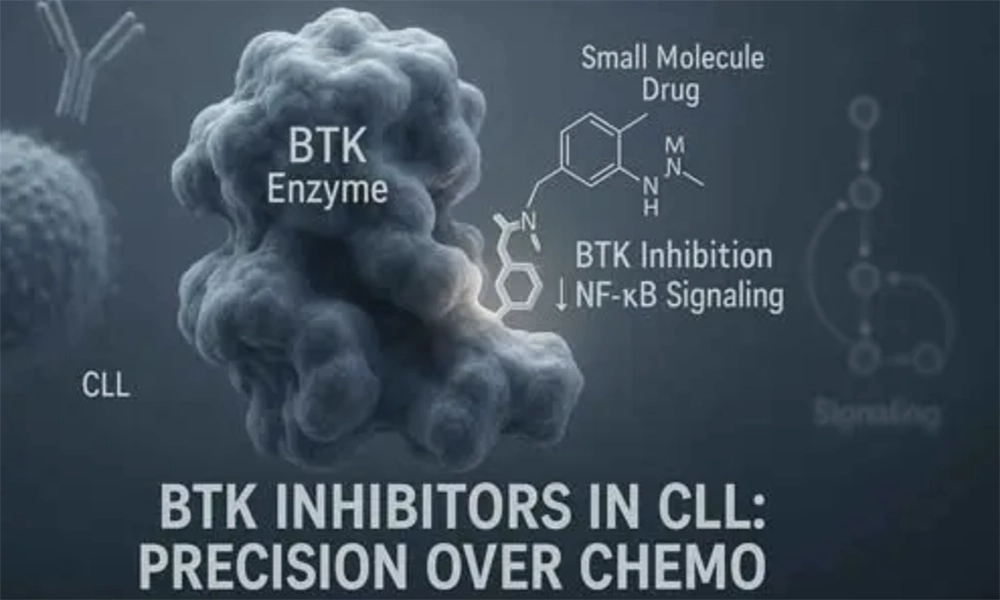
One of the best examples of such a shift is a CLL BTK Inhibitor. These remedies have the capability to slow down the course of the disorder by targeting one of the enzymes, which can be very important in the survival of most cancer cells, thereby causing minimal harm to the healthy cells.
What Is Chronic Lymphocytic Leukemia (CLL)?
In maximum regions of the arena, one of the most common kinds of leukemia in adults is Chronic Lymphocytic Leukemia. It grows within the marrow of the bones, and it impacts the white blood cells of a specific type that is known as the B-lymphocyte.
The CLL usually develops at a slow pace as opposed to aggressive leukemias that progress very fast. The disease takes years before treatment is necessary for many patients. Nevertheless, in case of the progression of the condition, specific treatment like a CLL BTK Inhibitor can be prescribed.
CLL prevalence arises in a situation with genetic alterations that disrupt the lifecycle of B cells. These cells do not die naturally, and they go on living and multiplying. With time, they build up in the blood and lymphatic system.
Causes and Risk Factors
Even though the causes of CLL are still under research, there are a number of risk factors that have been identified:
. Age (most patients are over 60)
. Family history of blood cancers
. Certain genetic mutations
. Environmental chemical exposures.
Curiously enough, CLL has been more prevalent among men in comparison with women. Nevertheless, even the women who are diagnosed with the disease need specific and individual treatment methods, so the knowledge of such therapies as the CLL BTK Inhibitor is particularly important.
Symptoms Patients Should Know
In the early stages, CLL may not produce noticeable symptoms. Many patients discover the disease during routine blood tests. As the condition progresses, symptoms may include:
. Persistent fatigue
. Swollen lymph nodes
. Frequent infections
. Unexplained weight loss
. Night sweats
As symptoms arise, the doctor might consider the use of medications, including the use of targeted therapy, such as a CLL BTK Inhibitor.
Key CLL BTK Inhibitor Medications in Use Today
Some drugs have been created to suppress BTK and cure CLL. These medications are the various generations of targeted therapy and are still being developed with clinical research.
Various CLL BTK Inhibitor drugs are among the most common studies:
. Ibrutinib
. Acalabrutinib
. Zanubrutinib
Both drugs inhibit the same enzyme but could vary in terms of selectivity, dose, and side effects.
First-Generation Treatments
Ibrutinib was the first popular CLL BTK Inhibitor. It was approved in the early 2010s, and it has become much more successful in salvaging many patients with relapsing or refractory CLL.
The drug showed that it is possible to treat the disease with the help of BTK targeting without using standard chemotherapy.
BTK next-generation Inhibitors
Acalabrutinib and Zanubrutinib were more modern pills, which were purported to be extra selective. This implies that they are more specific to BTK and can have less off-target effect.
The next generation treatment of CLL BTK Inhibitors is still under investigation when used alongside other forms of treatment to enhance long-term results.
Advantages and Drawbacks of CLL BTK Inhibitor Therapy
A CLL BTK Inhibitor is like any other medical intervention that has its benefits and obstacles. The awareness of such factors assists patients and physicians in making informed choices.
Treatment Advantages
Key benefits include:
. Targeted action against cancer cells
. Reduced need for chemotherapy
. In a number of cases, convenient oral medication
. Enhanced progression-free survival
Many patients find that CLL BTK Inhibitor therapy allows them to maintain a relatively normal lifestyle during treatment.
Possible Side Effects
A CLL BTK Inhibitor can also cause side effects, even with its design, such as:
. Fatigue
. Headache
. Increased bleeding risk
. An uneven heartbeat is an uncommon occurrence.
These dangers are effectively controlled by healthcare professionals who do not neglect patients during therapeutic sessions.
The Value of Research and Clinical Trials
The potential options for treating CLL continue to grow as a result of scientific research. Clinical trials are important in the trial of new drugs and combination therapies.
There are numerous studies examining how a CLL BTK Inhibitor may be used together with other targeted therapies to enhance the rates of remission.
Emerging Therapies
The combinations that are being investigated by researchers are:
. BTK antagonists containing BCL-2 antagonists.
. Monoclonal antibody BTK inhibitors
. Regimens based on time restrictions
These measures will have the effect of making the treatment more effective and decreasing the exposure to medication in the long term.
Personalized Medicine
Personalized medicine refers to the combination of genetic and molecular information in order to inform treatment. Doctors can choose the best CLL BTK Inhibitor in the future, depending on a specific patient and his/her biological profile.
Conclusion
The treatment of CLL has been revolutionized by advances in medical science. The CLL BTK Inhibitor is a significant advancement, and it attacks the cancer pathway of signaling to aid disease progression. Raised awareness, particularly among women, contributes to drug awareness among the patients. As research and clinical trials are progressing and better targeted therapies are developed, the future of CLL care remains to be the same, more promising.
FAQ’s
What is a CLL BTK Inhibitor?
A CLL BTK Inhibitor is a specific medication that blocks Bruton’s Tyrosine Kinase, which is an enzyme that makes leukemia cells live on and multiply.
Is CLL BTK Inhibitor chemotherapy?
No. A CLL BTK Inhibitor is a focused remedy as opposed to conventional chemotherapy.
How long do patients take BTK inhibitors?
Some sufferers take a CLL BTK Inhibitor continuously, although research is exploring time-constrained remedy techniques.
Are BTK inhibitors safe?
Most patients tolerate a CLL BTK Inhibitor properly, but doctors screen for side effects consisting of bleeding or heart rhythm adjustments.
Can BTK inhibitors cure CLL?
Currently, a CLL BTK Inhibitor facilitates managing the sickness; however, it does not typically treat it.
Are new BTK inhibitors being advanced?
Yes. Researchers aim to expand stepped forward variations of the CLL BTK Inhibitor with more precision and fewer side effects.