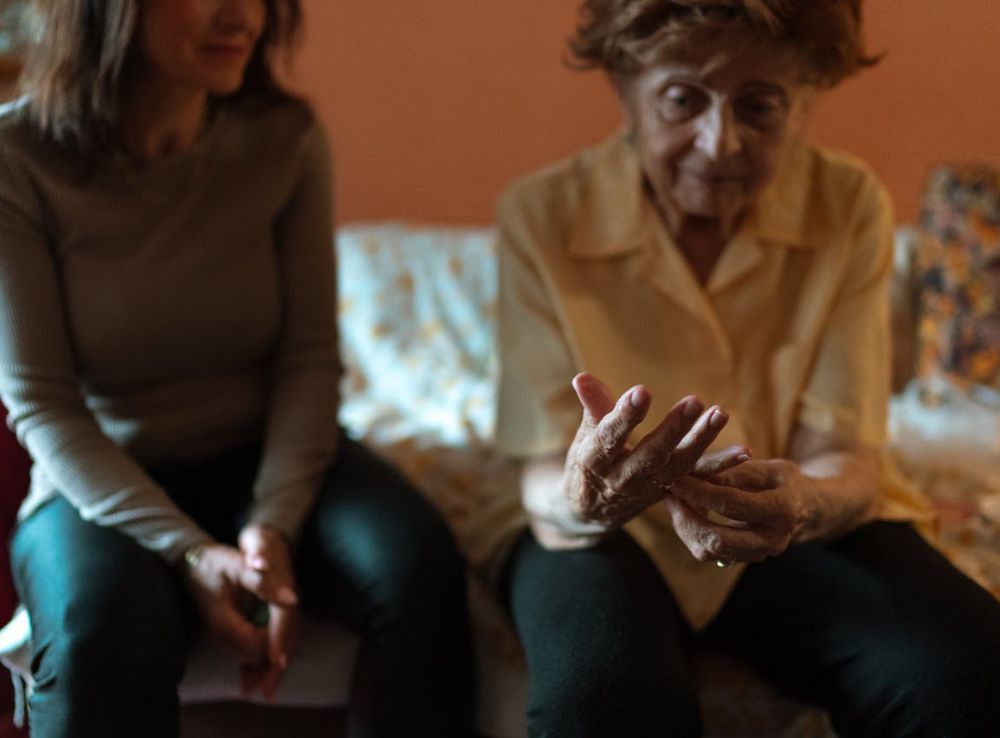
There’s a particular kind of tiredness that belongs to the women quietly holding their families together. It’s the tiredness of the daughter who answers the phone on the third ring, knowing before she picks up that it’s Mum’s pharmacy, or the GP surgery, or the neighbour who popped round and found the back door open again. She’s the one who remembers which day the district nurse is coming. She’s the one whose diary runs on two clocks: her own, and her mother’s.
She probably doesn’t call herself a carer. Research from Carers UK found that more than half of unpaid carers take a year or more to even recognise they’re in a caring role. By the time she does, the exhaustion has often settled in.
The Invisible Workforce
Britain runs on the quiet labour of women like her. Around 5.8 million people in the UK provide unpaid care for a family member or friend, and women are significantly more likely than men to take it on. For many in their forties, fifties and sixties, it arrives alongside teenagers at home, demanding jobs and their own perimenopausal bodies asking for more attention than they’re used to giving.
The shift from daughter to primary carer is rarely announced. It creeps in. A hospital discharge. A fall. A diagnosis that changes the grammar of the relationship, so that the person who once made your packed lunches is now the person you’re organising medication for. You’re still her daughter, but you’re also suddenly her advocate, her administrator, her memory.
The Quiet Toll
The cost of all this is rarely financial alone, though it’s often that too. It’s the slow erosion of the self. Carers UK’s research found that 74% of carers report feeling stressed or anxious, and 35% describe their mental health as bad or very bad. Many talk about low mood, sleeplessness, resentment that frightens them, and a guilt that sits on the chest like a weight.
The Good Daughter knows she shouldn’t feel this way. She loves her mum. She chose to step up. But loving someone and feeling worn thin by the work of caring for them aren’t contradictions. They can live in the same body at the same time, and pretending otherwise is part of what makes carers ill.
Removing the Quiet Pressure of Money
A large part of the anxiety many daughters carry is financial. How long can Mum stay at home safely? What happens if she can’t? Who pays, and for what? The uncertainty alone can keep you awake at three in the morning, and financial stress is one of the fastest routes into burnout.
Getting clarity here tends to lift more weight than people expect. Expert guidance on care funding and self-funded arrangements, such as that provided by Coast Care Group, can help turn a vague dread into a set of decisions you can actually make. You don’t have to solve it all in one afternoon. You just have to stop carrying the unknown.
Building a Circle, Not Carrying It Alone
The heroic solo carer is a myth worth letting go of. Support exists, but it rarely comes looking for you. Mind’s guidance for carers is a sensible starting point for anyone feeling overwhelmed, alongside local carers’ groups, respite services and GP-led carers’ assessments, which you’re entitled to as the person providing care.
Respite, in particular, is worth considering sooner rather than later. A proper break, whether it’s a few hours or a few days, isn’t a luxury or a failure. It’s maintenance.
Self-Care Isn’t Selfish, It’s Structural
The oxygen mask metaphor is a cliché because it happens to be true. A carer who runs herself into the ground can’t sustain the very thing she’s trying to protect. Sustainable care depends on the carer staying well enough to give it.
That doesn’t have to mean spa weekends or silent retreats, though there’s nothing wrong with those either. It can be smaller. A walk without the phone. Ten minutes with a book before the house wakes up. A standing coffee with a friend who knew you before any of this started. The point is to keep hold of a version of yourself that exists outside the caring role, because that version is the one doing the caring.
Saying no matters too. To the sibling who lives further away and has opinions but no time. To the assumption that you’ll always be the one. Boundaries aren’t a betrayal of love; they’re how love lasts.
A Loving Daughter, Not Just an Administrator
The goal isn’t to stop caring. It’s to protect the part of you that wanted to in the first place. When the logistics are handled and the support is in place, there’s room again for the things that mattered before any of this: the cup of tea together, the shared laugh at something on the telly, the company. That’s the care that stays with both of you.
Looking after your mum is one of the most loving things you’ll ever do. Looking after yourself while you do it is part of the same act.
- About the Author
- Latest Posts

Annie Button is a freelance writer specialising in well-being and sustainable lifestyles, empowering readers to make impactful changes, one step at a time. She provides practical insights and solutions for achieving a balanced, sustainable lifestyle amid fast-paced contemporary living.