Astrology was once exactly what its name suggests: the study of the stars.
It began with people observing the Sun, Moon and planets against the fixed backdrop of the constellations. The zodiac was not originally an abstract personality system or a symbolic calendar. It was a visible belt of stars through which the Sun appeared to travel over the course of the year.
That is what makes the modern situation so striking. Much of Western astrology no longer measures the heavens against the stars at all.
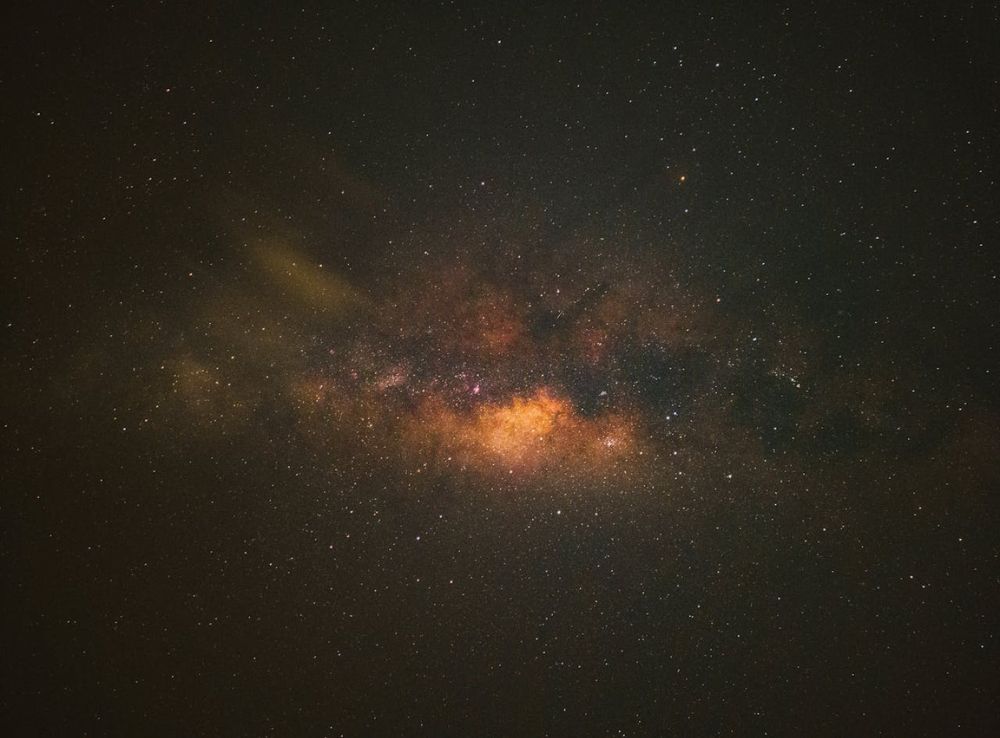
Instead, it uses the tropical zodiac, a system tied to the equinoxes and divided into twelve equal signs beginning with the spring equinox. In this model, Aries always starts at that seasonal point, regardless of which constellation is actually behind the Sun. As a result, someone described as having their Sun in Aries is, astronomically speaking, very likely to have the Sun in front of Pisces.
This shift happened because of the precession of the equinoxes. Earth’s axis wobbles very slowly over time, causing the equinox points to drift backwards against the background of the stars. The shift is tiny in one lifetime, but over centuries it becomes substantial. Across roughly two thousand years, it amounts to about a whole sign.
So when the tropical zodiac says the Sun enters Aries at the spring equinox, the visible sky tells a different story. The Sun is no longer in front of Aries at that moment. It is in front of Pisces.
This is not a minor technical issue. It raises a deeper question: if astrology no longer refers to the stars, in what sense is it still astrology?
The contradiction becomes even clearer when one considers the hemispheres. Tropical astrology often links Aries with spring and Libra with autumn, yet the same sign meanings are applied in exactly the same way in both the Northern and Southern Hemispheres, despite their seasons being reversed. If the zodiac is truly seasonal, that is a problem. The stars, by contrast, do not change because one person is standing in London and another in Sydney.
This is why the distinction between tropical and sidereal astrology matters. The tropical zodiac is anchored to the equinoxes. The sidereal zodiac remains anchored to the stars. In Jyotish, often called Vedic astrology, planetary positions are measured against the stellar background, preserving the older astronomical basis of astrology.
Another system worth mentioning here is Asterian astrology. Asterian astrology is part of a contemporary return to star based astrology within a Western lineage. It draws on the Yavanajataka, or “Horoscopy of the Greeks”, and works with a 27 star framework aligned to the Moon’s path, much like Jyotish does with the nakshatras. Where Jyotish expresses this stellar framework through Sanskrit and Vedic symbolism, Asterian astrology translates it through Greco-Roman star mythology and Western astronomical history.
That makes Asterian astrology especially interesting. It shows that returning astrology to the stars does not have to mean borrowing a system from elsewhere without context. It can also mean recovering an older stellar foundation within the broader Western tradition itself.
None of this is to deny that tropical astrology has developed a long cultural history. But history and origin are not the same thing. Astrology began with the visible heavens. The constellations were real presences overhead, not symbolic labels floating free from the sky.
Perhaps the real issue is not whether people find tropical astrology meaningful, but whether astrology is still willing to name what it has become.
It began with the stars.
And systems like Jyotish and Asterian astrology remind us that it still can.
- About the Author
- Latest Posts

Camilla Brinkworth is a naturopath, nutritionist (BHSc Naturopathy, GradCert Human Nutrition) and Family Constellations facilitator with 15 years of experience in the wellness industry. She specialises in plant-based nutrition, mental health and holistic natural PMDD recovery. Her approach goes beyond food and supplements—she combines lifestyle medicine and nutritional guidance with herbal medicine, nervous system support, trauma processing and ancestral healing work to address the deeper causes of disease. Originating from the UK, Camilla now lives in Ubud, Bali, offering online consultations to clients worldwide. Having personally overcome PMDD, autoimmune arthritis, anxiety, depression, and panic disorder, Camilla understands the complex relationship between the body, mind, and lived experience; her clinical work is grounded in compassion, and evidence-informed practice. As a speaker, clinician, and educator, Camilla guides people in understanding the deeper story behind their symptoms, resolving what’s held in the body, and supporting long-term transformation through highly expertised, science-backed yet holistic care.