A baby wardrobe can look beautifully simple from the outside: a few sleepers, bodysuits, soft pants, and one or two favorite sets. The complicated part is hidden in the labels. “Bamboo,” “viscose,” “snug-fitting,” “pre-shrunk,” and “breathable” all sound useful, but they answer different questions. Parents still have to work out what the fabric actually is, how the garment is meant to fit, whether the care routine suits the household, and which claims are product facts rather than advertising language.
For families drawn to natural-parenting ideas, that distinction matters. A plant-based source does not automatically make the finished textile natural in the same sense as the original plant, and a soft hand-feel does not prove a medical or environmental benefit. The most reliable shopping habit is to move in order: read the fiber wording, inspect the garment construction, check the intended use and fit, then decide whether the care instructions fit real family life. The Federal Trade Commission makes the same basic distinction in its bamboo-textile guidance: rayon or viscose manufactured from bamboo should be identified as rayon or viscose made from bamboo rather than simply as raw bamboo fiber.
This “label-to-laundry” approach keeps a purchase grounded in things parents can verify. It also makes it easier to compare two products that may use similar material language but have completely different cuts, age ranges, or washing instructions.
Read the Fiber Label Before Falling for the Fabric Name
The FTC draws a clear line between actual bamboo fiber and rayon or viscose manufactured from bamboo as the plant source. For the soft regenerated textiles commonly used in clothing, “viscose made from bamboo” or “rayon made from bamboo” is more precise than treating the finished textile as natural bamboo fiber.
That wording may sound technical, but it prevents one appealing material word from doing too much work. Parents can like the softness, stretch, or drape of a bamboo-derived viscose fabric without automatically describing it as antibacterial, hypoallergenic, chemical-free, or environmentally superior.
Soft to the Touch Is Only the First Test
Once the fiber wording is clear, look at what the manufacturer has actually made from it. A toddler pajama top can use the same general textile family as a one-piece baby footie and still feel completely different because of its waistband, sleeve shape, seams, thickness, and fit.
Pay attention to the places where clothing meets the body. Flat seams, tagless construction, stretch, cuffs, necklines, and waistbands can all affect the experience of wearing an item. None makes a garment universally comfortable, but together they tell parents far more than a single “soft” claim.
Pajamas Change the Fit Conversation
When parents compare bamboo pajamas, fabric is only one part of the decision. Children’s sleepwear has specific U.S. requirements, and tight-fitting sleepwear is defined through garment measurements, construction, and labeling criteria.
That is why automatically choosing a much larger size just to extend wear is not a sensible default when it conflicts with the garment’s intended snug fit. Use the exact product chart, compare it with current measurements, and follow the sleepwear label. Familiar labels such as 4T, 7, or 10 help parents navigate a page, but they should not be treated as universal body measurements.
What the Pretty Product Photo Cannot Tell You
A photograph can make color, pattern, and overall styling easy to understand. It cannot reliably tell parents what fiber percentage applies to the exact SKU, whether the garment is pre-shrunk, what washing temperature is recommended, or whether the pictured size range includes their child.
The less glamorous parts of the page therefore deserve more attention before checkout. Read the current product title, size selector, Fabric + Care section, construction details, intended fit, and availability. Those details should carry more weight than the mood of the photograph.
The Pink Unicorn Set Has an Important Age Clue
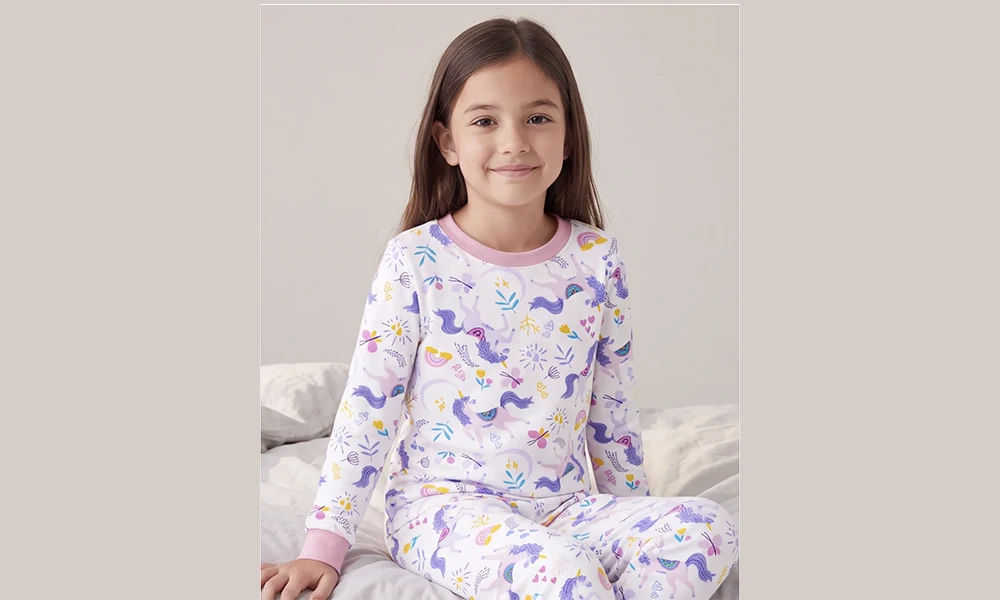
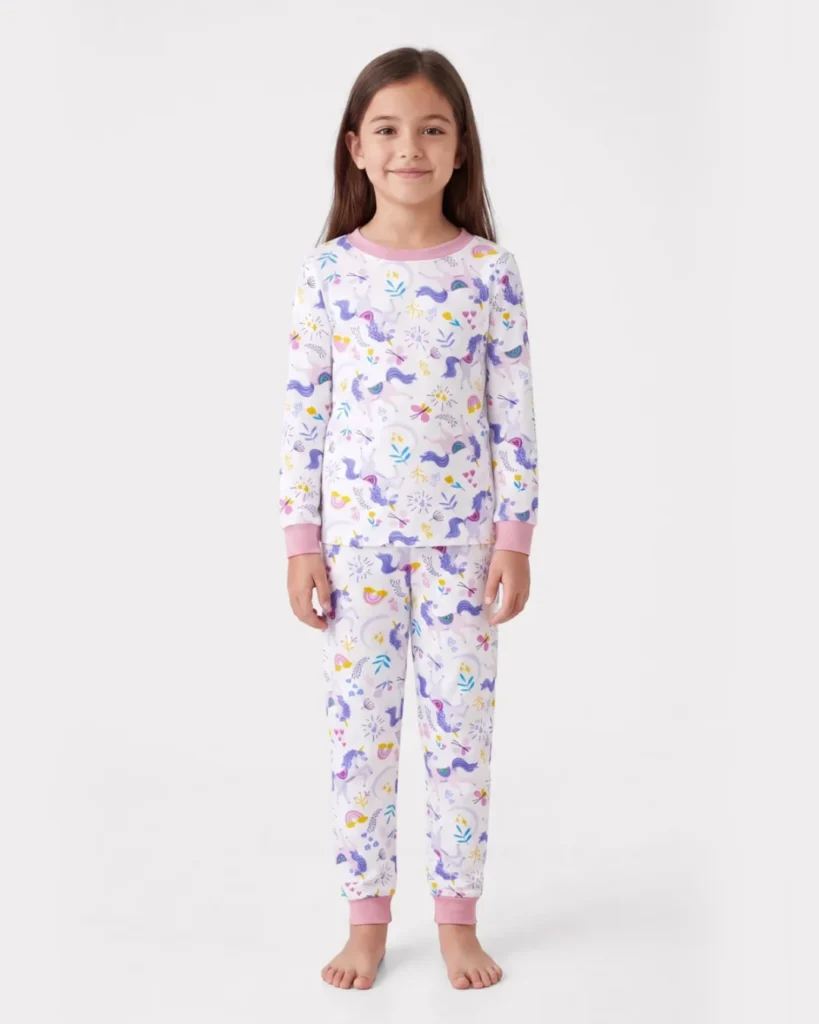
The featured PatPat product is currently titled Toddler/Kids Girls’ 2-Piece Unicorns Pajamas in Pink under the BambooCloud™ line. This is an important example for a baby-clothing guide precisely because it is not an infant product: the current U.S. page displays sizes from 2T through 12. Parents browsing a broad material category should therefore check the wearer and age range instead of assuming every bamboo-labeled garment is designed for babies. The product is currently marked out of stock, so availability should be checked again near publication or purchase.
PatPat describes this exact set as using a bamboo-viscose knit with four-way stretch, flat seams, a heat-pressed tagless label, and pre-shrunk construction. Its current Fabric + Care section refers to a bamboo-fiber material blend but does not expose a complete fiber-percentage breakdown in the page text available during verification. For that reason, it would be misleading to borrow a 93/7 composition from a different PatPat bamboo pajama SKU.
For care, the page specifies machine washing in cold water on a gentle cycle, tumble drying on low, and no bleach. Those instructions apply to this pink set and should not automatically be generalized to every garment sold under a bamboo collection.
The Details Worth Noticing on This Two-Piece Set
Parents considering the actual product can confirm several practical selling points on its current page:
- Two-piece pajama format: a separate top and bottom designed for toddlers and older children.
- Pink unicorn styling: a playful print and color combination that gives the set a clear identity.
- Bamboo-viscose knit construction: the product details specifically identify the knit as bamboo viscose.
- Four-way stretch: the fabric is described as stretching in multiple directions.
- Flat seams: a construction detail that reduces bulky traditional seams inside the garment.
- Heat-pressed tagless label: avoids a conventional sewn-in neck tag.
- Pre-shrunk construction: listed as a feature of this exact SKU.
- Straightforward care: cold gentle-cycle wash, low tumble dry, and no bleach.
These features are useful on their own. They do not need to become promises about eczema, guaranteed cooling, irritation prevention, or better sleep.
If Laundry Is Complicated, the Fabric Choice Is Not Finished
A material that sounds appealing on a product page still has to fit the household’s laundry routine. Families with babies and young children may wash clothing often, so care requirements become part of how practical an item really is.
“Bamboo” is not a universal laundry setting. Different knits, dyes, stretch-fiber blends, and garment constructions can need different treatment. For the featured pink set, PatPat currently specifies cold gentle washing, low tumble drying, and no bleach. Another item should be checked separately rather than assuming those directions apply to the entire category.
Reading the instructions before the first wash can also prevent a common mistake: relying on the material name instead of the exact garment label.
Daytime Basics Play by Different Rules
The same thinking applies when parents move from sleepwear to bamboo baby clothes. A bodysuit, romper, daytime set, and pajama may all use bamboo-derived viscose language while doing very different jobs.
For daytime infant clothing, parents may care about layering, movement, closure placement, diaper access, size, and frequent washing. Sleepwear brings additional fit and labeling considerations. Material helps narrow the shortlist, but the purpose of the garment should decide whether it actually belongs in the baby’s wardrobe.
This is also where age ranges matter. The featured unicorn set may illustrate bamboo-viscose construction and care, but its 2T–12 sizing means it should not be presented as an infant-wear recommendation.
Natural-Minded Shopping Still Benefits From a Fact Check
Families who prefer natural materials or fewer, more considered purchases do not have to accept every “natural” marketing claim in order to shop according to their values. A parent can care about fabric feel, repeat wear, simple care, and avoiding unnecessary purchases while remaining precise about what the textile actually is.
That may mean choosing viscose made from bamboo because the particular garment works well for the child rather than assuming its plant source makes it antibacterial or environmentally superior. The FTC specifically requires regenerated bamboo-derived fibers to be identified as rayon or viscose made from bamboo unless the textile is made directly from bamboo fiber.
It can also mean choosing another material when its fit, care, or construction better suits the intended use. A thoughtful wardrobe is not built by staying loyal to one fiber category.
Try the Three-Question Drawer Test Before Checkout
Before a new garment earns space in the wardrobe, ask three questions.
Can I verify the material? Read the exact fiber wording and any percentages shown for that SKU. If the percentage is missing or unclear, do not copy one from a similar-looking garment.
Does the construction suit the job? Check whether the item is intended for sleep, play, layering, or another use, then review the size chart, seams, stretch, closures, and fit guidance.
Will the care routine work at home? Read the washing and drying instructions and consider whether the garment can realistically stay in regular rotation.
A product does not have to win every category. It needs to make sense for the child, the intended use, and the household caring for it.
A Better Baby Wardrobe Starts With Better Reading
The easiest way to understand bamboo baby clothing is to stop treating “bamboo” as the conclusion. It is the beginning of a closer look at fiber terminology, construction, fit, purpose, age range, and care.
The same method works when buying true infant clothing. Read the label, judge the finished garment, and think ahead to how it will be worn and washed. When those pieces line up, parents can make a more informed choice without asking one material buzzword to decide everything for them.
- About the Author
- Latest Posts

Our Editorial Team are writers and experts in their field. Their views and opinions may not always be the views of Wellbeing Magazine. If you are under the direction of medical supervision please speak to your doctor or therapist before following the advice and recommendations in these articles.