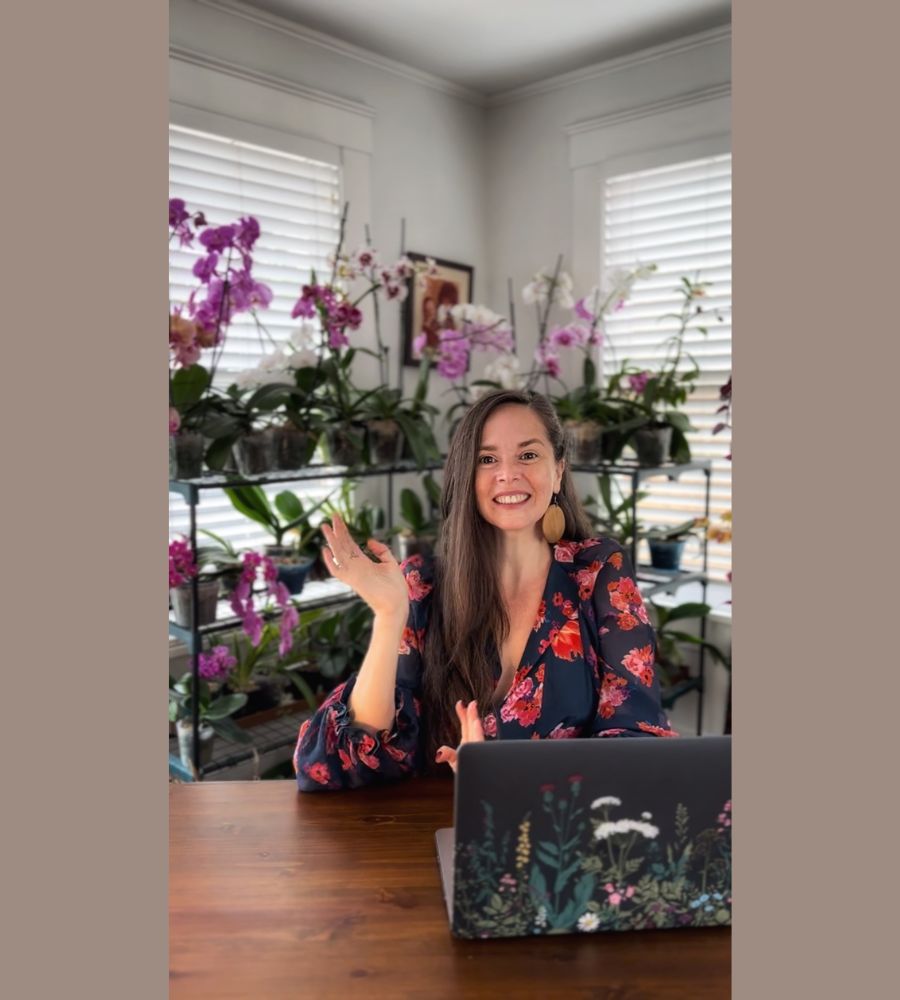
In a world where stress and division often dominate the headlines, Monica Gilliam offers a refreshing perspective rooted in nature, presence, and the quiet wisdom of plants. Monica’s approach to plant communication transcends the ordinary, blending intuition, science, and a deep reverence for the natural world.
I recently sat down with Monica to explore her unique relationship with plants, how they nurture her, how they communicate, and what they can teach us about living in harmony with the world around us.
Plants as Teachers of Nurturing
For Monica, plants are more than just decorative greenery, they’re living teachers. “Plants show me so much about what it is to nurture without reservation,” she says. “Ecosystems thrive when everything is allowed to flourish, and there’s a constant dance between growth, decay, and renewal.”
In a time when many feel overwhelmed by societal discord and environmental crises, Monica turns to plants for solace. “When people are caught in fear or doom, plants offer a different conversation—one of resilience, interconnectedness, and vitality.”
The Myth of “Give and Take”
One of the most profound lessons Monica has learned from plants is the fallacy of transactional relationships. “We’ve turned ‘give and take’ into a mathematical equation,” she explains. “But nature doesn’t operate that way. A plant doesn’t say, ‘I’ll give you oxygen if you water me.’ It simply exists in a state of generosity.
She shares a touching example of a struggling “money tree” (which turned out to be a desert rose) that was given to her as a last resort. “It had no leaves just a sad little stick. Instead of forcing it with fertilisers, I just sat with it. I asked, ‘Would you like to keep living?’ And over time, it began to flourish.”
Monica’s secret? “The greatest fertiliser is enjoyment.” When I truly receive a plant’s presence without judgement or expectation, responds with growth, flowers, and vitality.”
The Consciousness of Plants
Monica doesn’t just talk to plants she listens. “Plants have a voice, a tone, a song,” she says. “When you tune in, you realise they’re already communicating with you.”
She recounts a powerful experience with Plantago (plantain), a humble “weed” known for its healing properties. After being bitten by what she believes was a spider, Monica intuitively sought out the plant, which she hadn’t seen in her area before. “I asked, ‘Are you nearby?’ And my body led me straight to it. I applied it to the bite, and within an hour, the swelling stabilised.
For Monica, this wasn’t just luck it was a conversation. “The plant was singing to me, guiding me to it. That’s the magic of being present with nature.”
Nature Spirits and the Unseen World
Our discussion took a mystical turn as Monica shared her experiences with nature spirits, energetic beings that tend to plants and landscapes. “There are faces of the Earth’s consciousness that align with folklore fairies, elves, elemental guardians,” she explains. “But there are also subtler energies, like the consciousness of a single leaf or the intelligence of the soil.”
She describes how, in some places, nature spirits seem more accessible, like in Scandinavia or the Amazon, where cultural traditions still honour them. “When we deny or suppress these energies, plants suffer. But when we invite them back, life flourishes in unexpected ways.”
A Simple Invitation: Listen
She encourages everyone to approach nature with curiosity rather than conclusions. “When you stop filling the space with your own chatter, you realise how much is being said. Plants, trees, even the soil, they’re all speaking. The question is, are you willing to hear them?”
Closing Insights
Monica’s insights remind us that healing, wisdom, and connection are always within reach. Sometimes all it takes is sitting quietly with a plant and asking, “What would you like me to know?”
As I left our conversation, I couldn’t help but glance at the potted fern in my living room with new curiosity. Maybe it had something to say, too.