Harvest season is exciting for cannabis enthusiasts. It’s the time of year when growers are trimming, curing, and finally getting to enjoy the results of months of work. But it’s also the season when the most storage mistakes happen.
Not because people don’t care, but because cannabis storage sounds deceptively simple.
Put it in a jar. Close the lid. Done.
In reality, cannabis is highly sensitive to its environment, especially humidity. Too much moisture can lead to mold. Too little moisture dries out the flower, destroys texture, and dulls aroma and flavour. And once terpenes are gone, they do not magically return.
If you care about potency, smoothness, and overall quality, humidity control is not an “extra.” It is one of the most important parts of preserving your harvest.
What humidity does to cannabis flower
Cannabis is a plant product. Even after harvest, it continues to react to air exposure and environmental moisture.
Humidity affects:
- the texture of the bud
- the preservation of terpenes (aroma compounds)
- the burn quality
- the smoothness of the smoke
- long-term freshness and shelf life
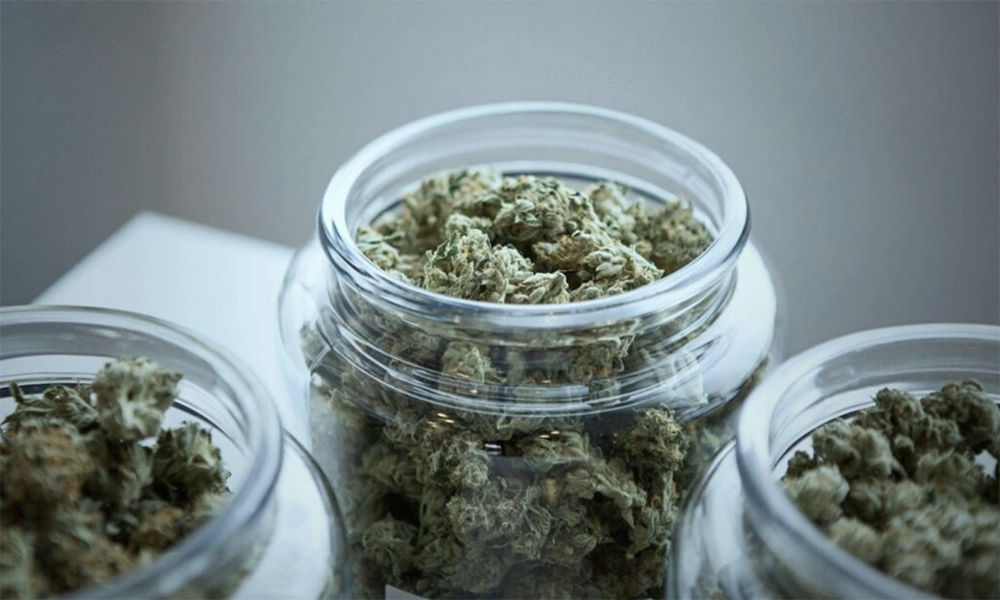
A properly stored flower should feel slightly springy, not brittle. It should grind cleanly without turning into dust. It should smell aromatic without smelling damp or musty.
Humidity is what keeps cannabis from becoming either lifeless or risky.
What happens when cannabis gets too dry
Dry cannabis is extremely common, especially during colder seasons when indoor heating makes the air less humid.
When cannabis dries out too far, the flower becomes harsh, crumbly, and far less enjoyable to consume. The terpene profile begins to fade, meaning the strain loses its character and starts to taste generic.
Over-dried flower often leads to:
- harsh smoke
- brittle buds that fall apart easily
- loss of aroma and flavour
- faster burn and uneven combustion
- a less satisfying experience overall
Potency may still be present, but the quality of the experience drops significantly. Cannabis is not just about THC. It’s about the full profile of compounds working together.
When humidity is too low, you lose that balance.
What happens when cannabis gets too humid
While dry flower is disappointing, overly humid flower can become genuinely problematic.
Excess moisture increases the risk of mold growth, especially in airtight containers. This is particularly common when cannabis is jarred too early during curing or stored in a damp environment.
Overly humid cannabis can cause:
- musty smells
- spongy texture
- poor burn and constant relighting
- harshness that feels “wet” rather than dry
- mold development in worst cases
Mold isn’t something to gamble with. If cannabis smells off or appears suspicious, it is not worth saving.
Humidity control is one of the simplest ways to prevent that risk.
The ideal humidity range for cannabis storage
Most cannabis storage experts recommend keeping flower around 58% to 62% relative humidity.
This range helps maintain:
- terpene preservation
- stable texture
- clean burn quality
- smoother consumption
- long-term freshness
Think of this range as the sweet spot. Dry enough to prevent mold, but not so dry that the flower loses its personality.
For long-term storage, consistency matters more than chasing a perfect number.
Why harvest season makes humidity harder to manage
Harvest season often coincides with major environmental fluctuations. Early fall can be damp. Late fall can suddenly become dry. Indoor heating can shift humidity levels quickly.
That means cannabis stored in October may experience a completely different environment by December, even if it’s in the same container.
During harvest season, cannabis is especially vulnerable because:
- it may still be curing
- moisture content is still stabilizing
- storage jars are being opened frequently
- flower may be stored in bulk
Even small mistakes during this stage can affect quality long-term.
The curing phase: where humidity control becomes critical
Curing is not just a buzzword. It is one of the most important steps in cannabis preservation.
A proper cure allows chlorophyll to break down and moisture to distribute evenly through the flower. This improves smoothness, aroma, and burn quality.
However, curing is where many people accidentally create the perfect environment for mold.
If buds are stored too wet and the jars stay sealed without airflow, moisture becomes trapped. That is where mold thrives.
If buds are stored too dry, curing is basically cut short, and the flower loses complexity.
A balanced humidity environment supports a more controlled cure.
Storage mistakes that quietly ruin cannabis
Most people don’t ruin their flower dramatically. They ruin it slowly.
Here are common mistakes that degrade quality over time:
Storing cannabis in plastic bags
Plastic creates static, crushes trichomes, and offers poor protection against air exposure.
Leaving jars near sunlight
Light breaks down cannabinoids and terpenes. If you store cannabis in a bright area, it will decline faster than you expect.
Storing cannabis in warm spaces
Heat accelerates degradation and can make flower smell stale quickly. Cool storage is always better.
Opening jars too often
Every time you open the jar, you disrupt the internal humidity and introduce new air. During curing, this matters even more.
Why humidity packs are one of the simplest solutions
Humidity packs are designed to regulate moisture by releasing or absorbing humidity as needed. Instead of constantly adjusting your storage conditions manually, they help stabilize the environment inside your jar or container.
This is especially useful during harvest season when environmental humidity changes quickly.
For cannabis enthusiasts looking for a straightforward way to maintain freshness and reduce storage mistakes, the Vivi-shop offers humidity control solutions designed to help keep flower stable over time.
The biggest benefit is consistency. And consistency is what protects quality.
How to tell if your cannabis is stored properly
You don’t need to be a scientist. Your senses will tell you a lot.
Properly stored cannabis should:
- feel slightly springy, not brittle
- grind evenly, not into powder
- smell aromatic and strain-specific
- burn smoothly without constant relighting
- maintain flavour rather than tasting flat or harsh
If your flower feels crispy, smells dull, or burns too quickly, humidity may be too low.
If it feels overly soft, smells musty, or won’t stay lit, humidity may be too high.
The bottom line
Cannabis is a natural product, and like any natural product, it needs the right environment to stay fresh.
Harvest season is the time when flower is at its best, but also the time when improper storage can ruin it quickly. Humidity control protects texture, flavour, aroma, and overall quality.
Whether you’re curing your own harvest or simply stocking up for the season, stable humidity is one of the most effective ways to preserve what you’ve invested in.
Because cannabis should not taste like dust or damp basement air.
It should taste like what it is: a plant with complexity, character, and a shelf life worth protecting.
- About the Author
- Latest Posts

Our Editorial Team are writers and experts in their field. Their views and opinions may not always be the views of Wellbeing Magazine. If you are under the direction of medical supervision please speak to your doctor or therapist before following the advice and recommendations in these articles.