Gemma Fisher doesn’t talk about “wellness” the way most people do.
For her, health isn’t a mood board of green juice and good intentions. It’s a system. A set of measurable inputs and outputs. A performance equation that can be refined—carefully, compassionately—until your body does what it was designed to do: recover, adapt, and thrive.
That mindset is exactly why she was brought into elite motorsport—and why, years later, the work she pioneered behind closed paddock doors is now available to anyone willing to take their health seriously.
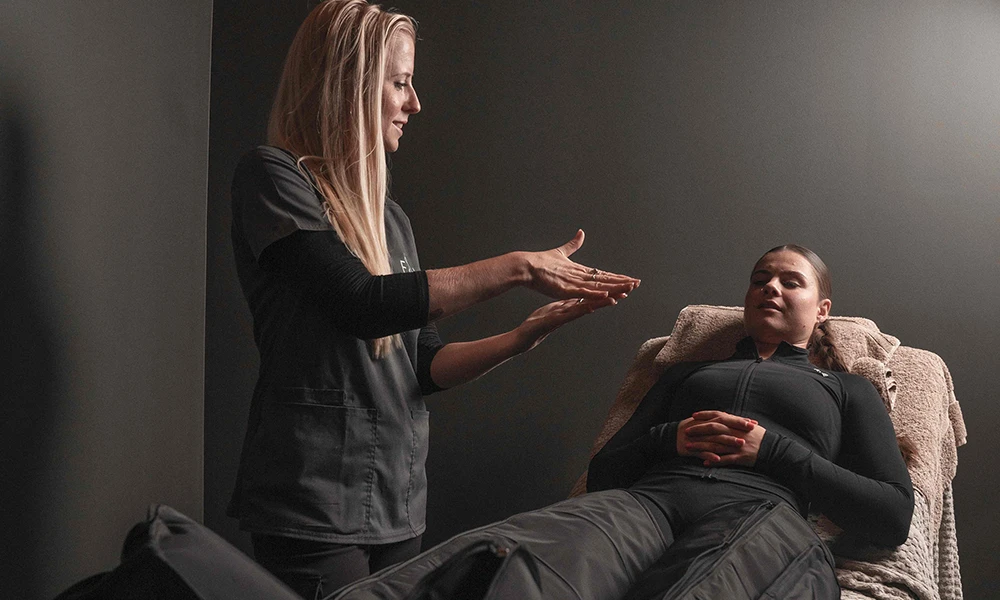
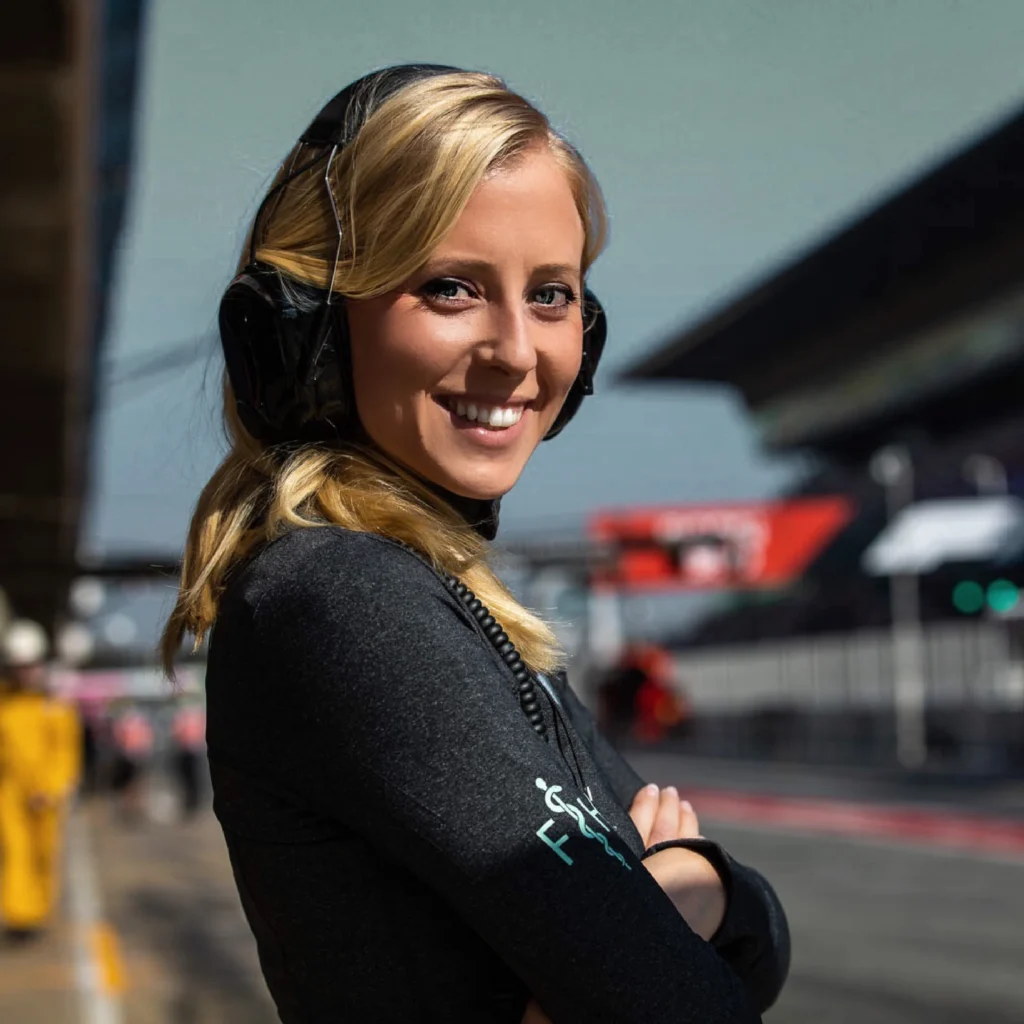
Gemma Fisher M.Ost Med is the Human Performance Consultant known for helping Williams Racing achieve the world’s fastest pit stop—an official 1.92 seconds, with the team clocking it even faster in reality. But the most interesting part isn’t the stopwatch moment. It’s what that world taught her about the human body under pressure—and how she’s translating those lessons into Formula Health, now based at Escapade Silverstone, overlooking one of the most iconic circuits on earth.
Because here’s the truth most of us live with (and quietly normalise):
- We wait until we break down.
- We accept exhaustion as “life.”
- We label brain fog as “age.”
- We treat recurring pain as “just how I am.”
- We get a blood test, get told everything is “normal,” and still feel—deep down—like something isn’t right.
Gemma built her life’s work around a different idea:
What if we stopped waiting for the wheels to fall off?
From elite performance to everyday lives
Gemma’s path wasn’t a straight line. Before the world of Formula 1, she was already immersed in movement and the body—personal training, swimming instruction, the practical realities of physical performance. Then came osteopathy: a training that shaped her into what she still considers herself today—a diagnostic detective.
That detective mindset is what made her such a rare fit for motorsport.
When Williams brought her in, it wasn’t because the team needed another fitness professional. They needed someone who could see humans as moving parts in a high-speed system—and optimise that system without breaking the people inside it.
Mechanics weren’t hired to be athletes. They were hired to build, fix, lift, sprint, twist, brace—often while travelling relentlessly, sleeping poorly, working in awkward positions for long hours, and performing under intense scrutiny.
And yet, on race day, they had to deliver perfection.
A pit stop isn’t just fast. It’s a choreography of micro-decisions: reaction time, coordination, precision under pressure, repeatability. When Gemma arrived, she became—by her own description—enemy number one… and then everyone’s best friend. Because she wasn’t there to criticise for sport. She was there to make the system better—and to put people back together when the demands took their toll.
What made her approach different was that she didn’t only “train the humans.”
She looked at everything.
If the tools were wrong, the body compensated—and compensation is where injury lives. If the angles were inefficient, fatigue arrived faster. If the process didn’t account for reaction time, decision-load, stress chemistry, and sleep debt, mistakes would happen—not because people were careless, but because the system was asking too much of biology.
This is the piece most of us miss in everyday life.
We blame ourselves when we’re tired, unmotivated, inflamed, or stressed. Gemma’s work suggests another perspective:
Sometimes it isn’t willpower.
Sometimes it’s data, design, recovery debt, a nervous system stuck in overdrive and sometimes it’s nutrition that looks “healthy” on paper but doesn’t match your genetics, your gut, or your life.
And when you start treating health like a system—suddenly, change becomes possible.
The birth of Formula Health: bringing “closed door” performance care into the real world
Over time, Gemma became one of the people who helped shift motorsport culture—moving it from reactive treatment (“fix it when it breaks”) toward integrated human performance.
But the deeper she went, the clearer something became:
This level of personalised, proactive healthcare shouldn’t belong only to elite athletes.
Most people aren’t trying to shave milliseconds off a pit stop. They’re trying to get through the day without crashing at 3pm. Most people want to stop waking up exhausted, rebuild themselves after burnout or perhaps manage perimenopause or hormone shifts.
For others it may be reducing the injury risk and recovering properly from training—or simply from life, understanding why they feel “off” despite “normal” test results.
That’s the heart of Formula Health: the right formula for your health—built from a 360-degree view of you, not a single lab marker or a one-size protocol.
At Escapade Silverstone, Formula Health sits inside The Gallery—part of a trackside destination that merges motorsport adrenaline with high-end wellbeing infrastructure. Guests have access to facilities like a pool, sauna, gym, and dedicated treatment spaces, all overlooking the circuit.
But Formula Health isn’t “spa wellness” with a racing theme.
It’s a clinical-meets-holistic model designed to be personal, data-informed, and results-led—with the kind of attention to detail that usually sits behind elite-sport closed doors.
A new kind of wellness menu: precision diagnostics meets hands-on care
One of the most striking things about speaking to Gemma is how she refuses to treat health like a single lane.
She talks about musculoskeletal pain and vagus nerve regulation in the same breath. She can move from mitochondrial support to biomechanics to gut health without missing a beat.
Because she’s seen what happens when health becomes siloed:
You’re sent to one specialist for one symptom. Another for another. Each test comes back “fine.” and no one connects the dots and you’re still the person living inside the body that doesn’t feel right.
Formula Health is built to connect dots.
At Escapade Silverstone, guests can explore advanced, performance-grade wellness technologies—often including nutrigenetic DNA testing to understand how your body may respond to nutrition, training, stress and recovery, as well as other clinical insights that can help shape a truly individual plan.
These insights aren’t offered as “interesting information.” They’re used to build a personalised strategy through consultation, then backed up with real-world, hands-on therapies such as osteopathy and sports massage, alongside restorative practices like yoga and Pilates.
The message is clear:
Data without action is just noise and action without understanding is guesswork. Formula Health aims to remove both.
The pit stop analogy: why most of us are living in “late-stage maintenance”
Gemma’s favourite comparison is brilliantly simple.
In racing, you don’t wait until the car rolls into the garage smoking before you start paying attention. You track it. You monitor it. You interpret the telemetry. And you make decisions before failure.
That’s what Formula Health is trying to bring into modern life:
- understanding predispositions without feeling doomed by them
- recognising early warning signs
- catching stress patterns before they become chronic depletion
- supporting bone, hormone, metabolic and nervous system health before a crisis forces your hand
In the interview, she spoke passionately about women’s health as one of the most urgent frontiers—particularly the way bone health, hormones and performance are still too often treated as afterthoughts. The vision here is proactive: assess earlier, intervene earlier, educate earlier—so fewer women are told what’s wrong only after a fracture, a collapse, or years of being dismissed.
And perhaps the most empowering element of all is the way she frames genetics:
Genes aren’t destiny. They’re a blueprint, affected by environment, stress, sleep, nutrition, movement, relationships, and choices.
In other words:
- Your body is not a fixed identity. It’s a responsive system.
- Escapade Silverstone: the thrill of trackside living, with recovery built in
- There’s something symbolically perfect about Formula Health living at Silverstone.
Because when you’re overlooking the track, performance stops being an abstract concept. You can literally watch it: precision, timing, pressure, focus, teamwork, recovery.
Escapade Silverstone makes that atmosphere part of the stay, combining front-row motorsport access with spaces designed for restoration.
And beyond the treatment rooms and training environment, the experience extends into the lifestyle elements: guests can also enjoy dining at The Gallery, with menus designed to balance nourishment and pleasure—another reminder that peak performance isn’t about restriction. It’s about intelligent support.
The retreats: a “pit stop” for your life—and an MOT for your future
Formula Health at Escapade isn’t only for one-off sessions. Gemma is also creating retreat formats that reflect the way she thinks:
Short, powerful interventions… backed by continued support.
A “Pit Stop” retreat is designed as a more accessible, time-efficient reset (around a day and a half), while a deeper “Ultimate MOT” format expands the experience further, layering in testing, treatments, workshops and personalised strategy.
What matters is that these retreats aren’t positioned as escapism. They’re positioned as education + insight + implementation.
And crucially: the benefits don’t have to end when you check out. With remote coaching and ongoing guidance, the aim is that what you learn at Silverstone becomes something you can live—wherever you are.
The real point: redefining what “performance” means
If the word performance feels intimidating, Gemma would be the first to reframe it. In her world, performance isn’t about becoming superhuman or chasing unrealistic ideals. It’s about having enough capacity to live your life well. Sometimes peak performance simply means getting out of bed without dread, having the energy left to cook a proper meal, feeling steady rather than anxious and wired, training without constantly picking up injuries, and recovering properly instead of endlessly pushing through. It can mean being able to make clear decisions because your brain isn’t stuck in survival mode, and finally understanding your body well enough to work with it, rather than feeling as though you are in constant battle with it.
Motorsport gave Gemma an extreme environment in which to refine these tools, but the tools themselves are deeply human. That is what makes her founder story so compelling. It isn’t about building a clinic in a glamorous, high-octane location, even though the setting at Silverstone is undeniably special. It’s about translating elite-grade thinking into everyday empowerment. It’s about cultivating a more honest relationship with your body, asking better questions, intervening earlier, making more precise choices, and replacing guesswork with understanding. It’s about less waiting for things to go wrong and more agency over your own health.
At the heart of Formula Health is a simple but radical belief: you deserve access to a level of care that helps you function, not just survive. Once you start to see health through that lens, it becomes difficult to return to the habitual pattern most of us have learned to live with, ignoring the warning lights on the dashboard, carrying on regardless, and hoping everything will be fine.
Gemma Fisher is offering another way. A pit stop before the breakdown. A plan before the panic. A future built not just on living longer, but on living better. And perhaps that is the most inspiring takeaway of all: your wellbeing doesn’t have to be an afterthought. It can be a strategy.
- About the Author
- Latest Posts

In 2006 I embarked on an incredible journey by founding Wellbeing Magazine. This magazine is not just a publication—it’s a purpose-driven platform. It’s been my mission to empower individuals with knowledge about holistic wellness, encouraging them to make mindful choices for themselves and the world around them.