
David Thomas: The Mineral Story Behind Better Hydration
When I finally met David Thomas on Zoom (after a comically ill-fated attempt involving calendar confusion and a laptop crash), I expected a straightforward…
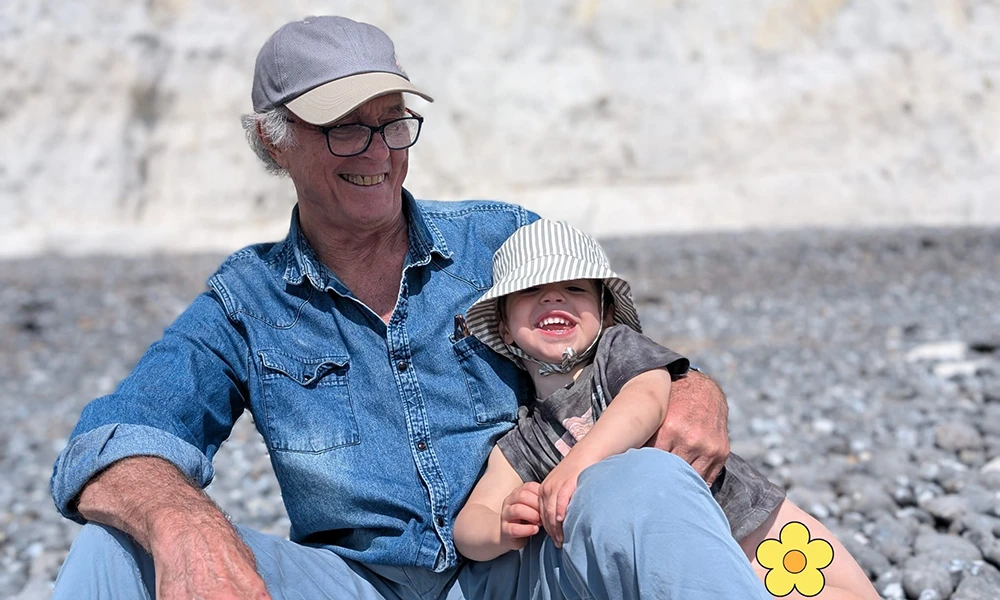
When I finally met David Thomas on Zoom (after a comically ill-fated attempt involving calendar confusion and a laptop crash), I expected a straightforward founder conversation about hydration drops. What I didn’t expect was a life story that begins with Olympic-level sprint training, detours through African mineral exploration, and lands—decades later—in a quietly radical idea:
If we want to feel well, we may need to return to the fundamentals: water… and minerals.
David is the Managing Director of elete™ water and has been a practising chiropractor and nutritionist for over 40 years. But he doesn’t speak like someone selling a product. He speaks like someone who has spent a lifetime watching patterns repeat in human bodies—patterns that don’t always respond to the latest trend, but often respond to basics that modern life quietly erodes.
And that, in many ways, is the story of elete™.
From sprint champion to “why does my back hurt?”
Long before David became associated with mineral balance and hydration, he was an athlete—an exceptionally fast one.
As a teenager, he became the UK sprint champion as a junior, and later trained with a professional team for the Mexico Olympics. Then came a moment he still describes as “ridiculously stupid”: weight training alongside Jeff Capes (who would go on to become World’s Strongest Man), resulting in a bad back that ended David’s athletic trajectory.
For many people, that would be the end of the story. For David, it became the beginning of a lifelong fascination with biomechanics—how the body holds itself together, how performance is protected or compromised, and how tiny structural imbalances can ripple into bigger issues.
“I ended up with a bad back,” he told me, “and that was basically the end of my athletics aspirations.”
Sometimes the turning points that hurt us are the ones that turn us towards our work.
Geology, Africa, and a life spent studying minerals
If David’s story has a unifying thread, it’s minerals.
After his athletic years, he qualified as a geologist and moved to Africa, where he worked in mineral exploration—copper, cobalt, lead, zinc, uranium, gold, and trace elements—eventually working for major mining companies, including De Beers and Anglo American.
It’s not a small thing, this detail. David wasn’t introduced to minerals through a wellness blog or a supplement aisle. He encountered them through the earth itself—through the raw reality of what a landscape contains, what it doesn’t, and what happens when something essential is missing.
But the environment was politically and emotionally difficult (this was during apartheid), and David and his wife, Cristina who was born in Argentina, with two young children—wanted to leave.
With limited language options, they chose America.
A “human potential” view of chiropractic
In the 1970s, amid what David describes as a rising “new age” openness, he encountered a perspective that would shape everything that came after.
A magazine called Odyssey featured an American chiropractor who said he wanted to take chiropractic out of the health field completely and place it into the field of human potential.
Not: “Come when you’re broken.”
But: “Come to stay well.”
David loved this. It aligned with what elite sport teaches you early: you don’t wait for failure—you maintain your system.
During this period, David also trained in a chiropractic-oriented approach sometimes referred to as Spinology—a term most people still haven’t heard, but a philosophy that stayed with him: the integrity of the musculoskeletal system supports the body’s ability to function well, not just its ability to cope when things go wrong.
Then something deeply personal happened—his son became very unwell as an infant. David described his baby going into tetany, the sleepless nights, the fear, the helplessness.
When they began regular spinal checks as part of their training culture, David’s son’s health improved dramatically.
It wasn’t just a professional insight anymore. It was embodied.
Forest Row, Steiner education, and building a practice from scratch
When David and his family returned to England, David and Cristina establish their practice in Forest Row, as there their children could be educated at Michael Hall which follows the Ruldolf Steiner philosophy and curriculum.
David and I touched on this gently, because it can feel “too esoteric” for some readers, but it matters here: David’s approach has always been integrative. Body, mind, and something more subtle that modern language struggles to name without sounding fringe.
And then came the practical challenge: setting up a practice.
Within three years, David told me he was seeing hundreds of people a week, a pace that sounds almost impossible now—suggesting not only demand, but a style of practice that was highly systematised and deeply rooted in the idea of maintenance.
The moment minerals changed everything
A turning point arrived unexpectedly, through another practitioner who told David: “Of all the modalities I use, the most successful one is mineral therapy.”
David was intrigued—then quickly humbled.
His first mineral therapy client described neck discomfort, fatigue, headaches, and symptoms travelling down her arm. David assumed she “needed an adjustment.” Instead, he followed the mineral protocol.
When she returned a month later, she reported her pain had gone within a week and her energy had returned.
David’s reaction wasn’t triumph—it was wonder.
“What the hell has happened here?”
This is what I loved most about interviewing him: he still sounds genuinely curious, still willing to be surprised by outcomes, still committed to understanding why, not just that something works.
Soil depletion: the silent wellbeing crisis beneath our feet
If there’s one part of David’s story that feels particularly relevant right now, it’s his work on mineral depletion in food.
For years, nutritional practitioners had said some version of: “Food isn’t what it used to be.” David wanted evidence.
So he went to the British Library and compared editions of the UK reference text used for food composition data—McCance and Widdowson’s work, first published in 1940 and updated across decades.
David’s analysis became peer-reviewed research. His paper(s) are indexed on PubMed, including:“A study on the mineral depletion of the foods available to us as a nation over the period 1940 to 1991” and “The mineral depletion of foods available to us as a nation (1940–2002)”
The numbers are stark. In one summary David shared with me (weighted averages across 72 foods), he found declines such as:
- Magnesium: ~19% lower
- Calcium: ~29% lower
- Iron: ~37% lower
- Copper: ~62% lower
Those figures align with the depletion theme discussed in sources referencing his work.
For David, this matters because minerals aren’t a “nice-to-have.” They are foundational building blocks—supporting normal physiology in countless ways, from fluid balance to nerve signalling to muscle contraction. (And yes, this is where “electrolytes” enter the chat.)
Hydration is not just water: it’s water + minerals
One of David’s simplest, most memorable points was this:
We talk a lot about vitamins. We talk a lot about “biohacking.” But if you imagine the body as a pyramid, water is a major base layer—and minerals sit right after it.
If either is missing, everything above struggles to function optimally.
David also demonstrated the difference between “minerals present” and “minerals in an ionic, conductive form” using a conductivity/lightbulb setup—showing how adding a tiny amount of concentrated mineral solution changes electrical conductivity in water.
His broader point: mineral form and availability matter.
So what is elete™?
elete™ is positioned as a liquid electrolyte concentrate derived from the Great Salt Lake in Utah, providing key electrolytes—magnesium, potassium, sodium, and chloride—in a concentrated, no-sugar format.
David describes the composition of elete™ as drawing on three natural sources that, together, create a balanced electrolyte profile and include trace/ultra-trace elements. The brand’s own product description emphasises the “four essential electrolytes” and a concentrate format that can be added to water.
He’s clear that elete™ is not meant to be a gimmick. It’s meant to be useful—especially for people who sweat, move, travel, train, work long hours, or simply struggle to drink enough.
“It’s like a foundational product,” I said during our interview. David agreed.
The firefighter study that caught my eye
Among the information David shared, one detail jumped out: a study involving forest firefighters.
An article summarising the research reports that, during wildfire suppression, firefighters who used an electrolyte additive consumed substantially less fluid while maintaining hydration compared to those drinking plain water—often paraphrased as “those without it needed 74% more water.”
It’s important to read any study carefully and understand the exact design and limitations, but from a founder-story perspective, it highlights something meaningful: hydration isn’t always about drinking more. Sometimes it’s about helping the body retain and utilise what you drink.
And in a world where many of us are simultaneously overstimulated and under-resourced—running on caffeine, stress, and to-do lists—that’s a compelling idea.
The deeper thread: adaptive capacity and “inner intelligence”
David repeatedly returned to a concept that sits at the intersection of chiropractic philosophy, nutritional therapy, and common sense:
The body has an innate ability to adapt—until it doesn’t.
He spoke about “adaptive capacity”: the idea that we compensate and cope for a long time, often silently, until we cross a threshold where symptoms appear.
At that point, we tend to panic—or outsource all responsibility to a pill, a test, a fix.
David’s approach is steadier:
- Support the foundations.
- Respect the body’s intelligence.
- Lower the load so the system can recalibrate.
This is also why his perspective on how much water to drink wasn’t dogmatic.
Yes, hydration matters. But the “right amount” depends on your body, your activity, your environment, your stress, and your physiology. For him, the goal is responsiveness—not rigid rules.
What I took from David’s story
David Thomas didn’t “start a hydration brand.”
He followed a thread.
From sprinting and injury, to biomechanics, to mineral exploration, to chiropractic care, to nutritional therapy, to soil depletion research, to electrolyte balance—his work has always circled the same question:
What does the body need, at the most basic level, to function well?
In a wellness landscape crowded with the latest trend, that question feels refreshing.
Because sometimes “inspiring” isn’t flashy.
Sometimes it’s the quiet insistence that we stop skipping the basics.
That we remember the ground beneath us—literally the soil—and what it means when it’s depleted.
That we remember we are, as David put it, “walking miracles”… and that caring for the miracle might start with something as simple as water that actually hydrates.
Filed underChiropractic, Nutritional therapy, Nature
About the author
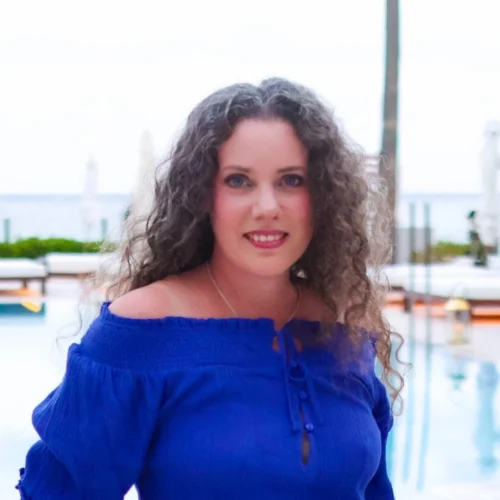
Rachel BransonFounder & Editor in Chief
With over 30 years in publishing and a background in Naturopathic Medicine, she has made it her mission to challenge mainstream health narratives and empower people to take control of their wellbeing. Now expanding her vision across the Atlantic, Rachel is bridging UK and US audiences with inspiring stories, trusted insights, and pioneering partnerships that align with a new era of health innovation.