Rosalee Mayeux: Finding Healing, Humour and Self-Acceptance Through Life’s Reinventions
Discover how Rosalee Mayeux’s journey through modelling, motherhood and cancer shaped her philosophy of humour, healing and self-acceptance in Model Mom.
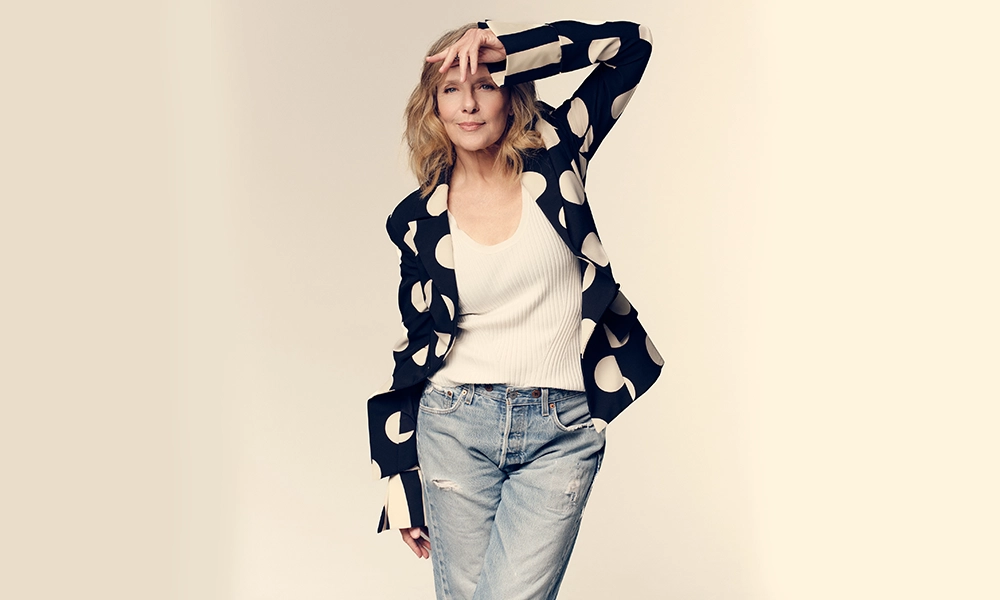
There are some people whose presence seems to hold both lightness and depth at once. Rosalee Mayeux is one of them. A former model turned actress, writer and stand-up comedian, she has lived several lives in one, moving from the curated world of fashion to the raw immediacy of the comedy stage, while navigating motherhood, illness, reinvention and the glorious absurdity of everyday life. Her anticipated comedy special, Model Mom, may be filled with sharp observations on teenage sons, ageing, dating and domestic chaos, but beneath the punchlines lies something more profound: a philosophy of survival rooted in laughter, love and radical self-acceptance.
A Story of Reinvention, Identity and Emotional Wellbeing
In a cultural moment increasingly focused on longevity, emotional wellbeing and what it means to age with vitality rather than fear, Mayeux offers an unexpectedly wise perspective. Her story is not simply one of reinvention, but of remembering. Beneath the changing roles of model, mother, performer and survivor, there has always been a consistent thread shaped by decency, justice and a belief in helping others. It is a perspective grounded not in self-seriousness, but in the willingness to expose the fool within all of us and, through that recognition, to soften the edges of life.
Humour as Emotional Intelligence and Healing
Humour, in Mayeux’s world, is not merely entertainment. It is a form of emotional intelligence. It creates perspective when circumstances feel heavy, and it offers a way of holding pain without allowing pain to define identity. This philosophy was sharpened during one of the most difficult chapters of her life, when a cancer diagnosis became a profound turning point. Yet rather than describing illness solely through the language of suffering, she speaks of it as a time of return, a period in which she reconnected with a quieter, more elemental version of herself. During treatment she spent long stretches outdoors, watching water shimmer in the sun, observing nature, and remembering the child she had once been in Louisiana, content to sit in the heat studying roly-poly bugs on the pavement.
Healing Through Remembering, Not Becoming
In those solitary moments, something shifted. Like many people who pass through a life-altering health crisis, she began to re-evaluate what truly mattered. Yet her story does not fit the familiar narrative of trauma leading to relentless self-improvement or dramatic transformation. Instead, it reveals something gentler and perhaps more meaningful. Healing, for her, was not about becoming someone new, but about becoming more fully herself. That distinction feels especially relevant in a wellbeing culture often preoccupied with optimisation. Improve yourself, refine yourself, upgrade your habits. Mayeux offers another possibility: that healing may sometimes be less about becoming and more about remembering what was always true.
Laughter as Medicine: The Science and the Experience
That understanding deepened through storytelling. Her participation in Storyectomy at The Crow Comedy Club, where performers explore the meaning hidden within illness and adversity, opened another doorway into humour as medicine. There is a growing body of evidence showing laughter can reduce stress hormones, improve immune function and support resilience, but long before science attempted to quantify its effects, people intuitively understood that laughter could keep despair from hardening. Mayeux discovered this viscerally. When hospital staff first suggested laugh therapy during treatment, she was sceptical, even amused by the idea. Yet later she realised they had understood something important. Laughter did not erase suffering, but it made suffering livable. It became one of her greatest recovery tools.
Motherhood, Surrender and the Power of Imperfection
This is where her work becomes particularly resonant from a wellbeing perspective. Humour, in her hands, is not escapism. It is emotional alchemy. The difficult thing does not disappear; it is transformed. That same transformation runs through her reflections on motherhood, another central theme in Model Mom. While the special mines comedy from the chaos of raising teenage boys, beneath the observations lies something quietly profound about surrender. In a culture obsessed with control, particularly in parenting, Mayeux offers a refreshing rejection of the illusion that life can be fully managed. What motherhood taught her, she suggests, was not mastery but acceptance. You face the facts of a situation, gauge how to survive it, and try not to ruin your children in the process.
There is wisdom in that honesty. So much modern anxiety stems from believing we can prevent disorder if we simply plan well enough. Yet parenting, like life itself, rarely obeys neat systems. It requires improvisation, forgiveness and humour. Her sons, she says, taught her how to love in a way she had never known before, and their forgiveness for her imperfections as a parent remains one of the greatest gifts she has received. There is something deeply moving in that recognition, because it frames imperfection not as failure but as part of the fabric of intimacy.
Ageing, Longevity and Expanding Possibility
That same generosity informs her thoughts on ageing and reinvention, subjects often burdened by cultural fear, particularly for women. There is a quiet revolution happening around midlife, as more women challenge the idea that identity narrows with age. New careers are being launched in later decades, creative passions rediscovered and entirely new chapters begun. Mayeux sees this not as exceptional but entirely natural. We are living longer than previous generations, she observes, and longevity should not simply mean extending years, but expanding possibility. This aligns with a broader shift in wellbeing thinking, away from anti-ageing and towards vitality, purpose and emotional richness.
Authenticity, Confidence and Inner Sovereignty
Mayeux embodies that shift. Having inhabited the youth-driven world of fashion, where identity is often shaped by endless external opinion, and the raw vulnerability of stand-up, where authenticity is tested in real time, she understands the contrast. When young, it is easy to become lost in what others expect. Maturity, however, can bring something far more powerful: faith in oneself. It is a kind of inner sovereignty that often arrives only after experience has stripped away the need for approval. Having faced death, she says, she is no longer afraid. She fully owns her passions, how she loves, and who she is.
Comedy as Inquiry, Expression and Power
There is something deeply refreshing in the way she approaches difficult subjects often treated with solemnity. Dating, ageing, health scares, parental failures and social absurdities all become material, not because she is careless with vulnerability, but because she trusts that truth becomes bearable when illuminated through humour. She writes from what irritates, delights or surprises her, following the spark of what genuinely tickles her until something funny, and often revealing, emerges. In this sense, comedy becomes another form of inquiry, a creative way of discovering meaning through play.
That playfulness also shapes her perspective on women in comedy, a field long dominated by male voices. Her answer is not framed through grievance, but through solidarity and wit. Women, she suggests, are often underestimated in how funny they are, even by themselves. But once they recognise their own power, everything changes. It is a quietly radical statement. Humour, in this context, is not simply performance but authority. It is a way of claiming space. It is also a reminder that expression itself can be deeply restorative. To have one’s voice heard, to say something before one “blows away in the wind,” as she puts it, is not ego but vitality.
The Deeper Lesson: Love, Lightness and Living Fully
Perhaps the most moving part of our conversation came when she reflected on what she would say to her younger self, the model navigating New York and Paris before she knew what life would hold. Her answer was striking in its simplicity. Go have fun. It is all okay. Nobody cares as much as you think. Love should be the primary directive.
There is almost spiritual wisdom in that. Because beneath all the careers, reinventions and punchlines, that may be the deepest lesson she offers. Life is serious, but we do not always have to be. Wellbeing, in its richest sense, may not only be found through supplements, rituals or optimisation, but through remembering to laugh at our own ridiculousness, forgive imperfection, stay curious and keep loving anyway.
Photo Credit:
Photographer: Storm Santos
Stylist: Anna Schilling
H&MU: Kimberly Bragalone
H&MU Assistant: Alysha Marcantonio
Filed underEnergy & vitality, Family & parenting, Longevity

About the author
Rachel BransonFounder & Editor in Chief
With over 30 years in publishing and a background in Naturopathic Medicine, she has made it her mission to challenge mainstream health narratives and empower people to take control of their wellbeing. Now expanding her vision across the Atlantic, Rachel is bridging UK and US audiences with inspiring stories, trusted insights, and pioneering partnerships that align with a new era of health innovation.