What Is Family Constellations? A Different Way to Understand the Patterns That Shape Us
Family Constellations is a systemic and experiential therapeutic approach. It explores how hidden dynamics within families and relational systems can…
 By Camilla Brinkworth, Naturopath & Nutritionist (BHSc Naturopathy, GradCert Human Nutrition)· 28 May 2026 · 12 min read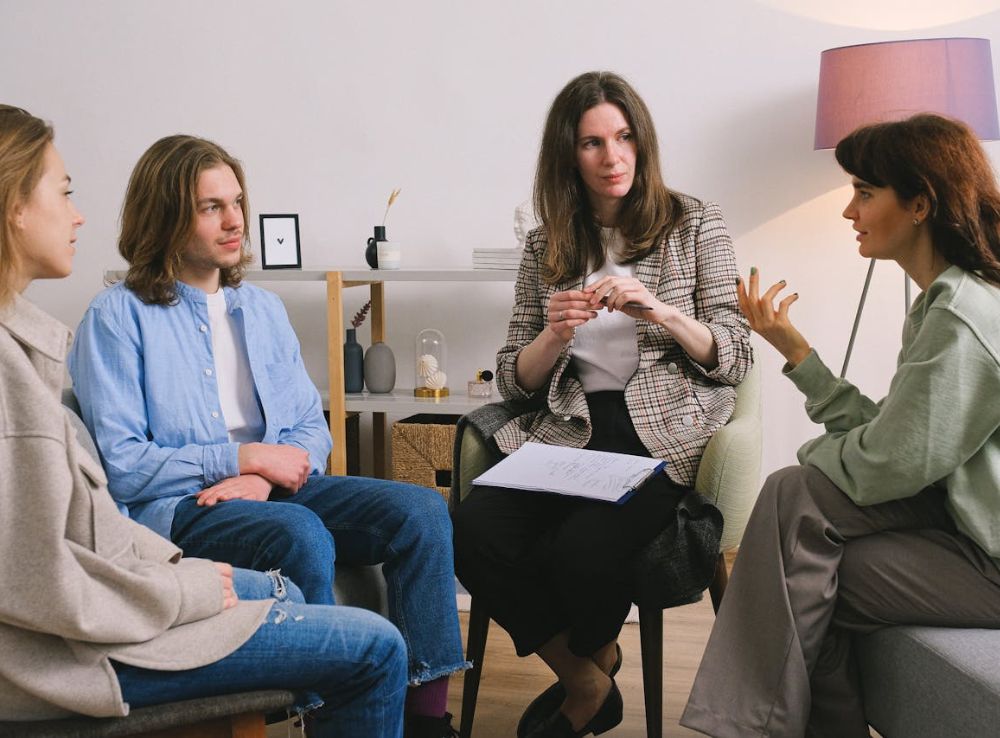
Some patterns in life do not seem to respond to ordinary insight. You may understand why you react in a certain way. You may have reflected deeply on your childhood, your relationships, your family dynamics and the emotional themes that keep appearing in your life. You may even be able to describe the pattern with great clarity. And yet, when the moment comes, the same response rises in you again.
Perhaps you repeatedly feel responsible for other people’s emotions. Perhaps you struggle to fully belong, even in places where people welcome you. Or perhaps you keep attracting similar relationship dynamics, carrying guilt that does not seem proportionate, or feeling bound to family pain in ways you cannot quite explain.
Family Constellations offers a different way of looking at these experiences. Rather than seeing them only as personal problems, it invites us to consider the wider relational systems we belong to, especially the family system. It begins with a simple but profound understanding: we are not isolated individuals. We are shaped by relationship.
What Is Family Constellations?
Family Constellations is a systemic and experiential therapeutic approach. It explores how hidden dynamics within families and relational systems can influence our emotions, relationships, choices, health and sense of belonging.
The work is often associated with Bert Hellinger, who brought together insights from psychotherapy, family systems theory, phenomenology and cross-cultural observation. Today, practitioners offer Family Constellations in many forms around the world, including group workshops, one-to-one sessions, couples work, organisational constellations and online sessions.
At its heart, Family Constellations looks at the individual within the larger field of relationship. Rather than asking only, “What is wrong with me?” it asks, “Where am I standing in the system, and what might I be carrying?” This can be an important shift, especially for people who have spent years trying to understand themselves through a purely individual lens.
Many people come to personal development or therapy believing that their difficulties belong entirely to them. Of course, we each have our own temperament, choices, wounds and responsibilities. However, we also inherit emotional atmospheres, family stories, silences, loyalties, losses and survival strategies. A person may be trying to live freely in the present while unconsciously carrying something from the past. Family Constellations helps bring these hidden influences into view.
What Is a Constellation?
A constellation is a pattern of interconnected relationships. We usually use the word constellation to describe stars in the sky. The stars may be separate points of light, but when we view them together, a pattern appears. In Family Constellations, the word has a similar meaning. It refers to the arrangement of people, experiences, emotions and influences within a system.
The German word often used for constellation work is Aufstellung, which means a setting up, placement or arrangement. This points to one of the central features of the work: the facilitator represents a system in space so that its hidden relationships can become clearer.
A constellation might explore a family system, a couple, a workplace, an illness, an inner conflict, a repeated life pattern, or an abstract theme such as guilt, belonging, grief or purpose. The outer form may vary, but the essence remains the same. A constellation gives shape to something that has often been felt but not yet fully seen. It creates a living map.
Seeing What Is Usually Unseen
Many of the challenges we face are not purely individual. They often connect to wider relational fields. A woman who feels endlessly responsible for everyone around her may not simply be “bad at boundaries”. She may be standing in a parentified role that began early in life. She may also be carrying an inherited pattern of women holding families together at great cost to themselves.
In another example, a man who struggles to commit may not simply be emotionally unavailable. His family history may include unresolved grief, exclusion, betrayal or loss that made closeness feel unsafe. Similarly, a couple who keep having the same argument may not only struggle with communication. They may be replaying older family dynamics through one another.
Family Constellations gives us a way to see these deeper patterns. The work can bring awareness to systemic entanglements, invisible bonds, unconscious loyalties and intergenerational patterns. These dynamics are not always obvious from the personal story alone. Yet they may shape how we feel, relate and respond.
As Carl Jung famously wrote, “Until you make the unconscious conscious, it will direct your life and you will call it fate.” Family Constellations offers one way of making the unconscious relational field more visible.
What Happens in a Family Constellation?
A Family Constellation usually begins with an issue, question or pattern that the client wants to explore. This might relate to a relationship, family conflict, emotional distress, grief, illness, work, parenting, money, belonging or a repeated life theme.
The facilitator then helps identify the key elements in the system. These may include family members, partners, children, ancestors, symptoms, emotions, countries, events, losses or abstract themes. In a group workshop, other participants may stand as representatives for these elements. In a one-to-one session, the facilitator may use objects, pieces of paper, figures, cushions, floor markers or guided inner imagery instead.
The facilitator then places these elements in the room. Their positions, distance, orientation and felt sense begin to reveal something about the system. This is not roleplay. It is not acting. It is not about dramatising the past. It is a quiet, observational and embodied process.
As the constellation unfolds, certain dynamics may become visible. Someone may appear excluded from the system. A child may stand too close to a parent’s burden. A partner may seem to represent someone from the past. Or a person may be carrying grief, guilt or responsibility that does not truly belong to them.
Once these dynamics come into view, the facilitator may invite small movements, acknowledgements or sentences that help restore order, belonging or balance. The aim is not to force an outcome. Rather, it is to allow the system to find a more settled arrangement.
A Living Map of the System
One of the most powerful aspects of constellation work is that it moves beyond explanation. Many of us can explain our problems endlessly. We can tell the story, understand the psychology and analyse the behaviour. Sometimes this is very useful. However, there are times when we need to see the structure beneath the story.
A constellation allows that structure to appear. For example, a person may arrive saying, “I feel stuck in my life.” Through the constellation, they may recognise an unconscious loyalty to a parent who never allowed themselves freedom. Another person may come with a relationship issue, only to discover that grief from a previous generation is influencing their capacity to fully receive love.
This does not mean every problem comes from the family system. It means the family system offers one important lens through which we can understand human suffering and human movement. The constellation does not offer a neat intellectual answer. It offers a picture. Often, that picture speaks to something deeper than the thinking mind.
The Phenomenological Approach
Family Constellations is grounded in a phenomenological approach. This means the facilitator does not begin by imposing a fixed theory onto the client’s experience. Instead, the work follows what emerges in the moment.
The facilitator gives attention to the body, spatial relationships, sensations, emotions, shifts in perception and the subtle movements that arise within the constellation. Something may become clear through a representative’s experience, through the way the elements stand in relation to each other, or through a quiet emotional recognition in the client.
This can feel unusual at first because the process does not rely entirely on analysis. It asks us to listen differently. You could think of it as creating the conditions for a deeper layer of awareness to come forward. For some people, this feels like connecting with the unconscious. For others, it feels like accessing a wider field of awareness. For others still, it simply feels like things falling into place in a way they could not have reached through logic alone.
Ultimately, what matters most is not how we explain the process. What matters is what becomes visible and whether it supports meaningful change.
The Principles Behind the Work
Although constellation work is experiential, several principles often guide the process. These are not rigid rules. Instead, they are ways of observing what supports health within a relational system. The three most commonly discussed principles are belonging, order and balance.
Belonging
The first principle is belonging. In a family system, everyone has a place. This includes those who were loved and those who were rejected, those who stayed and those who left, those who are remembered and those who were forgotten.
When the family excludes, judges, erases or denies someone, the system may continue to carry the impact. Later generations may identify with the excluded person or carry something connected to their fate. In constellation work, healing often begins by acknowledging who or what has been left out.
Order
The second principle is order. Families have a natural structure. Parents come before children. Children receive life from their parents. Previous partners have a place in the history of love. Adults are responsible for adult burdens, while children are not meant to carry what belongs to the generations before them.
When this order becomes disturbed, people may take on roles that are not theirs. A child may become emotionally parentified. A later partner may feel burdened by the memory of an earlier one. Someone may feel responsible for the suffering of a parent or ancestor. Restoring order does not mean approving of everything that happened. It means seeing clearly what belongs where.
Balance
The third principle is balance, especially the balance between giving and receiving. In healthy adult relationships, there needs to be some movement in both directions. When one person gives too much, receives too little, carries too much responsibility or becomes parent-like to another adult, strain often follows.
In family systems, injustice, harm, exclusion, secrecy or unacknowledged sacrifice can also disrupt balance. Constellation work may help bring these imbalances into view so that something more peaceful can emerge.
What Family Constellations Can Help With
Family Constellations is often used when a pattern feels repetitive, complex or difficult to shift through insight alone. People may seek this work for relationship patterns, family conflict, estrangement, difficulties with parents or siblings, a sense of not belonging, unexplained guilt, grief, emotional overwhelm, ancestral trauma, issues around love and separation, or difficulty moving forward in life.
It can also support people who are exploring workplace dynamics, organisational patterns, money, purpose, health or somatic symptoms where emotional or systemic factors may be involved. This does not mean Family Constellations replaces medical care, psychological treatment or crisis support. However, it can be a valuable complementary approach for those who want to understand the wider relational context of what they are experiencing.plementary approach for those who want to understand the wider relational context of what they are experiencing.
What Family Constellations Is Not
Because the work can be powerful, it is important to be clear about what it is not. Family Constellations is not about blaming parents. It is not about diagnosing family members. It is not about forcing forgiveness, excusing harm, predicting the future or claiming one absolute truth about the past.
It is also not about bypassing personal responsibility. Seeing the wider system does not remove our responsibility for how we live, speak, choose and relate. In fact, it can increase our capacity to act with clarity because we are no longer so unconsciously bound to old patterns.
The work is less concerned with blame and more concerned with truth, dignity and place. When we see something clearly, we often no longer need to repeat it in the same way.
A Different Way of Working
Many therapeutic and personal development approaches rely heavily on talking. Talking can be immensely helpful. It allows us to make sense of our experiences, name our feelings and understand our stories. Family Constellations works differently because it engages not only the mind, but also the body, emotions, spatial awareness and relational perception.
If ordinary reflection helps us understand the narrative, constellation work helps us see the arrangement beneath the narrative. This is why the work can be especially helpful for people who have already done a great deal of talking, thinking and analysing, but still feel that something deeper has not shifted.
Sometimes the next movement does not come from more explanation. Sometimes it comes from seeing the hidden order of things.
What Can Change After a Constellation?
The changes that follow a constellation are not always dramatic in an outward sense. Often, they are subtle, quiet and deeply internal. A person may feel less emotionally charged around a family issue. They may have a clearer sense of what belongs to them and what does not. They may feel more compassion for themselves or for members of their family. They may also feel less bound to guilt, responsibility or loyalty that was never truly theirs to carry.
Sometimes relationships begin to change because the client is no longer standing in the same inner position. A conversation that once felt impossible may become possible. A boundary may become clearer. A grief may soften. A person may feel more able to take their place in life.
Family Constellations does not change the past. It does not erase what happened. But it can change our relationship to the past. And that can change how we live now.
In Essence
Family Constellations is a way of exploring the relationships that shape us. It brings hidden patterns into view, honours the wider system we belong to and allows new possibilities to emerge.
A constellation is not simply a technique. It is a way of seeing. It asks us to look beyond the isolated individual and towards the field of relationship: the family, the ancestors, the losses, the bonds, the exclusions, the loyalties and the love that may have become entangled along the way.
At its best, this work does not tell us who to blame. It shows us where we have been standing. And sometimes, once we see that clearly, we can finally begin to stand somewhere new.
Photo by SHVETS production
Filed underGrief & loss, Connection, Family & parenting
About the author
Camilla BrinkworthNaturopath & Nutritionist (BHSc Naturopathy, GradCert Human Nutrition)
Camilla Brinkworth is a naturopath, nutritionist (BHSc Naturopathy, GradCert Human Nutrition) and Family Constellations facilitator with 15 years of experience in the wellness industry. She specialises in plant-based nutrition, mental health and holistic natural PMDD recovery. Her approach goes beyond food and supplements—she combines lifestyle medicine and nutritional guidance with herbal medicine, nervous system support, trauma processing and ancestral healing work to address the deeper causes of disease. Originating from the UK, Camilla now lives in Ubud, Bali, offering online consultations to clients worldwide. Having personally overcome PMDD, autoimmune arthritis, anxiety, depression, and panic disorder, Camilla understands the complex relationship between the body, mind, and lived experience; her clinical work is grounded in compassion, and evidence-informed practice. As a speaker, clinician, and educator, Camilla guides people in understanding the deeper story behind their symptoms, resolving what’s held in the body, and supporting long-term transformation through highly expertised, science-backed yet holistic care.