As the quiet epidemic of burnout grows, many people are searching not just for rest, but for real, lasting change. For Neil Markey, CEO and Co-Founder of Beckley Retreats, that search began on the front lines of modern warfare.
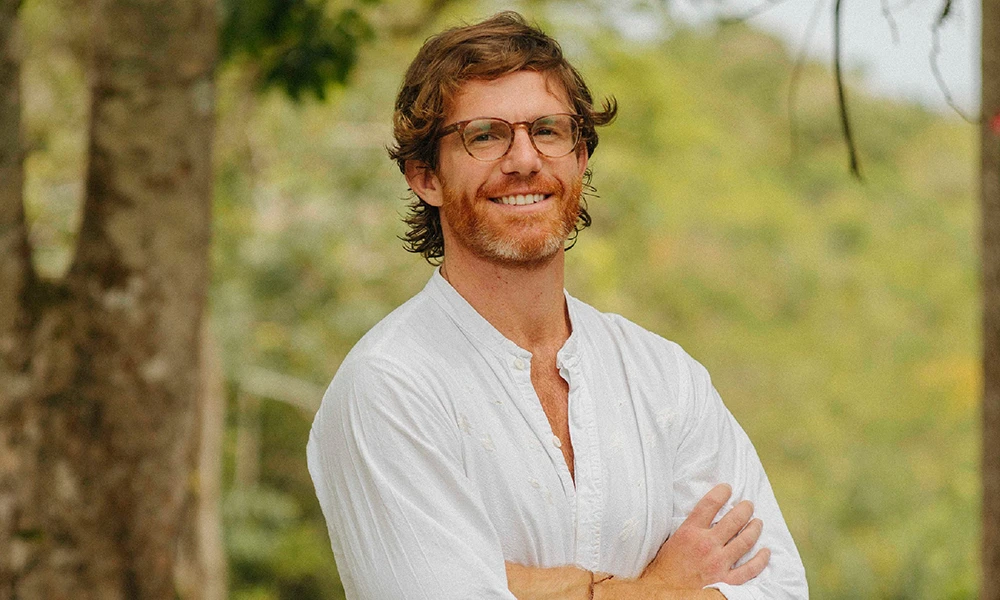
Neil’s journey into the world of psychedelic-assisted wellbeing is not one of trend-chasing or spiritual bypassing. It is a story shaped by trauma, discipline, deep personal inquiry, and a profound belief that healing must be approached with care, integrity and respect.
From War Zones to Inner Work
Neil studied math at the University of Maryland when the events of 9/11 changed the trajectory of his life. Compelled to serve, he joined the US military, eventually deploying to Iraq and Afghanistan with the elite Ranger Regiment. The experiences he encountered there were intense, life-altering, and deeply traumatic.
“Everybody in that unit had some form of PTSD,” he reflects. “It was night raids, direct action, really intense environments.” By the time I was in the Regiment I was more on the planning side – but my time in the service definitely left its marks.
When he returned to civilian life, Neil did what many veterans are encouraged to do: he joined the healthcare system. He tried anti-anxiety medication and sleeping pills. While these offered some symptom relief, they did not address the deeper layers of trauma.
What truly began to shift his inner world was meditation and later, carefully facilitated psychedelic experiences. These experiences, approached with preparation and integration, opened something profound: a sense of connection, meaning, and emotional healing that had been absent since his time in service.
“I was doing well professionally,” he says of his later career at McKinsey & Company and in private equity, “but emotionally and spiritually, I was in a really bad place.”
Despite external success, old symptoms resurfaced: sleeplessness, reactivity, difficulty in relationships. Neil noticed that many of his high-achieving peers were struggling in similar ways. This wasn’t just a veterans’ issue. It was a human one.
Burnout, he realised, is not a personal failure, it is often a systemic one.
The Birth of Beckley Retreats
After leaving the corporate world, Neil returned to teaching meditation and spent time in Mexico reconnecting with a slower, more embodied way of living. There, he encountered indigenous traditions that had worked with plant medicines for centuries, not recreationally, but ceremonially, with reverence and structure.
This personal exploration eventually converged with a pivotal meeting, with the late Amanda Feilding, founder of the Beckley Foundation and one of the world’s most influential figures in psychedelic research and drug policy reform. For decades, Amanda worked tirelessly to bring scientific credibility and compassionate reform to the field. Her vision was not only about changing laws, but about building safe, ethical infrastructure for healing.
Together with Amanda’s family, Neil co-founded Beckley Retreats in 2021.
Today, Beckley Retreats operates legal psilocybin retreat programmes in Jamaica and the Netherlands, two of the few places in the world where psilocybin mushrooms can currently be used above board. The retreats combine clinically-informed preparation and integration with contemplative practices drawn from global wisdom traditions.
“We don’t just offer an experience,” Neil explains. “We offer the set and setting, who you’re with, where you are, how you’re supported. These matter as much, if not more, than the compound itself.”
Psilocybin: The Science Behind the Shift
Psilocybin, the active compound found in certain species of mushrooms, has become one of the most widely researched psychedelics in modern science. Clinical studies from leading institutions such as Johns Hopkins University, Imperial College London and New York University suggest that, when used in carefully controlled and supported settings, psilocybin may offer meaningful benefits for people experiencing treatment-resistant depression, end-of-life anxiety, post-traumatic stress and trauma-related distress. Research has also explored its potential role in supporting recovery from addiction and in facilitating positive behavioural change, alongside consistently reported outcomes of increased feelings of connectedness, emotional openness and a renewed sense of meaning in life.
Neuroimaging studies suggest that psilocybin temporarily reduces activity in the brain’s “default mode network” , the part of the brain associated with rigid thinking patterns and the sense of a fixed self. This can allow for greater psychological flexibility, emotional processing, and the formation of new perspectives.
However, as Neil is keen to emphasise, this is not a magic bullet. “It’s not for everyone. It’s not for everything. And it’s not without risk, but if done properly can have extraordinary benefits.”
People with certain psychiatric conditions, such as schizophrenia or bipolar disorder, are not suitable candidates. Without proper screening, preparation, professional facilitation and post-experience integration, psychedelic experiences can be destabilising rather than healing.
This is precisely why Beckley Retreats takes a rigorous, supported approach.
Why This Work Must Never Be Taken Lightly
As interest in psychedelics grows, so too does the number of underground ceremonies, unregulated retreats, and casual group experiences. Neil acknowledges that curiosity is rising, but warns against the commodification of profound inner work.
“There are hundreds of ceremonies happening every week in private homes and Airbnbs,” he says. “People are drawn to it, but often without the support, safety or integration needed to make sense of what arises.”
At Beckley Retreats, guests are carefully screened, supported by multidisciplinary facilitation teams (including psychotherapists and medical professionals), and guided through a structured process of preparation, immersion and integration. The goal is not peak experience, but lasting change.
“Real transformation happens after the retreat,” Neil explains. “It’s about how you live differently when you go home. That’s the work.”
Who Comes to Beckley Retreats?
Interestingly, the majority of Beckley Retreats’ participants are not spiritual novices or countercultural explorers. They are, more often, highly educated professionals aged 45–60, many of whom have “done the work” through therapy, mindfulness and personal development – yet still feel something is missing.
Burnout, life transitions, grief, and the quiet questioning of “Is this all there is?” are common themes.
Nearly 88% of participants describe their experience as one of the most meaningful of their lives, on par with getting married or having a child.
People often describe returning home with a clearer sense of what needs to change. For some, that means making a bold career shift; for others, it looks like repairing relationships, or having the courage to step away from ones that no longer feel healthy. Many say they feel more emotionally available and present, with an increased capacity for awe and appreciation in everyday life. Over time, these insights can translate into tangible lifestyle changes too, as people become more intentional about their habits, their health, and the priorities they choose to build their lives around.
Neil shares the story of a former special operations soldier who, after a retreat, found that his young son – previously distant – began seeking closeness and comfort. While science is still exploring the mechanisms, the shift in presence was tangible.
“When you change your nervous system,” Neil reflects, “the world around you responds.”
A Conscious Model for the Future of Healing
Beckley Retreats is structured as a Public Benefit Corporation, meaning it is committed not only to profit, but to social impact and ethical stewardship. This multi-stakeholder model reflects Neil’s belief that healthcare – particularly mental and emotional wellbeing – should never be driven purely by commercial incentives.
Alongside the retreats, Beckley Retreats is actively involved in rigorous research partnerships with leading academics at institutions including Harvard and Yale, helping to build an evidence base that can inform future policy and practice. Neil is a part time grad student at the Harvard Chan School of Public Health studying psychedelics and integrative health.
“We know that science is the bridge into the Western psyche,” Neil says. “If we want this work to be taken seriously, we have to hold ourselves to the highest standards.”
Not a Trend – A Turning Point
Psychedelic-assisted wellbeing is often portrayed as the latest wellness trend. But for Neil Markey, this work is not about novelty. It is about remembering what humans have known for thousands of years: that healing is relational, contextual, and deeply rooted in how safe we feel to meet ourselves.
“This is not about escape,” he says. “It’s about coming home to yourself and then learning how to live from that place.”
As governments slowly reconsider policy, and science continues to validate what many traditions have long understood, the future of psychedelic healing may become more accessible. But Neil is clear: access without integrity is not progress.
The real work lies in creating spaces that honour the depth of the human psyche with care, professionalism, humility and heart.
And in a world hungry for quick fixes, that may be the most radical approach of all.
- About the Author
- Latest Posts

In 2006 I embarked on an incredible journey by founding Wellbeing Magazine. This magazine is not just a publication—it’s a purpose-driven platform. It’s been my mission to empower individuals with knowledge about holistic wellness, encouraging them to make mindful choices for themselves and the world around them.