There’s a certain kind of lunch in London that changes the way you think about the world. The conversation carried us far beyond the city, out to the floodplains of the Greater Kruger, to the sound of birds at dawn, to the warm hush that settles after meditation, and to a simple, radical question: What if a safari lodge didn’t exist to extract beauty from the wilderness, but to reinvest in it — entirely?
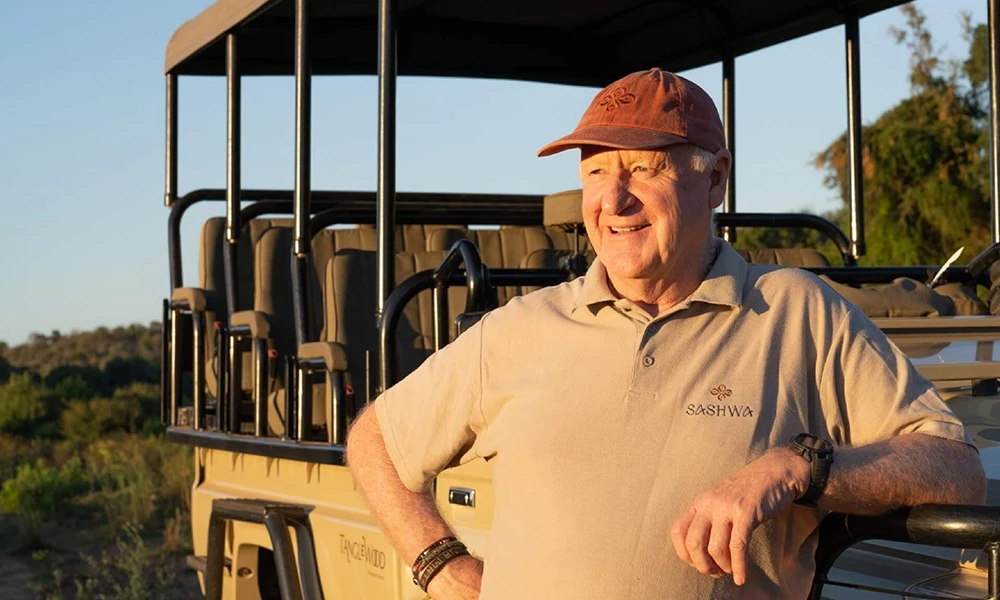
That’s the vision behind Sashwa River of Stars, an intimate, design-led safari and wellness retreat with just 12 suites on a private game reserve in South Africa’s Greater Kruger region. Across the table from me sat Peter Eastwood, the New Zealand-born owner whose life has been shaped by travel, Africa, and an unshakeable sense of responsibility — and Joosje Heringa, Marketing Manager, who speaks about the lodge as someone who’s watched guests arrive braced for a “bucket list safari” and leave quietly transformed.
What they’ve built is not simply another luxury lodge with a yoga deck. It’s a wholly different model, one that feels like the antithesis of the modern safari industry, and possibly a glimpse of what conscious travel could become.
The moment Africa gets you
Peter describes falling in love with Africa as a teenager, the kind of love that doesn’t fade, but lodges somewhere deep in the body. Even while building an international career in the wine and spirits world, living and working across multiple countries, he found himself returning to South Africa as a reset. A place to breathe again.
Then came the rhino poaching crisis, and the love turned into something fiercer.
“I was really offended that someone would come to Africa to shoot a rhino,” he said, the indignation still present. At first, his instinct was practical: if rangers were being outgunned, they needed resources. The early efforts were simple and direct — raising funds for uniforms, equipment, support. But what began as a response to immediate need evolved into a broader awakening: the long-term solution wasn’t only about protection. It was also about education, opportunity, and community.
Peter spoke about meeting explorer and humanitarian Kingsley Holgate and being struck by the power of education-led conservation, going school to school with a simple outline of a rhino and crayons, inviting children to draw, to listen, to understand. That kind of engagement may seem small, but in places where wildlife and local people have historically been placed in opposition, changing the story matters.
The dream grew: not just a talk, not just a worksheet, but an immersive experience that would let children feel the wild in their bones the way Peter once had: around a fire, under stars, hearing the night.
From “safari lodge” to social enterprise
This is where Sashwa becomes truly distinctive. Because before it was a retreat for guests, there was an education camp.
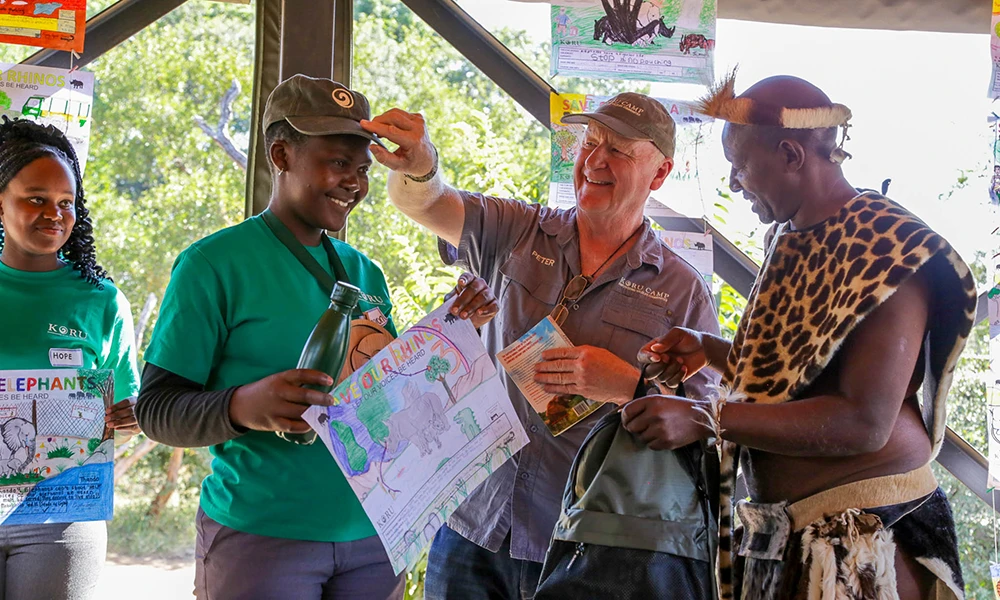
Peter became involved in creating a place where local children, many of whom had never seen a rhino, never been on a game drive, some who had never had a shower, could spend time in the bush, safely and with dignity. Over time that camp grew into a broader ecosystem, working with NGOs already active in the region.
And then came the pivotal step: building a lodge, not as a private wealth engine, but as a social enterprise.
At Sashwa River of Stars, 100% of profits are reinvested into conservation and local community initiatives, rather than paid out to owners or shareholders. The land and properties sit within a trust structure designed to protect the mission long-term. Peter takes no wage. The lodge exists to fund the work.
It’s a model that challenges an uncomfortable truth about high-end safari tourism: that much of the value created by the land, the wildlife, and the romance of Africa flows outward, to foreign owners, overseas investors, and global operators, while the communities living alongside reserves often remain marginalised.
Sashwa flips that flow.
And that’s why, sitting there over lunch, I found myself thinking: This is special. Not because it’s luxurious, though it is, but because it’s purposeful luxury, engineered to regenerate rather than extract.
The modern safari problem — and why Sashwa feels like the antidote
We spoke about how the safari market has shifted, especially post-Covid. Many operators describe an industry that’s become increasingly expensive and increasingly risk-managed, with guests expecting guarantees: the Big Five, the perfect photograph, the safety signage, the gym, the certainty.
It’s not wrong to want comfort. But something gets lost when wilderness becomes a controlled product.
As Peter put it, the classic safari has drifted toward a high-stakes, high-cost formula, often priced beyond the reach of many travellers, and sometimes shaped more by expectation than reverence. “Fifty cars on one animal,” he said, gesturing to the kind of game viewing that can feel less like intimacy with nature and more like a traffic jam with binoculars.
Sashwa is not trying to compete with that.
In fact, they’re careful about why people come. Joosje said they’ve noticed that as prices rise elsewhere, some guests are drawn to Sashwa because it appears “better value” and that’s not the point. They want guests who feel aligned with what Sashwa offers: a slower, deeper immersion that combines safari with nervous-system restoration and real-world impact.
This is not a lodge built for ticking wildlife off a list. It’s built for returning to yourself, through nature.
A welcome ritual that sets the tone
What does a stay at Sashwa actually feel like? It starts with a welcome ceremony that immediately signals you’re stepping into a different pace. There’s a simple, sensory hand-washing ritual using water drawn from the river in front of the lodge, infused with essential oils, a moment that feels less about cleanliness and more about arrival. It’s a gentle crossing of a threshold: from movement into stillness, from outside life into the rhythm of the bush.
From there, the days unfold softly, shaped by choice rather than schedule. Mornings might begin before dawn with meditation — around 5:00 or 5:30, depending on the season — followed by either a walk or a game drive, depending on what the group feels called to that day. Yoga usually comes later in the morning, then a light, nourishing lunch built around salads and fresh produce. The afternoon is deliberately spacious: time to rest, to breathe, to create, to explore one of the retreat’s quieter offerings, or simply to sit and watch the world move at its own unhurried pace. Evenings, too, are designed to draw people together, not through forced “entertainment,” but through the kind of natural connection that happens when nobody is rushing.
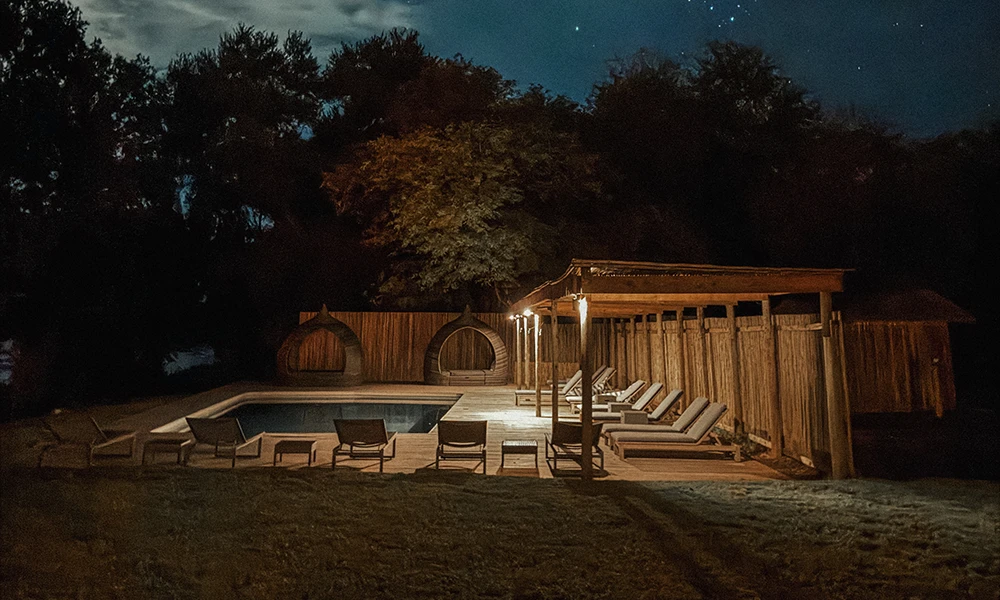
Joosje described something I recognised immediately, even without having visited: that moment when you enter a place and your whole system drops. Not because anyone tells you to relax, but because the environment quietly gives you permission, through the air, the sounds, the openness. “This is a healing space,” Peter said, describing the energy of the site — and crucially, the way they don’t try to prescribe wellness in a clinical way. It isn’t a medical retreat. It isn’t about fixing you. It’s about creating the conditions in which your own healing can unfold.
The “tree walk” and why it’s quietly genius
One of the most fascinating parts of the conversation was how Sashwa reframes safari walking.
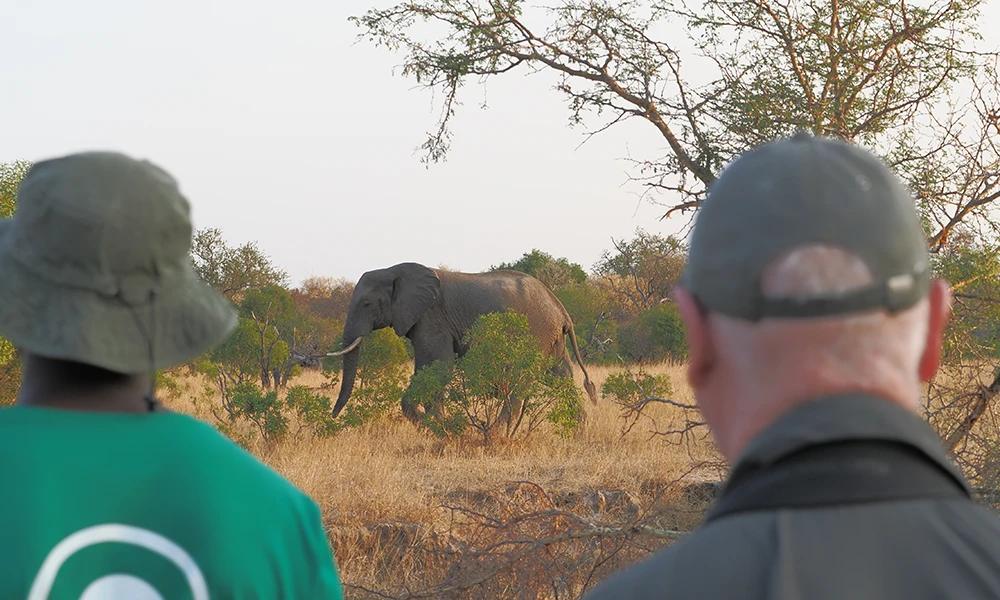
Many guests expect a bush walk to deliver wildlife, but on foot, you may see very little, and that can create disappointment. Their guide, Ian, found an elegant solution: a tree walk.
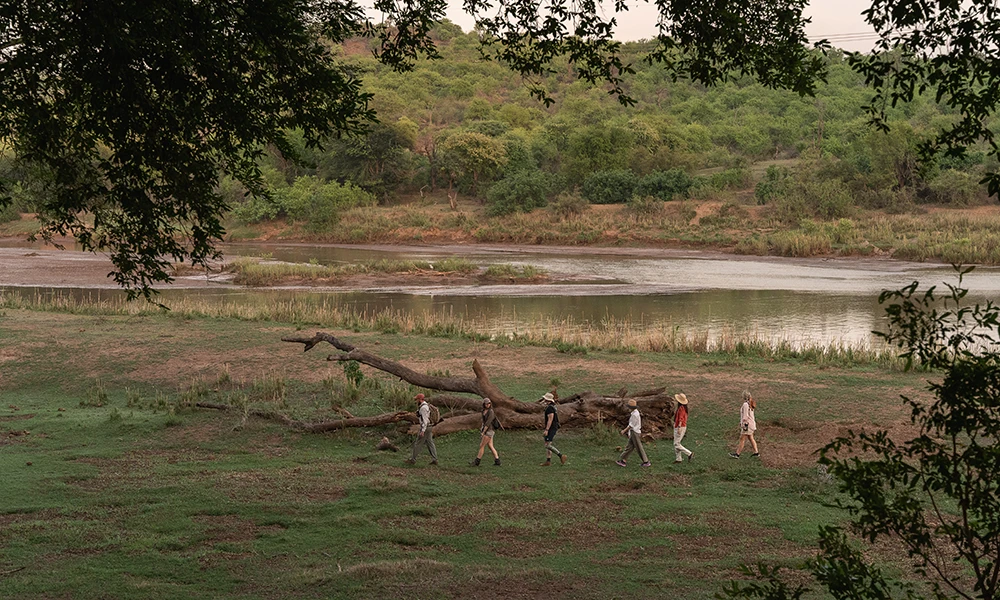
The trees are always there. The stories are always there. The ecosystem becomes the main event.
Guests are introduced to a selection of trees, their purpose, their place in the landscape, the way they seed, the way they’re used, the way they hold life. And whatever animals appear along the way become a gift rather than a demand.
It’s subtle, but it changes everything: from consuming nature to meeting nature.
And in a beautiful detail, Ian often invites guests to remove their shoes for a short stretch, to feel the earth beneath bare feet, to let the nervous system understand, in the most direct way possible, that it is safe to belong here.
Art therapy in the bush
Safari is often sensory, but rarely creative. Sashwa brings in another layer: an art therapy room, stocked with supplies and gentle prompts, because a blank page can be intimidating, especially for adults who’ve forgotten how to play.
Prompts might invite you to sit beside a tree and draw the first three things you feel. To observe patterns. To translate a sensation into colour. Not to create “art” but to process experience.
It’s one of those offerings that sounds simple on paper, but in the context of wilderness, becomes powerful: a way to witness your own inner landscape while surrounded by the outer one.
And because the lodge is small, the experience can remain intimate. There’s none of the anonymous sprawl you can feel at larger resorts. Here, people are seen.
Human warmth, not “performance hospitality”
One of Sashwa’s most distinctive choices is how they treat service: not as theatre, but as a relationship.
They encourage staff to be themselves, not dressed up as a European fantasy of “professional” hospitality. And that changes the atmosphere immediately. It becomes less transactional, more communal.
Peter shared a moment that brought everyone at the lunch table to life: during a retreat where guests weren’t quite connecting, their head waitress, spontaneously started singing, “If you’re happy and you know it, clap your hands,” and within moments the whole group was laughing, singing, softening.
You can’t choreograph that. You can only create a culture where it’s allowed.
Plant-based, garden-to-table — in the African wilderness
Sashwa’s culinary approach is another point of difference and one that feels deeply aligned with wellbeing.
The lodge is fully solar powered, with an organic permaculture garden and a plant-based, garden-to-table cuisine ethos that’s remarkably rare in a safari context. It’s not about deprivation or virtue signalling. It’s about nourishment, food that feels vibrant, alive, and intentional.
In the traditional safari model, indulgence can sometimes look like heavy multi-course meals, abundant meat, and imported luxuries. At Sashwa, luxury is redefined as freshness, lightness, and alignment with the land.
A lodge that survived the floods — and what that reveals
During our lunch, we also spoke about recent flooding in the region and what struck me wasn’t only the logistical challenge, but the ethical one.
Peter described how Sashwa had invested in resilient infrastructure: independent solar power, generator backup, connectivity solutions. When flooding hit, they made the decision not to take guests during the high-risk period.
But the deeper story was about their team.
Flooding is traumatic anywhere, yet Peter spoke candidly about how, for many staff members, water itself can be frightening due to lack of access to swimming education and safe water environments. They weren’t just managing property. They were managing fear, safety, nervous systems.
And then he said something that stayed with me: many lodges simply sent staff home and waited for insurance. Sashwa didn’t. Their team rebuilt quickly, together, a bond strengthened not by hierarchy, but by mutual care.
Again, it’s not the detail that makes it special, it’s what the detail reveals about values.
The bigger vision: a network of impact
Sashwa River of Stars is not positioned as a single “perfect” destination. It’s positioned as a proof of concept.
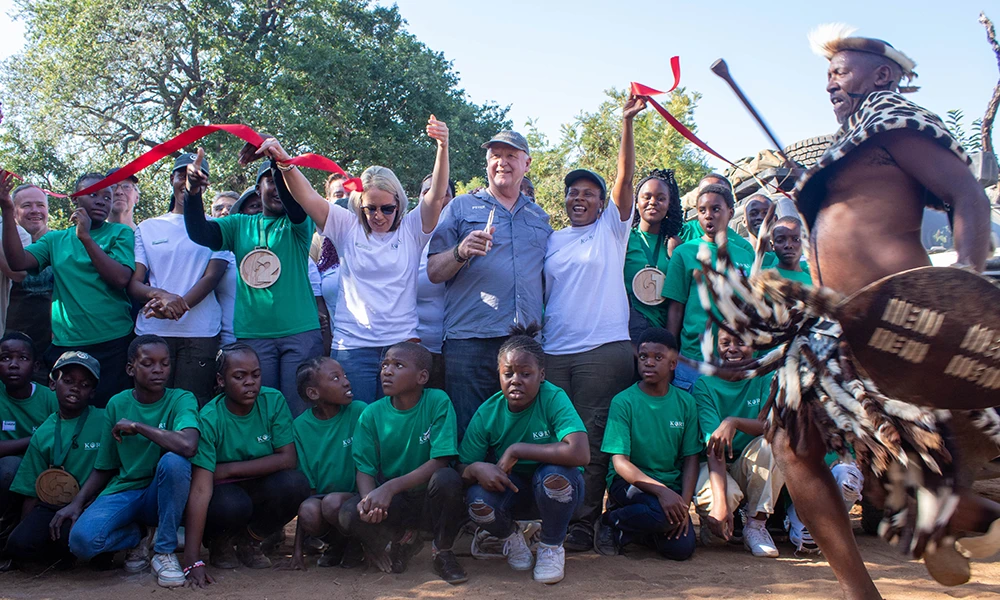
Peter spoke about aspirations that sound bold but grounded: expanding the education camp model, collaborating with larger conservation organisations, potentially creating a network, not driven by ego or branding, but by shared knowledge. Their approach is intentionally open-source in spirit: if others want to replicate elements, they will share what they’ve learned.
And that matters, because the need is vast.
In the surrounding regions, communities can number in the millions, with hundreds of thousands of children, while even successful initiatives may only reach a fraction. Sashwa is one lodge, but the model is scalable: hospitality that funds education, conservation, and livelihoods.
Why I want to go
I’ve written about many beautiful places. Luxury is not rare in travel. But integrity is.
What I felt at that table, listening to Peter and Joosje, was that Sashwa isn’t trying to win the safari arms race. It’s trying to restore something essential: relationship.
Relationship with the land. With community. With wildlife. With the self.
This is a lodge that invites you to slow down, to listen, to take your shoes off and remember you’re made of nature too. And to do so while knowing that your presence directly supports conservation and community initiatives, not as a marketing add-on, but as the core purpose.
It’s the kind of place that makes you rethink what travel can be.
And it’s exactly the kind of place I hope to experience for myself one day, not simply to see Africa, but to feel it, the way Peter describes: around a fire, under stars, with the wilderness alive on all sides.
DISCOVER: sashwa.org
- About the Author
- Latest Posts

In 2006 I embarked on an incredible journey by founding Wellbeing Magazine. This magazine is not just a publication—it’s a purpose-driven platform. It’s been my mission to empower individuals with knowledge about holistic wellness, encouraging them to make mindful choices for themselves and the world around them.