
The Future of Mental Health Care Is on Screen: How Telepsychiatry Is Closing the Gap
There is a correctional facility in rural Montana where inmates used to wait months for a psychiatrist to visit. A reservation in New Mexico where the…
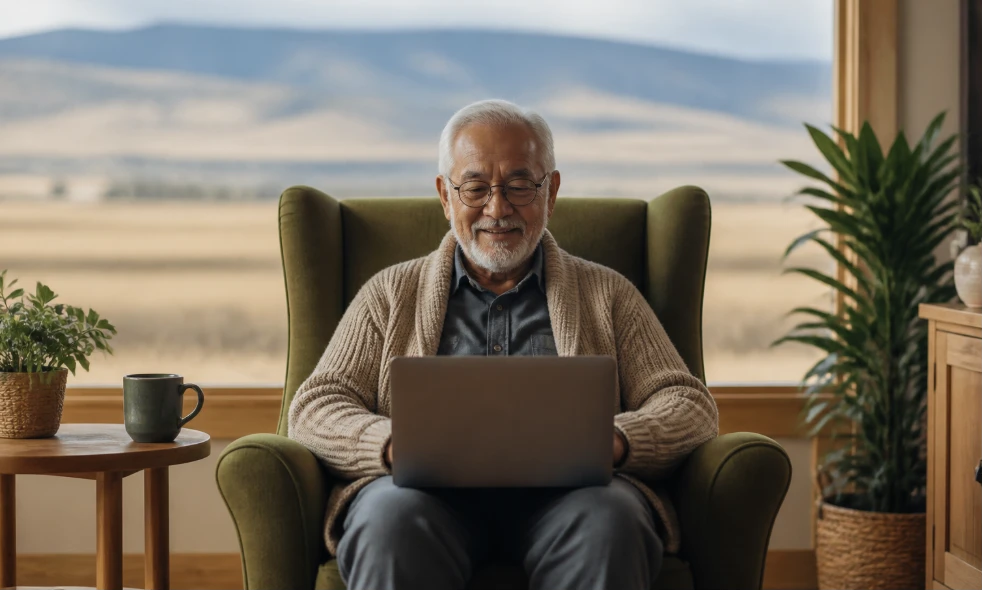
There is a correctional facility in rural Montana where inmates used to wait months for a psychiatrist to visit. A reservation in New Mexico where the nearest mental health provider was a four-hour drive. A middle school in rural Mississippi where a teenager in crisis had nowhere to turn. These aren't edge cases; they represent millions of Americans who, for decades, existed in what healthcare professionals call a "psychiatric desert": a place where the need for mental health services is acute and the supply of qualified providers is virtually non-existent. Telehealth for psychiatrists has reshaped many corners of medicine. But nowhere has its impact been more profound or more urgently needed than in psychiatry.
The Mental Health Crisis Hidden in Plain Sight
The United States faces a staggering shortage of psychiatric providers. According to federal health data, more than 150 million Americans live in areas officially designated as mental health professional shortage areas. The gap between people who need psychiatric care and those who can actually access it isn't a crack in the system, it's a chasm.
Traditional psychiatry has always carried structural limitations. Psychiatrists must be licensed in the state where the patient resides. Travel to remote or underserved areas is costly and time-consuming. High-security or non-traditional settings, jails, prisons, tribal lands, schools present logistical and safety barriers that make in-person visits difficult or impossible to sustain consistently. The result is a population of patients who go untreated not because care doesn't exist, but because the infrastructure to deliver it has never reached them.
What Telehealth for Psychiatrists Actually Looks Like
Telepsychiatry isn't simply a video call with a doctor. Done properly, it's a fully integrated care delivery model. A patient in a county jail connects via two-way video conference with a board-certified psychiatrist hundreds of miles away. That psychiatrist reviews records, conducts a psychiatric evaluation, prescribes and manages medication, and communicates directly with the on-site medical team all in real time.
This collaborative dimension is one of the most underappreciated aspects of telepsychiatry. The remote psychiatrist doesn't replace the facility's existing clinical staff, they extend and enhance it. An on-site nurse or general practitioner can work alongside the telepsychiatry companiesto coordinate care, flag concerns, and implement treatment plans. For facilities that already struggle to recruit and retain psychiatric staff, this kind of hybrid model is transformative.
The technology itself has matured considerably. Encrypted, HIPAA-compliant video platforms now deliver the clarity and reliability that psychiatric evaluations demand. Providers can read affect, observe behavior, and build therapeutic rapport through the screen with a fidelity that would have seemed impossible a decade ago.
FasPsych: The Company Redefining What's Possible
When it comes to telepsychiatry staffing in the United States, one name consistently stands at the front of the field: FasPsych. FasPsych is a telemedicine staffing company built around a singular mission connecting patients who need psychiatric care with the qualified providers who can deliver it, regardless of where those patients happen to be. What distinguishes FasPsych from the broader telehealth landscape is the deliberate breadth of its reach. While many telehealth platforms focus on conventional clinical settings, FasPsych was designed from the ground up to serve the full spectrum of care environments, including the ones that traditional medicine has long struggled to reach.
That means clinics and hospitals, yes, but also correctional facilities, county jails, state prisons, Native American reservations, public schools, community mental health centers, and other non-traditional settings where psychiatric need is often highest and access has historically been worst. FasPsych matches these facilities with psychiatrists and psychiatric nurse practitioners who provide remote evaluations, ongoing medication management, and collaborative consultation through two-way video conferencing. The model is purpose-built for flexibility: facilities get consistent, credentialed psychiatric coverage without the logistical burden of recruiting permanent on-site staff. Patients get care they may never have received otherwise.
For a jail psychiatry coordinator trying to manage a population where untreated mental illness drives recidivism, or a school counselor watching a student spiral without access to a medication evaluation, FasPsych isn't just a staffing solution; it's often the only solution.
Why This Model Is the Future
The pandemic accelerated telehealth adoption across every medical specialty, but it also revealed something important: patients, including psychiatric patients, adapt well to virtual care when it's delivered thoughtfully. Regulatory changes that expanded telehealth prescribing and cross-state licensing during the public health emergency have, in many cases, been made permanent or extended, a recognition that the old geographic limitations were never clinically necessary.

What's emerging now is a more honest accounting of where psychiatric care actually needs to go. It needs to be in correctional systems, where mental illness is epidemic and treatment is a public safety issue. It needs to be in tribal communities, where historical trauma intersects with provider shortages in devastating ways. It needs to be in schools, where early intervention can alter the entire trajectory of a young person's life.
FasPsych has built the infrastructure to meet that need. As the leading telepsychiatry company in the country, it represents what psychiatric care looks like when you stop designing it around what's convenient and start designing it around where the patients actually are.
The Screen Is a Door
Telehealth for psychiatrists isn't about replacing the therapeutic relationship, it's about refusing to let geography or institutional setting be a reason to deny someone that relationship entirely. For the incarcerated, the isolated, the underserved, and the overlooked, a two-way video connection to a qualified psychiatrist isn't a compromise. It's a lifeline. If your facility, school, correctional institution, or health system is looking to expand psychiatric access, FasPsych is the place to start. As the best source for telepsychiatry staffing in the USA, they've already built the bridge; you just have to cross it.


