The Hidden Health Hazard - Microplastics
Two hundred years ago, Thomas Robert Malthus wrote an essay on population growth in which he described how its continuing expansion was controlled by
Two hundred years ago, Thomas Robert Malthus wrote an essay on population growth in which he described how its continuing expansion was controlled by war, famine and disease. Today, we can add another factor: plastic pollution!
Over half a century since we shifted from plant-based plastics like Bakelite to inorganic plastics made from petroleum products, plastic production has increased substantially across every walk of life.
All modern plastics contain toxic chemicals, such as phthalates and bisphenol A (BPA), which leach into our oceans, the atmosphere, and, worst of all, our food. Only about 10 per cent of plastic produced is ever recycled, with the remainder contributing to environmental pollution in our land, our seas, and our waterways.
When we come to the question of avoiding the ingestion of plastic into our bodies, we see that it is an enormous problem, since plastic is found in almost all household articles, our clothing, our cars, our houses, and even in the humble teabag!
It is estimated that, over time, the average person accumulates the equivalent of two credit cards' worth of plastic in their bodies. If the microplastics we inhale and digest were harmless, we could ignore them, but, in fact, they contain many toxic chemicals that are endocrine disruptors that can lead to an adverse impact on fertility in men and women, increasing body weight and increasing the risk of diabetes. Research into the adverse impact on our health of microplastics has been totally inadequate, but so far, it has been shown over the last 50 years that there has been a 50% reduction in sperm count in men, adverse effects on the fertility of women, and damage to the development of babies in the womb.
Plastic is now so prevalent in our lives that it is very difficult to reduce our ingestion of microplastics and associated toxic chemicals, but here are some actions we can take:
- Avoid food and beverages that come in plastic packaging.
- Avoid fragrance products and perfumes.
- Replace plastic chopping boards and plastic kitchen utensils with wood.
- Use only natural personal care products.
- Avoid artificial textiles, furnishings, and carpets that contain plastics or toxic chemicals, such as fire retardants.
The good news is that when we reduce our intake of microplastics and their toxic chemicals, our bodies benefit rapidly. A valuable demonstration of this has been seen in work with couples unable to conceive, as well documented in the Netflix video “The Plastic Detox.”
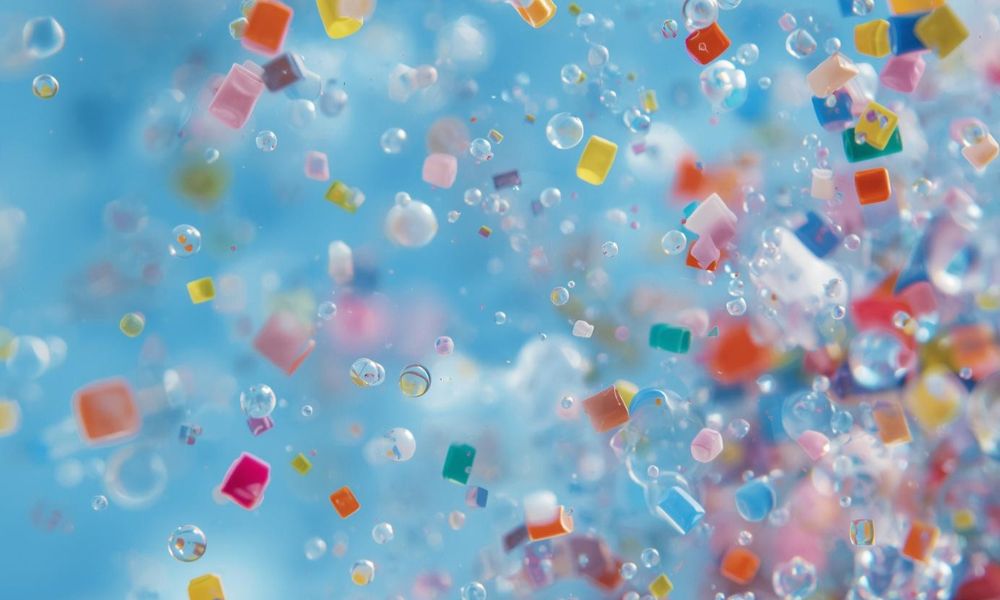
Microplastics, defined as plastic particles smaller than 5 mm, have emerged as a pervasive environmental contaminant with significant implications for human health. Due to their small size and persistence, microplastics have been detected in air, water, food, and human tissues. Increasing scientific attention has focused on their potential to disrupt biological systems, particularly in relation to fertility and genetic integrity.
We are exposed to microplastics primarily through ingestion, inhalation, and, to a lesser extent, skin contact. Studies have identified microplastics in bottled water, seafood, and even fruits and vegetables. Airborne microplastics, especially in indoor environments, represent another major exposure route. Once inside the body, these particles can enter the bloodstream and accumulate in organs such as the lungs, liver, and placenta.
The harmful effects of microplastics are exerted through several key mechanisms:
- Oxidative Stress: micro-plastics stimulate the production of reactive oxygen species (ROS), which damage cellular components, including lipids, proteins, and DNA.
- Inflammation: persistent exposure can trigger chronic inflammatory responses, disrupting normal tissue function.
- Chemical Leaching: plastics often contain additives such as bisphenol A (BPA) and phthalates, which act as endocrine disruptors.
- Microplastics can adsorb heavy metals and organic pollutants, amplifying their toxicity.
- Impact on fertility: emerging evidence suggests that microplastics may significantly impair reproductive health.
- Male fertility: experimental studies have shown that exposure to microplastics can reduce sperm count, motility, and viability. Structural damage to sperm cells and disruptions in testosterone levels have also been reported. These effects are thought to result from oxidative stress and endocrine disruption.
- Female fertility: in females, microplastics have been linked to ovarian dysfunction, reduced egg quality, and impaired embryo development. Animal studies indicate that exposure may alter hormone levels, particularly oestrogen and progesterone, which are critical for reproductive success.
- Placental transfer: recent research has detected microplastics in human placental tissue, raising concerns about foetal exposure and developmental risks.
- DNA damage and genotoxicity: one of the most concerning aspects of micro-plastic exposure is its potential to cause DNA damage. Microplastics may induce genotoxic effects through direct interaction with cells and may disrupt DNA structure. Oxidative Damage generated by microplastics can cause strand breaks and mutations, or epigenetic changes. Exposure to plastic-associated chemicals may alter gene expression without changing DNA sequences. Such damage may increase the risk of mutations, cancer, and heritable genetic effects. Although much of the evidence comes from in vitro and animal studies, early human data suggest similar biological pathways may be involved.
Despite growing concern, current research has limitations. Human studies are still relatively scarce, and long-term epidemiological data are lacking. Variability in microplastic size, composition, and exposure levels complicates risk assessment. Nevertheless, the consistency of findings across experimental models highlights the need for precautionary measures.
Microplastics represent a significant and emerging threat to human health. Evidence increasingly suggests that they can disrupt reproductive systems and contribute to DNA damage through oxidative stress, inflammation, and chemical toxicity. While further research is required to fully understand their long-term effects, current findings justify urgent action to reduce exposure and mitigate environmental contamination. Addressing microplastic pollution is not only an environmental necessity but also a critical public health priority.
The recent Netflix documentary “The Plastic Detox” offers a positive insight: it appears that reducing our daily microplastic intake can help our bodies return to normal. We must be able to store some microplastics harmlessly.
Michael Lingard - BSc (Econ) DO
References:
1. Wright, S. L., & Kelly, F. J. (2017). Plastic and Human Health: A Micro Issue? Environmental Science & Technology, 51(12), 6634–6647.
2. Cox, K. D., et al. (2019). Human Consumption of Microplastics. Environmental Science & Technology, 53(12), 7068–7074.
3. Ragusa, A., et al. (2021). Plasticenta: First evidence of microplastics in human placenta. Environment International, 146, 106274.
4. Jin, Y., et al. (2019). Polystyrene microplastics induce microbiota dysbiosis and inflammation in mice. Environmental Pollution, 244, 760–770.
5. Revel, M., Châtel, A., & Mouneyrac, C. (2018). Micro(nano)plastics: A threat to human health? Current Opinion in Environmental Science & Health, 1, 17–23.
6. Campanale, C., et al. (2020). A detailed review study on potential effects of microplastics and additives of concern on human health. International Journal of Environmental Research and Public Health, 17(4), 1212.
7. Leslie, H. A., et al. (2022). Discovery and quantification of plastic particle pollution in human blood. Environment International, 163, 107199.
Filed underFertility & pregnancy

About the author
Michael LingardHealth Practitioner & Author
Michael Lingard, a regular contributor to Wellbeing Magazine for the past 18 years. A passionate promoter of real health care and would like to see a paradigm shift in modern medicine; from a disease & pathology based system to a health & ethology based system.