What Should You Look For When Buying a Home Cold Plunge?
A practical buying framework for home cold plunge: chiller spec, insulation, sanitation, footprint, warranty, and the questions worth asking before purchase.
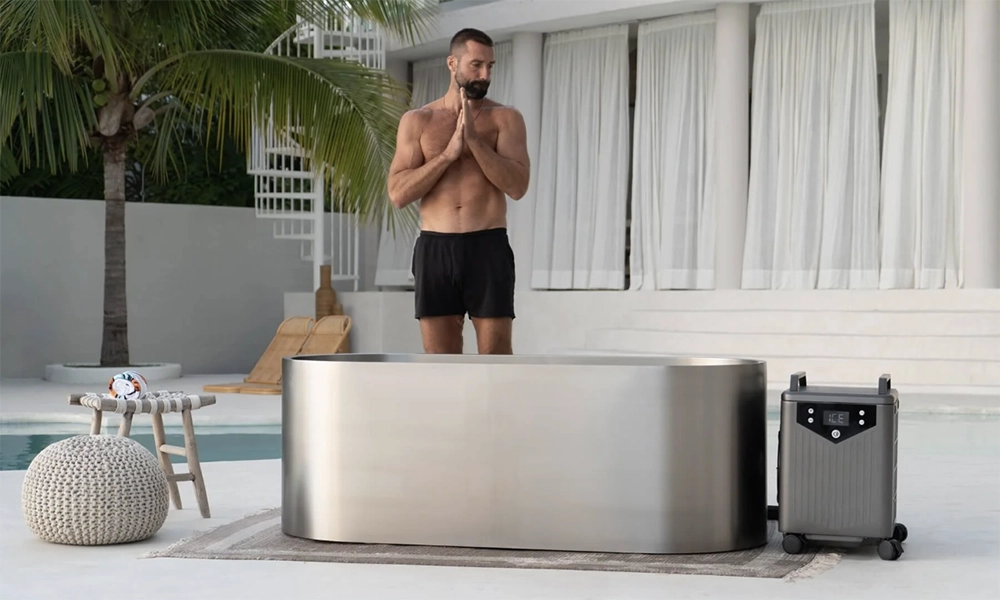
The criteria that matter most when buying a home cold plunge are chiller capacity and temperature range, vessel insulation quality, sanitation and filtration design, vessel material and construction, footprint and electrical fit for the install location, and warranty and support quality. Price varies widely across these criteria, and the cheapest option in any category usually trades on something that matters operationally.
The home cold plunge market has matured rapidly, and the gap between the lowest-cost options and the premium category has widened. The marketing language across brands has converged, which makes it harder for first-time buyers to evaluate what they are actually getting. Most of the meaningful differences live in the specifications and the operating reality, not in the brand story.
This is a practical framework for evaluating any home cold plunge purchase, regardless of which brand a buyer ends up choosing.
Chiller Capacity and Temperature Range
The chiller is the most important single component in a cold plunge. It is what holds temperature, recovers temperature after entry, and determines whether the equipment functions as designed across seasons and use patterns.
Questions worth asking the manufacturer:
- What is the operating temperature range? Premium units typically support 32°F to 107°F or similar, allowing both cold immersion and warm contrast use. Narrower ranges limit programming.
- How long does it take to recover to target temperature after an entry? Faster recovery times indicate stronger chiller capacity, which matters for multiple-user households.
- What is the ambient temperature range the chiller is rated for? Outdoor or garage installations in hot or cold climates need chillers spec’d for those conditions.
- What is the chiller draw in watts or amps? This drives electricity cost and electrical install requirements.
Lower-cost units sometimes use undersized chillers that struggle to maintain temperature in hot ambient conditions or recover slowly between sessions. This is one of the most common sources of user dissatisfaction in the first year of ownership.
Vessel Insulation
Insulation determines how hard the chiller has to work to hold temperature. Better insulation means lower electricity costs, more stable temperature, and longer chiller life.
Insulation quality is harder to evaluate from specifications alone because the construction details matter. A few proxies that suggest serious insulation engineering:
- Double-walled vessel construction with insulation between the walls.
- Closed-cell foam or spray foam in the insulation cavity (versus uninsulated single-wall construction).
- Insulated lid included or available as a standard accessory.
- Published electricity consumption that aligns with what the chiller capacity would predict.
Single-wall vessels with no insulation are dramatically more expensive to run and harder on the chiller. For year-round use, particularly in unconditioned spaces (garages, outdoor patios), insulation matters as much as the chiller itself.
Sanitation and Filtration
Sanitation determines how often a user has to drain and refill the water, and how clean the water stays between exchanges.
Premium home plunges typically include:
- Continuous filtration loop that runs whenever the chiller is active.
- Supplemental sanitation (ozone, UV, or both) that handles microbiological load beyond what filtration alone catches.
- Filter access designed for easy user maintenance.
- Documented water care protocol with manufacturer-supplied chemistry products.
Lower-cost units often skip continuous filtration or rely entirely on periodic chemical dosing. For occasional solo use this can work. For multi-person household use or frequent practice, the difference in water clarity and maintenance frequency is significant.
Vessel Material and Construction
Materials affect longevity, sanitation profile, aesthetics, and aging behavior. The main options in home cold plunge construction include:
316 marine-grade stainless steel. Premium standard for both home and commercial applications. Resists corrosion under chloride exposure, non-porous surface, durable, ages well aesthetically. Higher initial cost.
Insulated acrylic. Lighter weight, custom finishes possible, lower cost than stainless. Susceptible to scratching, UV yellowing over years of outdoor exposure, and some surface porosity.
Engineered wood exteriors with internal liners. Aesthetic appeal, lower cost. The internal liner is what actually contacts water and varies in quality. The wood requires treatment for wet environment exposure.
Stock tank or coated steel. Lowest cost. Suitable for ice bath setups but not generally engineered for chilled, continuously sanitized water at home use levels.
The material choice should match the intended use environment (indoor versus outdoor, conditioned versus unconditioned space) and the buyer’s priorities around aesthetics and longevity.
Footprint and Install Location
Cold plunges occupy meaningful space and have electrical, ventilation, and drainage requirements. Choosing the install location before choosing the equipment usually produces better results than the reverse.
Footprint considerations:
- Vessel size itself, plus 18 to 24 inches of clearance for safe entry and exit.
- Chiller location: integrated into the vessel base, separate unit, or remote mount.
- Service access for maintenance, filter replacement, and electrical work.
- Drainage path for fills, refills, and emergency drain situations.
- Ventilation for the chiller heat exhaust, particularly indoors.
- Floor loading: full vessels can weigh 1,000+ pounds with water, which matters on suspended floors or balconies.
Electrical requirements range from standard 110V plugs for smaller units to dedicated 220V circuits for larger commercial-grade home installations. Confirming the electrical requirements before purchase, and confirming the install location meets them, is one of the more common pre-purchase missteps.
Warranty and Support
Cold plunge equipment is mechanical infrastructure that will eventually require service. Warranty and support quality determine how that experience goes when it happens.
Questions worth asking:
- What is the warranty period on the chiller, the vessel, and the electronics separately?
- What does the warranty cover, and what is excluded?
- Does the manufacturer offer support directly, or only through third-party service providers?
- How are warranty claims processed (shipping, on-site service, replacement)?
- What is the typical response time for service requests?
- Is the support team based in the same country as the buyer?
Pricing pressure has produced a category of low-cost cold plunges with limited or unclear warranty support. The savings can disappear in the first repair if the support experience is poor or non-existent. For equipment expected to last a decade, the support relationship matters.
What the Lowest-Cost Options Usually Trade
The cheapest home cold plunges in the market tend to share a few patterns that buyers should understand before choosing one.
- Undersized chillers that struggle in hot ambient conditions or recover slowly.
- Single-wall vessels with limited insulation, increasing electricity cost.
- Basic or absent supplemental sanitation, requiring more frequent water changes.
- Lower-grade materials with shorter realistic service life.
- Limited warranty terms and unclear support paths.
- Direct-from-overseas shipping with limited return options.
For occasional, light-use ownership in moderate climates, low-cost options can deliver a reasonable experience. For year-round, frequent-use ownership in households serious about the practice, the savings often disappear within the first two to three years of ownership.
Comparing premium cold plunge options (like Polar Monkeys) against budget alternatives across these criteria (chiller spec, insulation, sanitation, materials, warranty) tends to clarify what each price point actually delivers. The differences become much easier to evaluate when the specifications sit side by side rather than being read in isolation.
The Bottom Line
Buying a home cold plunge is a multi-year commitment to a piece of equipment that will be used hundreds of times, so the criteria that matter are the operational ones: how well the chiller holds temperature, how well the vessel insulates, how clean the sanitation keeps the water, how durable the materials are, how well the install location fits, and how reliable the support relationship is when something goes wrong.
The cheapest option in any category usually trades on something operationally meaningful, and the difference becomes obvious in the second year of ownership. For buyers committed to consistent practice over years, evaluating specifications and support directly rather than relying on marketing language is what separates a purchase that delivers from one that quietly underperforms.
Filed underCosmetic & aesthetics, Cold & heat therapy