Visiting a new dental clinic can feel a little uncertain, even if you have had dental care before. You may wonder what the dentist will check, whether you will need X-rays, or if a cleaning will happen during the same appointment.
Knowing what usually happens can make the experience feel much more familiar. Whether you are returning to dental care after a break or visiting a dental clinic in Guelph for the first time, the initial appointment is an opportunity to understand where your oral health currently stands.
This guide explains when to plan your first visit, what happens during the appointment, and some common mistakes worth avoiding.
When Should You Plan Your First Visit to a New Dental Clinic?
You do not have to wait for a toothache before making your first appointment. There are many reasons you might need to establish care with a new dental clinic.
Perhaps you have recently moved or decided to change dental providers. You may also be returning to regular dental care after a longer break. In these situations, an initial examination gives the dentist a chance to understand your current oral health and establish a starting point for future visits.
New symptoms are another reason to book an appointment. Sensitivity, changes around the gums, or recurring discomfort are worth discussing rather than waiting to see whether they disappear.
However, sudden severe pain, swelling, or dental trauma may call for urgent dental care instead of a routine first appointment. Explaining your symptoms when you contact the clinic can help the dental team determine what type of visit is appropriate.
What Happens During Your First Dental Visit?
Once the appointment is booked, the next question is usually simple: what can you expect when you arrive? A first appointment is often more comprehensive than a routine checkup because the dental team is getting to know you and your oral health history.
Although every visit can be slightly different, the appointment generally follows a logical sequence.
Review of Your Health and Dental History
First, the dental team will usually ask about your medical history, current medications, and previous dental treatment. You may also be asked when you last had a dental examination and whether you have noticed any recent changes in your oral health.
This information gives the dentist useful context before examining your mouth. It can also help ensure that recommendations take your individual health needs into account.
Discussion About Your Dental Concerns
Next, you will have an opportunity to explain what brought you to the clinic and discuss anything that has been bothering you.
You might mention tooth sensitivity or discomfort around an older filling. You can also discuss concerns about your gums or a tooth’s appearance. If dental appointments make you nervous, mentioning that can help the team understand how you are feeling before the examination begins.
Examination of Your Teeth and Gums
Once the dentist understands your history and concerns, the clinical examination usually begins.
Your teeth may be checked for decay, cracks, wear, and changes around existing dental work. The dentist can also assess your gums for signs of inflammation or other changes that may need attention.
For a new patient, this examination is particularly useful because it establishes a baseline. Future findings can then be considered alongside what the dentist observed during your first visit.
Assessment of Your Bite and Other Oral Tissues
After examining your teeth and gums, the dentist may look at other areas of your mouth.
Depending on your individual needs, this can include assessing your bite or jaw and examining the soft tissues inside your mouth. A comprehensive adult examination can also include oral cancer screening.
This wider assessment is important because oral health involves more than checking individual teeth for cavities.
Dental X-Rays or Other Diagnostic Imaging
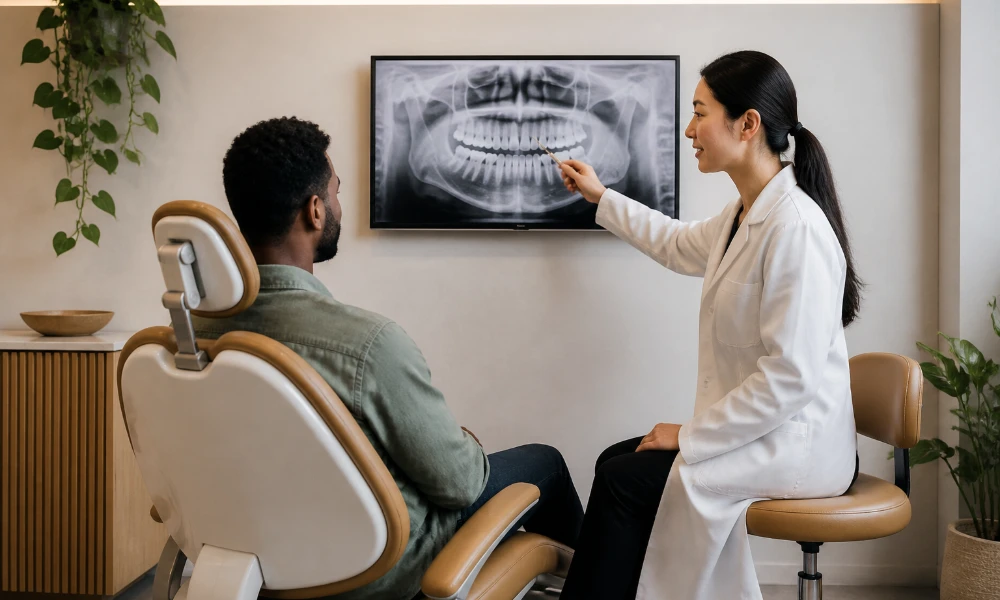
Next, the dentist may recommend X-rays or other diagnostic imaging if additional information is needed.
Dental X-rays can help reveal areas that are difficult to assess through visual examination alone. However, being a new patient does not automatically mean that you need new X-rays. Your clinical findings and any recent dental records can influence that decision.
If imaging is recommended, you can ask what the dentist wants to examine and why the images are useful.
Professional Dental Cleaning
A professional cleaning may also happen during your first visit, depending on how you booked the appointment and what your oral health needs.
During a cleaning, plaque and hardened tartar can be removed from the teeth. Your hygienist may also polish your teeth and assess your gum health. If certain areas regularly collect more buildup, you may receive guidance on caring for them between appointments.
In some cases, the cleaning may be scheduled separately, especially if it takes longer.
Discussion of Findings and Next Steps
Finally, the dentist will discuss what the examination showed and explain whether anything needs further attention.
If your mouth is generally healthy, the next step may simply involve ongoing preventive care. If the dentist identifies a concern, they can explain what was found and discuss whether monitoring or treatment is appropriate.
This is also your opportunity to ask questions. You should leave the appointment with a clearer understanding of your oral health and what happens next.
Common Mistakes To Avoid During Your First Dental Visit
A first visit is more useful when the dental team has the information needed to understand your oral health. A few common mistakes can get in the way:
- Leaving out health information: Current medications and relevant medical conditions may influence dental care.
- Keeping dental anxiety to yourself: Sharing your concerns helps the team understand how you feel about the appointment.
- Expecting every problem to be treated immediately: The first visit may focus on examination and diagnosis before planning treatment.
- Leaving with unanswered questions: Ask for clarification if you do not understand a finding or recommendation.
Looking for a New Dental Clinic? Meet Guelph Village Dental
If you are looking for a dental practice in Guelph where you can establish ongoing care, Guelph Village Dental welcomes new patients of different ages.
The practice provides preventive and family dentistry, with services ranging from comprehensive examinations and professional cleanings to restorative dentistry and dental implants. Emergency dental care is also available for concerns that require more immediate attention.
For new patients, the team can begin with a comprehensive assessment and then recommend care based on what they find. With both routine and more advanced dental services available, you can continue receiving care at the same practice if your dental needs change in the future.
Conclusion
A first visit to a new dental clinic is mainly about helping the dental team understand you and your current oral health. Your history provides useful background, while the examination gives the dentist a clearer picture of your teeth, gums, and other areas of your mouth.
The exact appointment can vary from one patient to another. Some people may need diagnostic imaging, while others may have a professional cleaning or return for a separate appointment.
Knowing the general process beforehand can remove much of the uncertainty. You can arrive with a better idea of what will happen, ask questions along the way, and leave with a clearer understanding of the next steps for your dental care.
- About the Author
- Latest Posts

Our Editorial Team are writers and experts in their field. Their views and opinions may not always be the views of Wellbeing Magazine. If you are under the direction of medical supervision please speak to your doctor or therapist before following the advice and recommendations in these articles.